Window Replacement Cost Guide: Ranges, Types, and Tax Credits

The average window replacement cost runs between $450 and $1,200 per window installed, but that range is so wide it’s almost useless when you’re trying to set a real budget. Two homeowners on the same street can get quotes that differ by $15,000 or more for a full-house project, and neither quote is necessarily wrong.
The window unit itself is usually 50-60% of your total cost. The labor, flashing, trim, disposal, and installation method makes up the other 40-50%. Most contractors don’t break this down for you, which is exactly why comparing quotes is trickier than it seems: a $7,500 bid and an $11,000 bid can both be fair pricing for the same house, depending on what’s actually included.
What Does Window Replacement Cost?
Most homeowners pay $450-$1,200 per window installed for a standard replacement. A full-house project with 10-15 windows can run anywhere from $5,000-$18,000. Price variation depends on window style, frame material, glass package, and installation method, each of which is covered with specific cost ranges below.
Average Window Replacement Cost
These figures reflect national averages for standard-sized windows with professional installation:
- Per window (installed): $450-$1,200 for standard sizes
- Labor only per window: $150-$400, depending on replacement method
- Full-house replacement (10-15 windows): $5,000-$18,000
- Premium or custom projects: $20,000-$35,000+
Those ranges cover the middle 80% of projects. You will land at the low end with builder-grade vinyl double-hungs in a single-story home, and at the high end with fiberglass or wood casements in a two-story home with custom sizing.
Window Replacement Cost by Type

Window style is the first major price lever. Each design requires different hardware, framing, and installation complexity. Here’s what you’ll pay per window installed, using standard sizes and mid-grade materials.
| Style | Cost per Window (Installed) | Best For |
|---|---|---|
| Single-Hung | $200-$650 | Budget projects, bedrooms |
| Double-Hung | $350-$900 | Most rooms, easy cleaning |
| Casement | $400-$1,100 | Kitchens and tight spaces |
| Sliding | $300-$850 | Wide openings, patios |
| Picture | $250-$800 | Views with no ventilation needed |
| Bay Window | $1,200-$3,500 | Living rooms, added shelf space |
| Bow Window | $1,500-$4,000 | Curved aesthetic, larger openings |
Why Do Bay and Bow Windows Cost More?
Bay and bow windows are bigger, but also require structural support brackets or cables, custom framing, and often a small roof section above the projection. Labor hours typically double or triple compared to a flat-wall replacement. If your existing home already has a bay window, replacing it in kind costs less than adding one from scratch, since a new bay projection can push the total above $5,000 with structural modifications.
Double-hung windows dominate the residential market for good reason. They’re the most competitively priced by manufacturers, the fastest to install, and the easiest to find in stock sizes. If you’re replacing 10 or more windows and budget matters, double-hung is the default recommendation unless specific rooms need a different style for ventilation or aesthetics.
Picture Windows: Surprisingly Budget Friendly
Picture windows have no moving parts: no tracks, no cranks, no weatherstripping to fail. That simplicity means lower manufacturing cost and faster installation. If you have windows in hallways or stairwells where you never open them anyway, swapping to a picture window saves $100-$300 per opening compared to an operable style.
Vinyl, Wood, Fiberglass, and Aluminum Frame Material Costs
Frame material is the second-biggest cost driver, and it also determines maintenance requirements for the life of the window. Choosing the cheapest frame isn’t always the smartest move, but choosing the most expensive one isn’t either.
| Material | Cost per Window | Lifespan | Maintenance |
|---|---|---|---|
| Vinyl | $300-$800 | 20-30 years | Virtually none |
| Aluminum | $350-$900 | 20-25 years | Low |
| Fiberglass | $500-$1,500 | 30-50 years | Very low |
| Wood | $600-$1,800 | 30+ years (with maintenance) | High: painting/staining every 3-5 years |
| Wood-Clad | $800-$2,000 | 30-50 years | Low exterior, some interior maintenance |
Vinyl Windows: The Best Value for Most Homeowners
Vinyl wins the value equation for roughly 70% of replacement projects. Modern vinyl frames offer decent energy performance, never need painting, and come in a wider range of stock sizes than any other material. The main drawback is color selection: vinyl can’t be painted reliably, so you’re limited to factory colors.
Keep in mind that builder-grade vinyl windows in the $200-$300 range often use thinner extrusions that can warp in extreme heat. If you live in a climate with intense summers, spend the extra $100-$150 per window for a mid-grade vinyl with welded corners and multi-chamber frames.
When to Choose Fiberglass or Wood
Fiberglass frames expand and contract at nearly the same rate as the glass itself, which means tighter seals and better long-term energy performance. For homeowners planning to stay in their house for 15+ years, fiberglass often delivers the lowest total cost of ownership despite the higher upfront price. Wood makes sense primarily in historic homes where architectural guidelines require it, or where interior wood aesthetics are non-negotiable.
Aluminum frames are a niche choice. They’re strong and slim, which gives you more glass area, but they conduct heat readily. In hot or cold climates, aluminum frames with a thermal break cost nearly as much as fiberglass without matching its insulation performance. Skip aluminum unless you’re in a mild climate or doing a modern architectural build where you require those slim sightlines.
What It Costs to Replace Multiple Windows
Most contractors offer volume discounts on larger projects because mobilization costs (permits, dumpster, crew travel) get spread across more units. Here’s how total project costs typically scale, assuming mid-grade vinyl double-hung windows with professional installation.
| Number of Windows | Total Cost | Per-Window Average |
|---|---|---|
| 5 windows | $2,500-$5,000 | $500-$1,000 |
| 10 windows | $4,500-$9,000 | $450-$900 |
| 15 windows | $6,500-$13,000 | $430-$870 |
| 20 windows | $8,000-$16,000 | $400-$800 |
The per-window average drops as the project grows. A 20-window project typically runs 15-20% less per unit than a 5-window project with the same contractor. This is worth considering if you’re debating whether to replace all your windows at once or do them in phases. Replacing everything in one project almost always costs less total than splitting it into two or three separate jobs.
For projects in the $8,000-$18,000 range, most homeowners benefit from spreading payments over time. Home Genius Exteriors offers flexible financing with low monthly payments so you can tackle the full project now and capture the volume discount rather than phasing the work.
Here are some example projects and their associated costs:
Scenario 1: A single-story ranch with 10 standard double-hung vinyl windows, pocket (insert) replacement, no structural issues: $4,500-$7,500
Scenario 2: A two-story colonial with 15 windows (mix of double-hung and casement), fiberglass frames, full-frame replacement on the second floor: $12,000-$22,000
Scenario 3: A 1960s split-level with 8 windows plus one bay window, wood-clad frames, custom sizes due to non-standard openings: $10,000-$18,000
Single-Pane vs. Double-Pane vs. Triple-Pane: Glass Package Costs
The glass package (number of panes, gas fill, and coatings) affects both upfront cost and long-term energy savings.
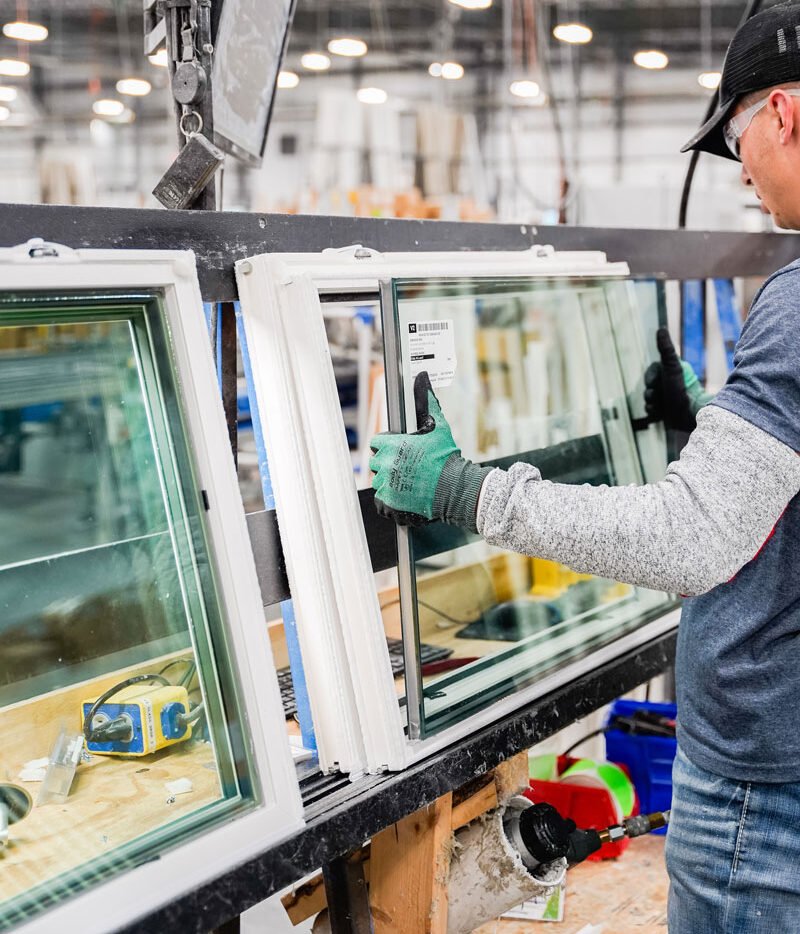
Single-pane glass has virtually no insulating value and is only appropriate if you’re matching historic windows or working in mild climates where heating and cooling costs are minimal. Double-pane with argon gas fill and Low-E coating is the current industry standard for replacement windows. It’s what most quotes assume unless you specify otherwise.
Triple-Pane: When the Premium Pays Off
Triple-pane windows typically add $75-$150 per window over double-pane equivalents. That premium buys you roughly 15-25% better insulation (measured by U-factor) and noticeably better sound reduction. Triple-pane makes the most financial sense in cold climates (IECC zones 5-7) where heating costs are high and winters are long. In moderate climates, the energy savings rarely justify the upfront premium within a reasonable payback period.
Compare the annual energy savings estimate (your contractor or a BPI-certified auditor can model this) against the added cost. If the payback exceeds 12-15 years, double-pane is the better value.
Climate Zone Guidance for Glass Selection
Energy Star recommends matching your window performance ratings to your climate zone. The two key ratings are U-factor (thermal resistance, where lower values mean better insulation for cold climates) and Solar Heat Gain Coefficient or SHGC (lower values reduce cooling loads in warm climates).
IECC Zones 1-3 (South, Southwest, Florida): Prioritize low SHGC to block solar heat gain. Consider double-pane with a spectrally selective Low-E coating. Triple-pane adds cost without proportionate benefit.
IECC Zones 4-5 (Mid-Atlantic, Midwest, parts of NJ and PA): Low U-factor and moderate SHGC. Double-pane argon-filled with Low-E is the right call for most homes.
IECC Zones 6-7 (Upper Midwest, New England, mountain states): Prioritize the lowest U-factor available. Triple-pane becomes worth the premium. Krypton gas fill outperforms argon at this tier.
Labor vs. Materials: Where Your Money Actually Goes
On a typical window replacement project, the labor-to-materials split looks like this:
Materials: 50-60% of total project cost. This covers the windows themselves, trim, flashing, sealants, and hardware.
Labor: 30-40% of total project cost. Installation time averages 1-2 hours per window for standard pocket replacements and 2-4 hours for full-frame replacements.
Overhead and permits: 5-15%. This includes disposal of old windows, permit fees (where required), and contractor overhead.
Pocket Replacement vs. Full-Frame Installation Costs
Pocket (insert) replacement keeps the existing window frame in place and slides a new sash unit into it. Full-frame replacement tears out everything down to the rough opening, including the frame and trim, and sometimes surrounding siding or drywall. The cost difference is substantial.
Pocket replacement saves $100-$300 per window in labor and typically takes half the time. It works well when the existing frame is structurally sound and square. Full-frame replacement costs more but gives you the opportunity to inspect and repair the rough opening, add proper flashing, and install a correctly sized window.
If your home was built before 1980 and has never had windows replaced, full-frame is often the safer choice because it’s common to find hidden water damage or rot in the original frame. Water infiltration around windows often ties back to broader exterior problems, since poor flashing on the roof or clogged gutters can send water directly into window frames. Know how roof flashing works and fails, and you can tell whether a rotted frame is an isolated window problem or a sign of water getting in somewhere else.
Keep this in mind: contractors who insist on full-frame replacement for every window in a house built after 2000 with vinyl or aluminum frames in good condition are often trying to upsell. Get a second opinion.
Why Window Replacement Costs Vary
Beyond window type, material, and glass package, several project-specific factors can push costs significantly higher. Here’s what to budget for.
Stories, Accessibility, and Structural Complexity
Second-story windows add $50-$150 per window due to scaffolding or ladder work. Third-story access can add even more, and some contractors require separate scaffolding rental fees. Windows above rooflines, inside shower stalls, or behind built-in cabinetry all increase labor time.
Custom sizing adds 20-40% to the window unit cost. If your openings are non-standard, which is common in homes built before 1970, every window becomes a special order with longer lead times. Egress requirements for bedrooms can also force size upgrades that affect both the window cost and the framing work needed to enlarge the opening.
Permits, Disposal, and Lead Paint Remediation
Many municipalities require permits for window replacement (typically $50-$200). Disposal of old windows runs $15-$30 per window if not included in the quote, so always ask if the estimate includes it.
Lead paint remediation for pre-1978 homes is a major cost wildcard. EPA RRP (Renovation, Repair, and Painting) rules require certified contractors for lead paint disturbance, and compliance adds $200-$500+ to the project. The fines for non-compliance start at $37,500 per day.
Signs Your Windows Need Replacement
Not every window issue requires a full replacement, but some signs point clearly toward it rather than repair. Watch for:
Failed seals: Fogging or condensation between panes that doesn’t clear. This means the insulating gas has escaped.
Rot or warping in frames: Wood frames that have absorbed water and softened can’t be patched reliably.
Drafts at the edges: If you can feel air movement around the frame during cold weather, weatherstripping alone won’t fix a frame that has shifted out of square.
Single-pane glass: Any home still running on single-pane windows is losing 25-30% of its heating and cooling energy through those openings.
Windows that stick or won’t lock: Hardware problems alone are sometimes repairable, but if the frame has warped enough that the sash won’t seat properly, replace it rather than constantly trying to adjust it.
Sometimes targeted repair extends the life of a system. Other times, the underlying structure has failed and patching only delays the inevitable.
Energy-Efficient Windows
Energy-efficient upgrades such as Low-E coatings, argon or krypton gas fill, and warm-edge spacers typically add $30-$80 per window over standard double-pane options. Here’s the question: do they pay for themselves?
ENERGY STAR reports that certified replacement windows can lower annual heating and cooling costs by up to 13%. For a home spending $2,400 per year on energy, that translates to approximately $312 in annual savings. On a 15-window project where efficiency upgrades add $1,200 total, the payback period falls in the 4-5 year range.
Real-world payback varies by climate zone, existing window condition, and home insulation quality. Replacing single-pane windows with ENERGY STAR double-pane yields the most dramatic savings. Upgrading from newer double-pane to triple-pane offers a longer payback, typically 10-15 years.
To confirm whether specific products meet the threshold for your climate zone, check the ENERGY STAR Certified Windows, Doors and Skylights product finder.
About the 25C Tax Credit
The Inflation Reduction Act’s 25C Energy Efficient Home Improvement Credit, which covered 30% of qualifying ENERGY STAR Most Efficient windows up to a $600 annual cap, applied to windows installed through December 31, 2025. As of 2026, this credit has expired and is no longer available for new installations.
If you installed qualifying windows in 2025, you can still claim the credit on your 2025 tax return using IRS Form 5695. For windows being installed now, federal tax incentives are no longer available, but state and utility programs may still offer rebates. Check your utility’s website and the DSIRE database for current state and local incentives. You can also review the IRS Energy Efficient Home Improvement Credit page for any legislative updates.
How to Compare Window Quotes and Avoid Overpaying
Getting three quotes is standard advice, but comparing window quotes is harder than comparing most home improvement bids because the specifications vary so much between contractors.
Every quote should include the following line items:
- Window brand, series, and model number (not just “vinyl double-hung”)
- Glass package details: number of panes, gas fill type, Low-E coating type
- Frame material and color
- Installation method: pocket/insert or full-frame
- Interior and exterior trim (capping, casing, sill work)
- Flashing and waterproofing method
- Disposal of old windows
- Permit fees (included or extra?)
- Warranty details: manufacturer warranty plus installer warranty, with terms
- Timeline and payment schedule
If a quote just says “10 vinyl windows installed for $7,500” with no specifications, that’s not a quote; it’s a guess. Ask for itemized details before signing anything.
Keep an eye out for these window contractor red flags:
- A deposit over 30% before work begins.
- High-pressure “today only” pricing; it’s a classic sign of a sales-driven operation that prioritizes closing over quality.
- Quotes significantly below every other bid (30%+ lower). This often means corners will be cut on flashing or trim work.
Ask every contractor whether they carry general liability insurance and workers compensation, and verify it. Ask for three recent references with phone numbers you can actually call. Contractors who resist providing references or proof of insurance aren’t worth the risk, regardless of price.
How to Save on Window Replacement
There are a few reliable ways to reduce total project cost without sacrificing quality.
Buy in bulk when possible. As the volume table above shows, a 20-window project runs 15-20% less per unit than a 5-window project. If you have aging windows throughout the house, doing them all at once usually beats phasing the work.
Choose the right style for each room. Picture windows cost $100-$300 less per opening than operable styles. Audit each room before specifying window types.
Use stock sizes wherever possible. Custom sizing adds 20-40% to the window unit cost. If an opening can be shimmed or slightly modified to accept a stock window, that usually saves money over a custom order.
Get multiple bids with identical specs. Once you know exactly which window model, glass package, and installation method you want, get at least three bids using the same specification sheet.
Check for utility rebates. Many Mid-Atlantic utilities and some state programs offer rebates for ENERGY STAR windows independent of federal tax credits. Check your utility’s website and the DSIRE database for current state and local incentives.
Financing Options for Window Replacement
Most homeowners don’t pay cash for a full-house window replacement. Here are the most common financing paths, ranked by total cost to you.
Home equity line of credit (HELOC): Typically the lowest interest rate option. Best for large projects where you have significant equity. Interest may be tax-deductible if the funds improve your home.
Manufacturer or dealer financing: Many window companies offer 0% promotional periods (12-24 months). These work well if you can pay off the balance before the promo expires. Read the fine print: deferred interest plans charge you retroactive interest on the full original amount if you carry any balance past the promotional period.
Personal loan: Fixed rates, no home equity required. Good for smaller projects.
Credit card: Usually the most expensive option. Only practical for small projects you can pay off in 1-2 billing cycles.
Get a Free Window Inspection
Window replacement cost comes down to five decisions: window style, frame material, glass package, installation method, and who does the work. You now have specific price ranges for each, the tradeoffs between budget and long-term value, and exactly what to look for in contractor quotes. Schedule a free inspection with Home Genius Exteriors where we’ll walk through itemized quotes, energy savings modeling, and straightforward guidance before you commit to any contract. Every installation is backed by the HGE Workmanship Guarantee, and financing with low monthly payments is available so the right project fits your budget.
Frequently Asked Questions
How long does a typical window replacement project take from order to installation?
Most timelines depend on product availability and whether your windows are stock or made-to-order. Stock vinyl windows in standard sizes often ship within 2-4 weeks. Custom sizes or specialty frames can take 6-12 weeks. Ask your contractor for a written schedule that separates lead time, installation days, and any follow-up visits for trim or touch-ups.
How should I prepare my home before the installers arrive?
Clear a few feet around each window inside and outside, remove blinds or curtains, and protect nearby furniture and floors. If you have security sensors or window AC units, coordinate removal and reinstallation ahead of time.
How do I choose the right window contractor beyond comparing prices?
Look for a contractor with a clear installation process, good local reviews, and a track record with your home type and siding material. Confirm whether employees or subcontractors will do the work, and get the installer warranty details in writing.
Do window replacements increase home value?
Windows can improve perceived condition and marketability, which may help at resale even if you don’t recoup every dollar spent. If you’re selling soon, prioritize widely appealing choices like neutral colors and reputable brands.
What are the most common mistakes homeowners make when picking new windows?
The biggest mistakes are choosing products based on price alone and mixing styles that look inconsistent from the curb. It also helps to confirm exterior color and grid patterns with a sample before ordering, since small design choices can change the whole facade.
How do I maintain new windows so they last as long as possible?
Clean tracks and weep holes, inspect caulk lines seasonally, and lubricate moving hardware as recommended by the manufacturer. Avoid harsh abrasives on glass coatings and confirm what cleaners are approved for your frame finish.
What questions should I ask about warranty coverage before I sign a contract?
Ask what is covered for glass seal failure and hardware, and whether coverage is prorated over time. Check if the warranty is transferable to someone who buys your home in the future and what documentation you must keep to make a claim. Also ask whether the installer warranty is backed by the contractor’s own business or through a third-party program.
What’s the difference between U-factor and SHGC on a window label?
U-factor measures how much heat passes through the window. Lower values mean better insulation, which is the most important in cold climates. SHGC (Solar Heat Gain Coefficient) measures how much solar heat enters through the glass. Lower values block more heat, which matters most in warm or sunny climates. For most Mid-Atlantic homes, look for a U-factor below 0.30 and an SHGC below 0.30.