What Is a Picture Window?
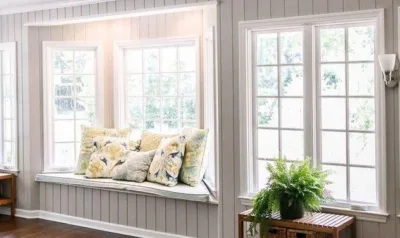
You’ve seen “picture window” on a floor plan or a contractor’s quote, and it’s not obvious what separates it from any other window on the list. The difference is one design choice: the glass never opens.
That one choice gives you an unbroken pane of glass, and it also means the window can’t do some of the jobs a window that opens can. To see where one fits in your home, start with what a picture window is and how its fixed glass is built.
Table of Contents
- What is a picture window?
- Why a picture window seals tighter than other window styles
- Sizes and the best rooms for this style
- The trade-offs of fixed glass
- Picture windows combined with windows for airflow
- Picture window vs. a bay window or a window above a door
- How this style compares with other windows
- Glass and frame options
- What does a picture window cost compared to other styles?
- The installation work that makes the seal airtight
- Ready to replace or add a picture window? Start with a free inspection
- Frequently Asked Questions
What is a picture window?
A picture window is a fixed window that doesn’t open, built to maximize natural light and an unobstructed view. Because it has no moving parts, it also has fewer joints for air to get through than a window that opens.
Why a picture window seals tighter than other window styles
Every window that opens has moving parts, whether it’s a double-hung (two panels of glass that slide up and down), a casement (hinged at the side and cranked outward) or a slider (glass that slides sideways). Weatherstripping seals the gap when you close it and a lock pulls it tight, and each of those joints is a place where air can leak.
A picture window has none of those moving parts. The glass is sealed into the frame at the factory, so the only places air can get through are the frame itself and the seal around the glass, and neither of them moves.
Energy ratings on the window label
Windows certified by the National Fenestration Rating Council, an independent testing group, have a label that lists their energy performance ratings. The U-factor measures how much heat escapes through the window, and the lower it is, the better the window insulates. The solar heat gain rating measures how much of the sun’s warmth the glass lets in, on a scale of 0 to 1, and a lower number means less of it comes through.
When you compare quotes, ask for both numbers on every window, along with the price.
Sizes and the best rooms for this style
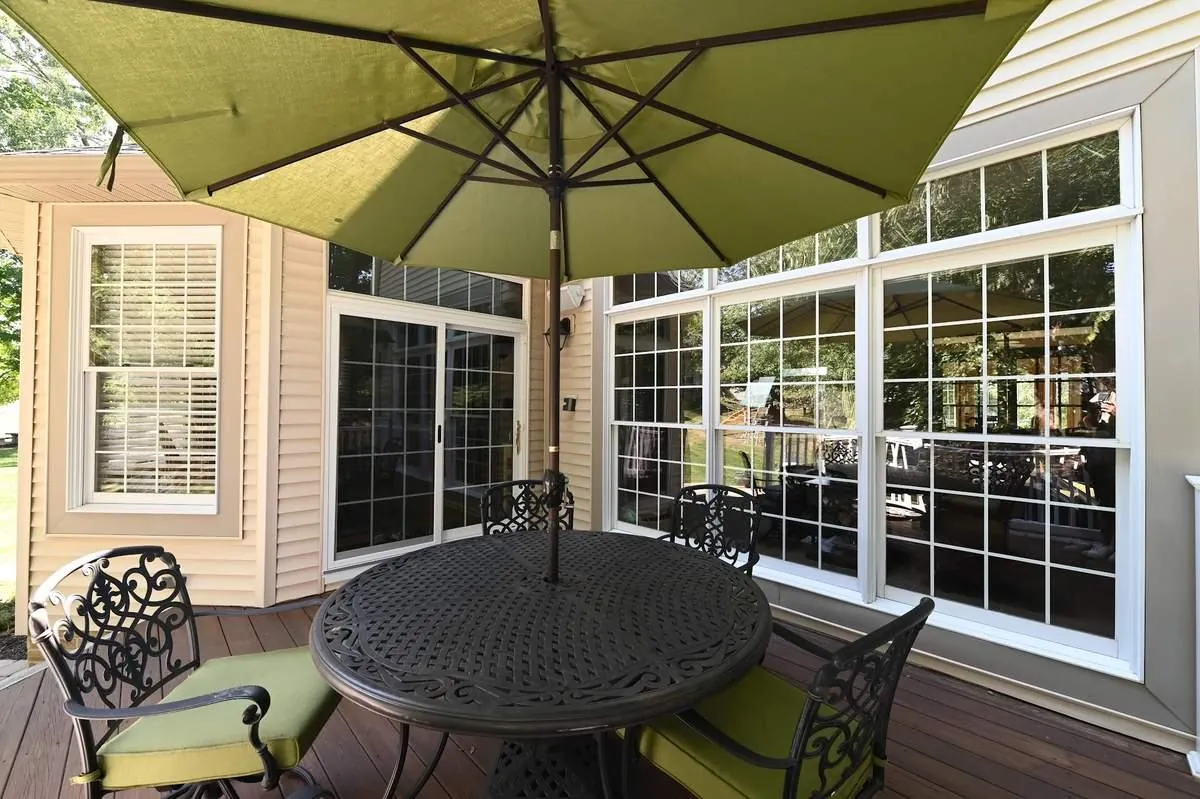
Picture windows come in standard and made-to-order sizes, from a small accent window to a wall of glass, so the size is set by the wall you’re filling.
Best rooms for a picture window
Living rooms and great rooms are a common place for a picture window, especially on a wall with a view.
Stairwells and hallways are another good fit, since the windows there rarely get opened, and so are rooms with vaulted ceilings, where a window high on the wall is hard to reach.
In a kitchen, a picture window works well above the counter or sink, with a window that opens nearby to clear cooking smells and heat.
Home offices and dining rooms work too, anywhere you want daylight and a view more than air.
The trade-offs of fixed glass
Each limit of a picture window has a workaround, usually in the window you pair it with or the glass you order.
No ventilation
If you want fresh air in the room, you’ll need a second window that opens, or a fan or other mechanical ventilation.
No emergency exit
Building codes require every bedroom to have at least one window large enough for a person to climb out of in an emergency.
A picture window can’t open, so it can’t be that exit. A bedroom with one also needs a second window that opens and meets the egress window requirements, the code’s minimum size and sill height for an emergency exit.
Exterior cleaning access
Many double-hung windows tilt in, so you can clean the outside glass from inside the house.
A picture window doesn’t move, so its outside glass has to be cleaned from outdoors, and on a second story that can mean hiring a window-cleaning service.
Solar heat gain on south and west walls
A large picture window on a south-facing or west-facing wall lets in a lot of solar energy.
In winter, that sun warms the room. In summer, it adds to what you spend on air conditioning.
A low-emissivity (low-E) coating is a thin layer on the glass that slows heat moving through it. Low-solar-gain low-E glass also cuts the sun’s heat coming in while letting most of the light through, and it still reduces heat loss in winter.
If summers run hot where you live, ask for low-E glass with a low solar heat gain rating on that window.
Picture windows combined with windows for airflow
A picture window can be installed with windows that open on one or both sides, or below it.
One setup puts the picture window in the center with a casement on each side, so the center gives you the view and the most light.
Double-hung windows can go on the sides instead.
An awning window, a small window hinged at the top that opens outward from the bottom, can also go below a picture window to let air in without breaking up the view.
Ask your installer to match the frame color and glass across the whole group so the windows look like one set.
Picture window vs. a bay window or a window above a door
A small fixed window above a door or in a bathroom isn’t usually called a picture window. The name is for a larger pane that’s the main source of light and view on its wall.
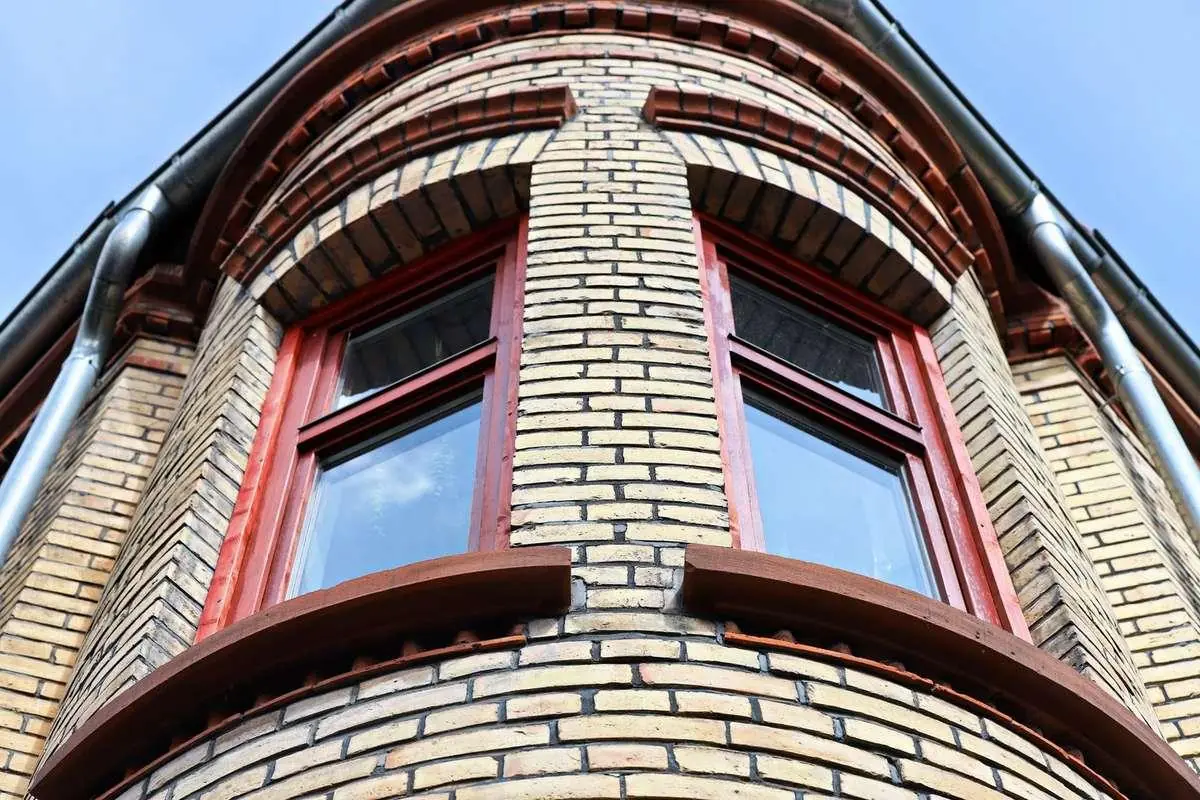
A transom window sits above a door or another window and may or may not open, so its name comes from its position. A picture window’s name comes from its job, framing a view.
A bay window projects outward from the wall to make a small alcove inside, and it can have a picture window in the center with a window that opens on each angled side.
How this style compares with other windows
| Feature | Picture Window | Double-Hung | Casement | Sliding |
|---|---|---|---|---|
| Ventilation | None | Yes (top and bottom) | Yes (full opening) | Yes (half the opening) |
| Emergency exit | No | Yes (if sized correctly) | Yes (if sized correctly) | Yes (if sized correctly) |
| Air Leakage | Lowest (no moving joints) | Moderate | Low to moderate | Moderate to high |
| Maximum Glass Area | Largest (no moving frame) | Reduced by the moving frame | Reduced by the hinged frame | Reduced by the overlapping frame |
| Window Price (Same Size) | Lower | Moderate | Moderate to higher | Moderate |
| Cleaning the Outside Glass (Upper Floors) | Cleaned from outside | Tilt-in frames available | Reachable when open | Exterior access often required |
Glass and frame options
Glass packages
Picture windows come with double-pane or triple-pane glass. Double-pane glass is two layers of glass with a sealed gap between them, filled with air or argon gas.
Argon is denser than air, so less heat moves across the gap.
Triple-pane glass has a third layer and a second gas-filled gap, so it insulates better, but the window is about 50% heavier. Double-pane and triple-pane windows also differ in installed price: double-pane costs $450 to $850 per window, compared with $750 to $1,400 for triple-pane.
Frame materials
Vinyl frames never need painting and cost the least of the four frame materials here.
Fiberglass frames are strong and expand and contract at nearly the same rate as the glass, but they cost more than vinyl.
Wood frames give the room a traditional look inside, but they need painting or staining every few years to keep moisture out.
Aluminum frames are durable and low maintenance. Because metal conducts heat, aluminum frames on windows that earn Energy Star certification, the federal efficiency label, typically include a thermal break, an insulating strip inside that cuts heat loss through the metal.
What does a picture window cost compared to other styles?
The installed price depends on the size, the frame material, the glass and whether you’re replacing a window or cutting a new one into the wall, so ask each contractor to quote the same size and glass.
Window replacement cost varies by style: a standard-size picture window costs $250 to $800 installed, compared with $350 to $900 for a double-hung and $400 to $1,100 for a casement. A made-to-order picture window is priced to its size.
The installation work that makes the seal airtight
How well a picture window keeps air out also depends on the seal between its frame and the wall around it.
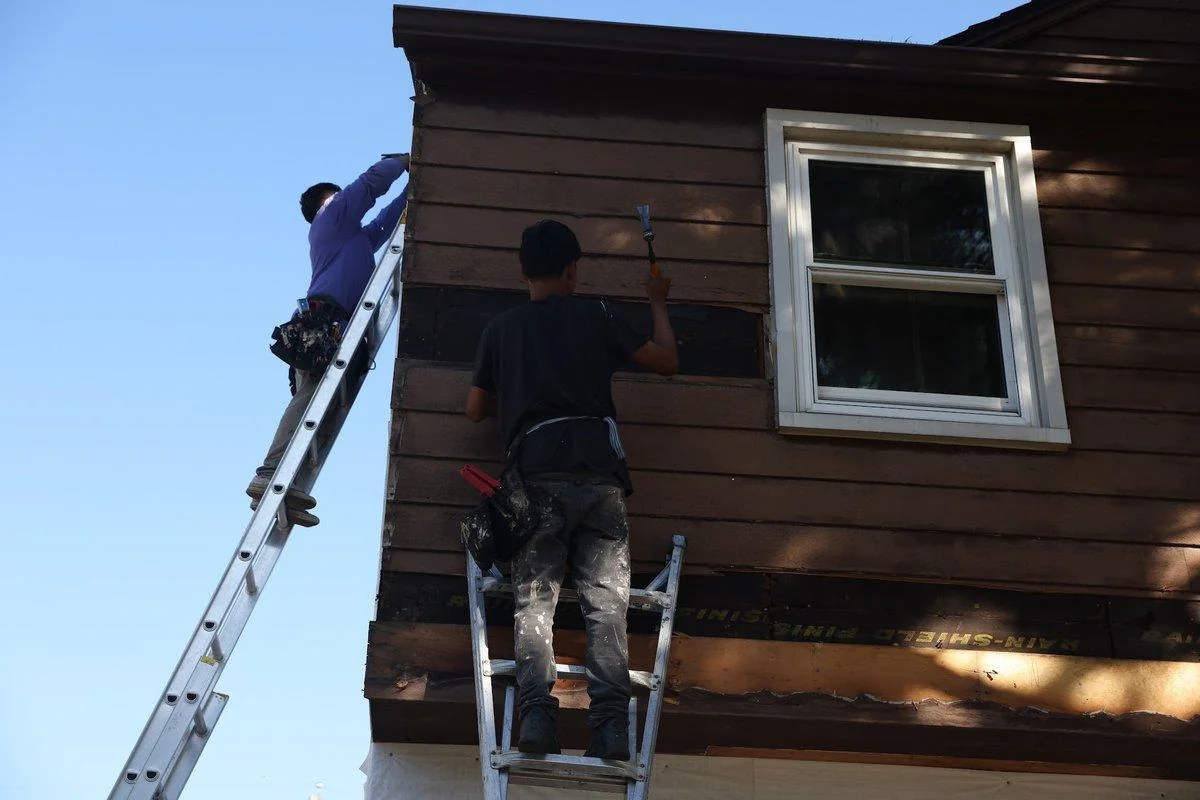
A professional crew levels the frame on all sides, seals the gap around it with tape and foam so water and air can’t get behind it, and checks that the frame isn’t bowed anywhere before the trim goes back on.
Ask the crew how they check that seal for gaps.
Ready to replace or add a picture window? Start with a free inspection
Home Genius Exteriors provides free inspections and installs ProVia windows across a full range of styles, including picture windows. Their installations are backed by the Genius Limited Lifetime Warranty on workmanship, with materials covered under the manufacturer’s warranty. Call today to schedule your free inspection and find out which window combination fits your home.
Frequently Asked Questions
How do you replace a picture window?
The crew measures the old window first so the new one matches its frame size, then removes the interior and exterior trim and the old window before setting, sealing, and refinishing the trim around the replacement.
What is an image window?
There’s no window style by that name. It’s another name some people use for a picture window: a large window with glass that doesn’t open.
Can a picture window be opened?
No. The glass is sealed into a frame with no hinges, cranks or track. If you want air from that spot, a casement or double-hung of the same size can go in its place, or a smaller picture window with a window that opens beside it.
Is a picture window cheaper than a regular window?
Usually. A standard picture window is priced below a double-hung or casement of the same size because there’s no hardware to build, but a made-to-order one is priced to fit your wall, so compare installed quotes.
What are the standard sizes for large picture windows?
There isn’t a single standard size. Manufacturers make picture windows in a range of stock sizes, and a larger one is built to order, so a contractor measures your wall before quoting it.
Are picture windows a good idea?
They’re a good idea on a wall where you want light and a view more than fresh air. A picture window also costs less than a window that opens in the same standard size, so using one where you’d never open the glass keeps the price down.
Are picture windows still in style?
Yes. ProVia still makes picture windows as one of its standard window types, with window grids available for a more traditional look.