Composite Shingles vs. Asphalt: Which Roof Material is Right for Your Home?
Choosing between composite shingles and standard asphalt shingles can mean the difference between replacing your roof once and replacing it twice in the same time period. Your roofing material can affect everything from monthly energy costs to your home’s resale value, and you’ll be in the best position to move forward when you’re able to compare features and benefits.
Keep reading for an in-depth look at everything you should know about composite shingles and asphalt shingles, how they stack up to each other in terms of cost and longevity, and which one is the right choice for your home.
What Are Composite Shingles?
The term “composite shingles” can be confusing because roofers, retailers, and manufacturers don’t always use it the same way. In its broadest sense, a composite shingle is any roofing product made from a blend of materials rather than a single raw substance.
However, the industry increasingly reserves composite shingles to mean synthetic composite shingles, which are engineered from polymers, recycled plastics, rubber, and other advanced materials designed to mimic the look of slate, wood shake, or architectural asphalt.
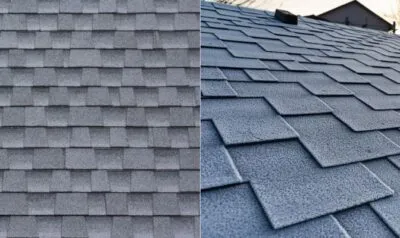
Traditional asphalt shingles also qualify as “composition” shingles because they combine a fiberglass mat, asphalt coating, and ceramic granules. This overlap explains why you’ll see “comp shingle roofing” used loosely online to describe both categories.
For clarity throughout this guide, “composite” refers to the newer synthetic products, while “asphalt” covers standard three-tab and architectural asphalt shingles.
Composite Shingles vs. Asphalt Shingles
Asphalt shingles dominate the American housing market, covering up to 80% of residential roofs. That popularity stems from low upfront cost and material availability. Composite shingles, while newer and less ubiquitous, challenge asphalt on nearly every long-term performance metric.
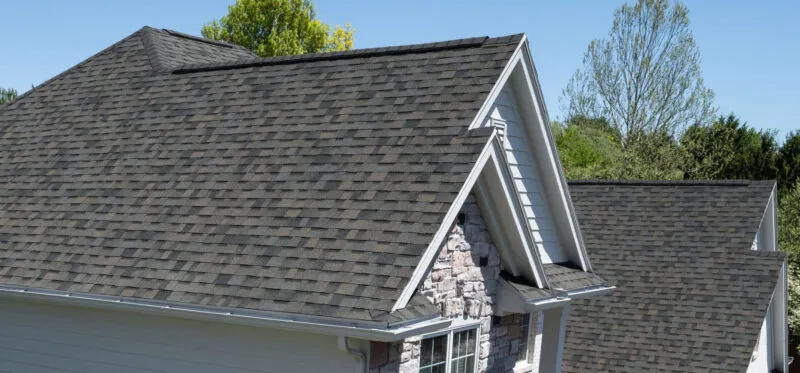
Composite Shingles Are More Durable
Between composite and asphalt, composite is the clear winner for longevity as a roofing material.
Synthetic composites are molded under high pressure to replicate natural textures, and they resist cracking, curling, and algae growth better than organic products. Asphalt shingles rely on petroleum-based coatings for waterproofing, which makes them more vulnerable to UV degradation over time.
Composite shingles are far more durable than asphalt shingles. Composite/synthetic shingles can last up to 50 years, compared to 15-20 years for three-tab asphalt. Architectural asphalt shingles can last 25–30 years under ideal conditions, but they still fall short of premium composites.
Composites also earn higher impact resistance and wind uplift ratings. Many carry Class 4 impact ratings (the highest available) and withstand wind speeds of 110 mph or more. Standard asphalt shingles typically top out at Class 3 impact resistance and 60–70 mph wind ratings unless you upgrade to premium architectural lines.
Asphalt Costs Less Upfront
When it comes to the initial investment, asphalt is cheaper. Expect to pay roughly $3.50–$5.50 per square foot installed for quality architectural asphalt, versus $6.00–$9.00+ per square foot for synthetic composite shingles.
On a typical 2,000-square-foot roof, that translates to approximately $7,000–$11,000 for asphalt and $12,000–$18,000 for composite.
However, when you calculate the annual cost of ownership, composite ends up providing more long-term value:
| Factor | Three-Tab Asphalt | Architectural Asphalt | Synthetic Composite |
|---|---|---|---|
| Installed Cost (2,000 sq ft roof) | $5,000–$8,000 | $7,000–$11,000 | $12,000–$18,000 |
| Expected Lifespan | 15-20 years | 20–30 years | 30–50+ years |
| Estimated Annual Cost | $250–$400 | $233–$440 | $240–$600 |
| Re-Roof Needed in 50 Years? | Yes (2–3 times) | Yes (1–2 times) | Possibly never |
| Typical Wind Rating | 60–70 mph | 110–130 mph | 110–150 mph |
| Impact Resistance Class | 1–2 | 2–3 | 3–4 |
When you factor in at least one full re-roofing cycle for asphalt, composite shingles often match or beat asphalt’s total lifetime cost while delivering superior protection throughout.
Put simply, in terms of cost per year of ownership, composite actually wins.
Composite Has Better Curb Appeal
Asphalt shingles offer a conventional look and come in a wide array of colors. While architectural versions add some dimension, they generally provide a uniform, mass-produced appearance that can’t replicate the unique character of natural materials. Their primary appeal is function and familiarity.
Composite shingles are designed to be a significant aesthetic upgrade. They convincingly mimic the premium look of natural slate, cedar shakes, or clay tile, featuring authentic textures, varied profiles, and rich color blends. This ability to create a high-end, custom look similar to luxury shingles gives composite shingles a major advantage in boosting a home’s curb appeal.
Composite Has Better Warranties
Asphalt shingle warranties are typically “limited lifetime,” which means the coverage is heavily prorated after an initial period of 10-20 years. They primarily cover manufacturing defects, and labor costs are often excluded after that initial window. Wind and hail damage coverage can be limited.
Composite shingle warranties are generally superior, often providing 50-year non-prorated coverage for both materials and labor. This means you get full replacement value for a much longer period. They also tend to include stronger protection, such as Class 4 impact resistance for hail and higher wind ratings, offering better peace of mind.
Should I Choose Composite Shingles or Asphalt Shingles?
While it’s tempting to go the budget route, keep in mind the maintenance schedule, your local climate, and how long you think you’ll stay in the home.
First, let’s compare maintenance requirements:
- Asphalt shingle maintenance: Asphalt shingles need regular inspection for granule loss, curling, and moss growth. You should plan for gutter cleanings twice a year and budget for spot repairs as shingles age past the 15-year mark.
- Composite shingle maintenance: Most manufacturers recommend an annual visual inspection and occasional debris removal. Their resistance to algae, moss, and UV damage eliminates the need for chemical treatments that are expected for asphalt roofs.
Here’s how these two shingle types measure up for energy efficiency and sustainability:
- Asphalt shingle waste represents one of the largest contributors to construction landfill volume. While some recycling programs exist, participation is limited. Composite shingles often incorporate recycled content in their manufacturing process, and their longer lifespan means fewer tear-offs over a building’s lifetime.
- When it comes to energy efficiency, lighter-colored composite shingles reflect more solar radiation than dark asphalt, potentially reducing cooling costs by 10–15% in sun-heavy regions.
If sustainability ranks high on your priority list, composite outperforms traditional asphalt.
Your best roofing material depends on more than just aesthetic preference. Here’s the final consensus:
- Budget-conscious homeowners (under 10 years in the home): Architectural asphalt delivers solid performance at the lowest entry point. You’ll get a reliable 25–30 year roof without the premium investment.
- Long-term homeowners (15+ years): Composite shingles pay back their higher upfront cost through reduced maintenance, fewer repairs, and the likelihood of never needing to replace the roof while you live in the home.
- Homeowners in hail-prone or high-wind areas: Composite’s Class 4 impact rating and 110+ mph wind resistance make it the strongest performer. Some insurers even offer premium discounts for impact-resistant roofing.
- Historic or luxury homes: Composite products that replicate slate or cedar shake provide the aesthetic sought after by HOA boards and historic commissions, without the weight and fragility of natural stone or wood.
- Eco-conscious homeowners: Composite’s recycled content and extended lifespan make it a strong sustainability choice.
If you’re unsure where your home falls, start with three questions: What’s your 10-year plan for this property? What weather threats do you deal with in your area? And what does your HOA allow? Those answers eliminate options faster than any spec sheet.
Make the Right Roofing Investment for Your Home
Composite shingles have earned their growing market share by solving the problems traditional roofing materials leave behind. They last longer than asphalt, require less maintenance than wood, and cost less than metal, all while offering aesthetic versatility that satisfies even the strictest neighborhood standards. For homeowners planning to stay put, this exterior investment gives you an excellent long-term return for your money.
The right choice depends on your unique circumstances. That’s why it’s important to work with an experienced contractor like Home Genius Exteriors, who’s seen virtually every situation and can recommend the best materials for your preferences and budget. As an Owens Corning Platinum Preferred Contractor, we help homeowners evaluate the roof’s condition, compare materials against budget and climate, and select comp shingle roofing or other options backed by Platinum Warranties that cover both labor and materials. Get in touch today for a free inspection and estimate so you can make your next roofing decision with confidence.
Frequently Asked Questions
How do warranties differ between composite shingles and asphalt shingles?
Warranty terms vary by brand, but composite products often emphasize longer material coverage and stronger guarantees tied to enhanced performance features. Always ask whether coverage changes with ventilation, underlayment choices, or contractor certification, and get the full warranty in writing.
What should I ask a roofing contractor before choosing composite shingles?
Request proof of licensing, insurance, and recent installations, then ask how they handle ventilation, flashing details, and deck prep. Also confirm which product line they’re quoting, the accessory components that are included, and who manages permit and inspection requirements.
Do composite shingles require special roof decking, underlayment, or ventilation?
Most homes don’t need special decking, but the roof must be structurally sound, properly ventilated, and paired with the underlayment specified by the manufacturer. Your contractor should document the system build, including ice and water protection where required by building codes for roof replacement.
How do composite shingles perform in cold climates with ice dams and freeze-thaw cycles?
Performance depends more on roof design and installation than shingle type, including insulation levels, airflow, and ice and water barrier placement. If ice dams are common in your area, ask for a cold climate detailing plan rather than relying on material choice alone.
Will composite shingles change the look of my home compared to asphalt?
Composite shingles can create a more dimensional, premium appearance because many profiles mimic slate or shake more convincingly than standard asphalt styles. To avoid surprises, review full-size samples in daylight and ask for local addresses where the same color has been installed.
What is the typical installation timeline for a composite shingle roof?
Many residential projects can be completed in a few days, but timing depends on roof complexity, weather, tear-off scope, and any deck repairs found during removal. A detailed proposal should outline start to finish expectations, daily cleanup, and how delays are handled.