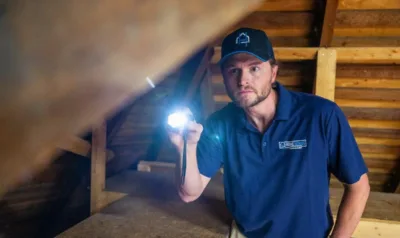
Can a Drone Replace a Roof Inspection?
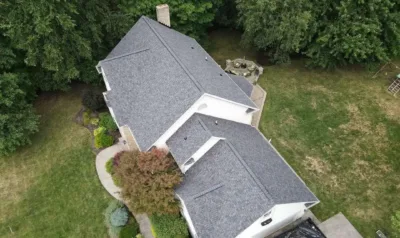
A drone roof inspection can have every square foot of your roof photographed in half an hour. No one needs to climb a ladder, and the images are sharp enough to count missing shingles from the driveway. However, that footage won’t tell you if the plywood under those shingles has gone soft, which is the finding that turns a simple shingle repair into a complex structural one.
If a roofer has offered you a drone roof inspection, or you’ve watched a quadcopter circle a neighbor’s house after a hailstorm, this guide outlines which parts of a roof inspection a camera can do and which parts still need hands.
Can a Drone Replace a Roof Inspection?
No. Think of a drone roof inspection as a screening and documentation tool that works alongside a physical inspection. A camera in the air records surface conditions across the whole roof quickly and safely, but it can’t press on decking to find soft spots, lift shingles to check the seal and the nailing, probe flashing for cracked sealant, or look at your attic from the inside. The most complete inspection combines the aerial photos with a professional on the roof.
What Happens During a Drone Roof Inspection?
A pilot flies a small camera-equipped aircraft along a planned path around and above the house, capturing overlapping photographs that software can stitch into one detailed overhead view. Some drones carry a thermal camera, which reads surface temperature differences that can point to moisture trapped under the roof covering.
For a single-family home, the flight itself takes 30 to 60 minutes. Afterward the inspector reviews the images on a screen, zooms into anything that looks wrong, and sends you a report with labeled photos (and may include measurements of the roof’s footprint).
What a Drone Does Well
Aerial photos are good for anything you could recognize with your own eyes if you were hovering above the house:
- Missing, lifted, or visibly damaged shingles across the whole roof at once
- Standing water and debris on low-slope sections, which are hard to see any other way
- Storm damage patterns over a wide area
- The roof’s shape and measurements, useful for a first estimate
Walking on tile or slate can crack the material underfoot, and a roof steep enough to need a harness is a fall risk even for an experienced roofer. In these circumstances, a drone is often the only way to get a complete look at the surface, and if you’re documenting hail damage on your roof, a wide aerial view shows the impact pattern in a way ground-level photos don’t.
What a Drone Can’t Do
The limits come from the difference between looking at a roof and touching one:
Drones can’t find soft decking. When a roofer walks a roof, they’re feeling through their boots for spots that give. A spongy or bouncy patch means the decking underneath, the plywood or strand board your shingles are nailed to, has taken on water and started to rot. No camera detects it.
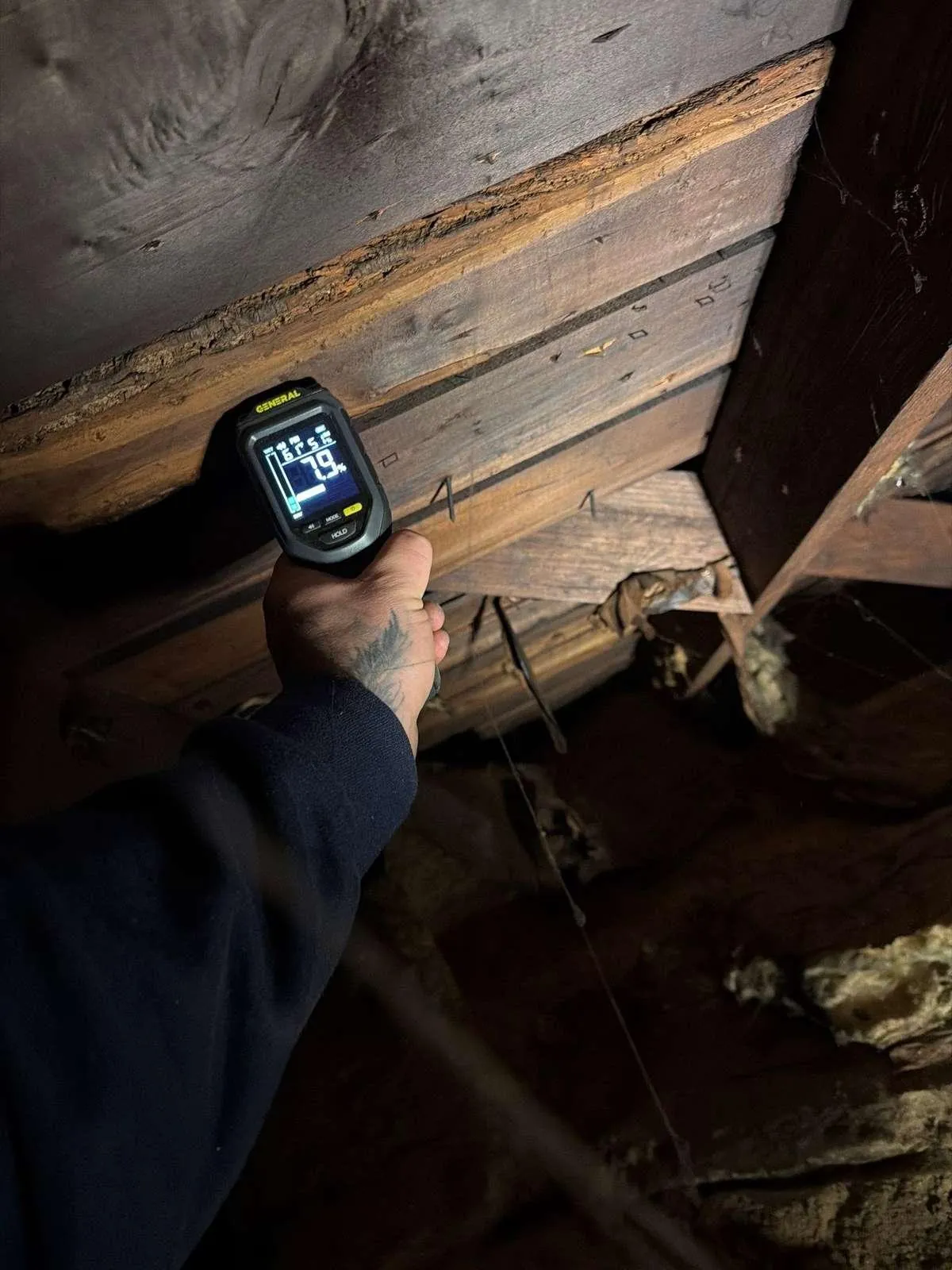
Drones can’t lift shingles or probe flashing. Roofers lift individual shingles to check the seal strip (the adhesive line that bonds each shingle to the one beneath it) and to count the nails holding it down. A shingle with a broken seal, or three nails where the manufacturer specifies four, looks completely normal from 50 feet up. But it’s the one that blows off during the next big storm.
Flashing, the metal that seals the joints where your roof meets a wall, a chimney, or a vent, has the same problem. It gives way slowly as its sealant cracks and pulls away. A roofer identifies this by pressing on it. A photograph can show flashing that’s already fallen off, but that’s about it.
Drones can’t access your attic. Well, they technically can, but it wouldn’t make sense to send one in when a roofer can do a manual inspection. Water shows up on the underside of a roof long before it shows up on top. An attic inspection catches stains on the rafters, condensation from bad ventilation, and wet insulation. If a report includes only what the camera captured, the underside of the roof went unexamined.
Drones aren’t reliable in high wind, rain, or high-glare situations. Direct sun washes detail out of the photos, especially on light-colored shingles. Wind and rain ground the aircraft outright. That’s most limiting right after a storm when you’re looking for a roof inspection.
How Much Does a Drone Roof Inspection Cost?
A standalone residential drone survey costs $150 to $400, depending on roof size and complexity, and adding thermal imaging typically costs another $100 to $200. A contractor who already inspects for free may fly a drone as part of that visit. That free inspection often becomes the starting point for estimating your eventual roof replacement cost.
| Factor | Drone inspection | Physical inspection |
|---|---|---|
| What it detects | Surface damage, missing shingles, standing water, roof layout and measurements | Everything above plus soft decking, broken seals, nailing problems, and attic moisture |
| Cost | $150 to $400 standalone, often free as part of a contractor’s inspection | Often free from a roofing contractor, or $200 to $700 from an independent inspector |
| Time on site | 30 to 60 minutes | Longer, because the attic and the surface both get checked by hand |
| Safety | Nobody on the roof, so steep, fragile, or storm-damaged roofs are no problem | Needs ladder and roof access, and tile or slate can crack underfoot |
| Main limitation | No touching anything, no attic, grounded by weather | Some roofs are unsafe to walk |
How Drone Photos Affect an Insurance Claim
Insurers fly drones themselves. Underwriting and claims adjustment are both listed among the commercial applications of drone technology, which means the aircraft over your house may be working for your insurance company rather than for you. Your own aerial photos are useful in a claim for the same reason theirs are: they show an adjuster the full extent of storm damage, especially across a roof where wind damage is scattered.
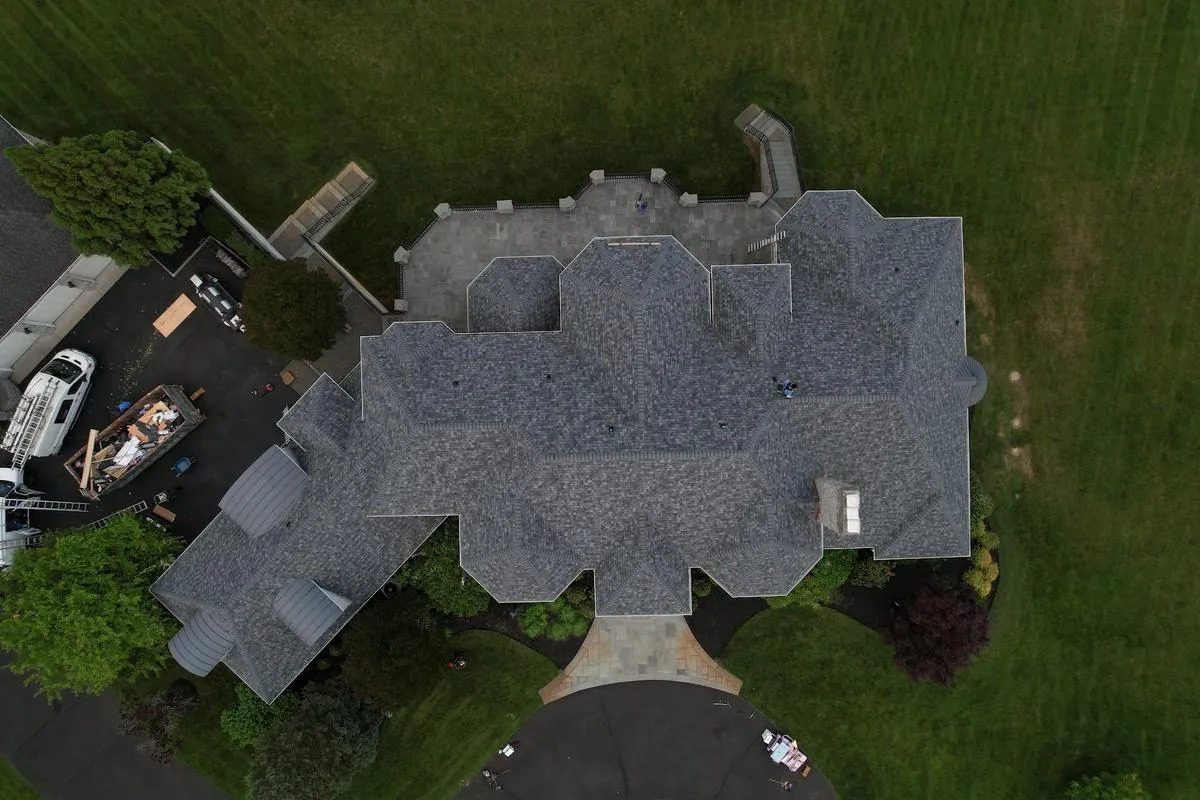
Accuracy is the problem. Aerial assessments of roof condition have gone wrong often enough to attract legislation. Imprecise drone and satellite photos used to judge roofs have led to policies being wrongly canceled or not renewed, and legislators have introduced bills that require transparency when insurers take or obtain aerial images, and give homeowners rights over how those images are used in a nonrenewal. If a photograph of your roof taken from 100 feet up can cost you your policy, get your own close-up documentation of what’s up there first.
Either way, aerial photos rarely settle a claim on their own. An adjuster will still want close-up evidence of specific defects, and that comes from a written assessment by someone who was physically on the roof.
Can You Fly Your Own Drone Over Your Roof?
You can legally fly a consumer drone over your own house for fun, but the footage is unlikely to be detailed enough for a roof inspection. Consumer cameras resolve less detail than commercial units and have no thermal sensor.
On top of that, interpreting roof photos is a separate skill from capturing them. A dark streak across a shingle might be algae (which is cosmetic), or granule loss from hail (which would be part of a claim). It takes training to tell those apart, and it could lead to expensive mistakes if you get it wrong.
Anyone flying a drone commercially over your property needs a Remote Pilot Certificate from the FAA. Add this to the list of questions to ask a roofer before you hire.
When to Perform a Drone Roof Inspection
A drone is the right choice when the roof is too steep, too fragile, or too damaged to walk safely. The images show the roofer where to concentrate once it’s safe to get up there. After a bad storm, aerial coverage of the whole roof is the fastest way to find out if there’s a problem, and if damage is scattered or concentrated.
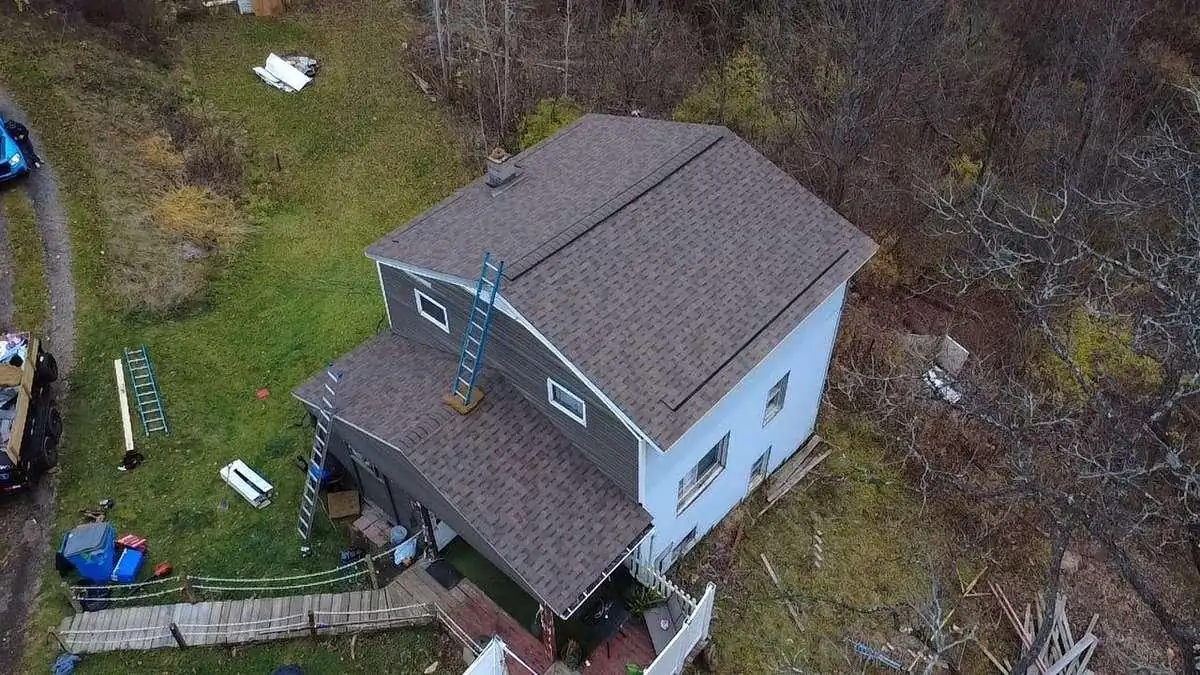
You can also set a good baseline by taking aerial photos every year. You’ll be able to make accurate comparisons as the roof ages, which is more useful than trying to remember what it looked like last spring.
See What the Camera Can’t
Home Genius Exteriors provides free inspections that include both the roof surface and the attic, which is the part a drone inspection won’t cover. Call today to get on the schedule, and ask about financing if the roof turns out to need more than a repair. Bring your drone photos to the appointment if you have them, because they’re a useful starting point.
Frequently Asked Questions
Is a drone roof inspection worth it?
Yes, as one part of an inspection. It’s the safest way to survey a steep or fragile roof and the fastest way to document storm damage across a whole roof. Don’t pay for one on its own if a contractor will inspect the roof and the attic for free.
How much should I pay for a roof inspection?
Many roofing contractors, including Home Genius Exteriors, offer free inspections. An independent inspector’s written report costs $200 to $700, and a standalone drone survey costs $150 to $400 (thermal imaging adds around $100 to $200). Pay for an independent inspection when the report has to persuade someone else, like a buyer or an insurance adjuster.
Do I need a license to fly a drone for roof inspections?
Flying over your own property for personal use doesn’t require a license. Anyone flying commercially, including a roofer or an inspection company working on your house, needs an FAA Remote Pilot Certificate.
Do insurance companies use drones to check roofs?
Yes. Underwriting and claims adjustment are among the established commercial uses of drones, so aerial images may be affecting your coverage. Those assessments have been wrong often enough that California legislators have moved bills forward that require transparency and protect homeowner rights over the images.