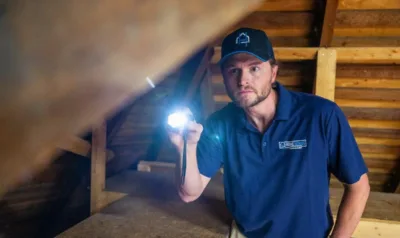
Why Home Inspectors Should Always Do An Attic Inspection
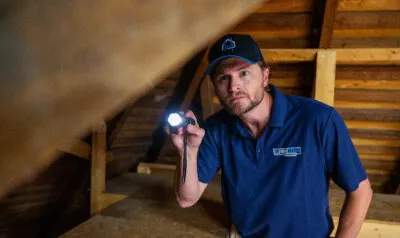
The attic is the one space where roof leaks, ventilation failures, and structural problems show up first, often months before any sign reaches the ceiling below. Home inspectors and roofing contractors should always conduct a thorough attic walkthrough to check insulation depth and condition, ventilation intake and exhaust, framing integrity, moisture indicators, and pest activity.
A roof can look perfect from the ground and still be rotting from the inside. That’s the uncomfortable truth about skipping an attic inspection during a home evaluation. The damage that costs homeowners thousands of dollars almost always starts overhead, hidden behind insulation and above ceiling drywall, where only a trained eye and a willingness to climb up there can catch it early.
Whether you’re preparing for a home purchase or just wondering what’s going on above your head, this is the information you need before your next inspection.
Why Get An Attic Inspection
Think of the attic as the space where your roof system and building envelope converge. A roof leak might take months to stain a ceiling, but the water damage in the attic is often immediate and visible. Ventilation failures that slowly cook your shingles from below leave clear evidence on the underside of the roof deck long before the shingles themselves show wear.
What makes this space so important is the cause-and-effect chain. Compressed or water-stained insulation signals a leak source, a ventilation failure, or both. A professional can also evaluate whether full attic insulation installation makes more sense than a partial fix. Rust halos around nail points on the underside of roof sheathing tell you condensation has been forming repeatedly, which means the attic isn’t breathing properly.
Cracking or sagging framing members suggest long-term moisture exposure or structural overload. Heat-stressed sap and resin deposits on rafters indicate that temperatures are climbing far beyond normal ranges. Each of these findings points backward to a root cause and forward to a repair that only gets more expensive with time.
Attic Inspection Checklist
A complete attic review covers more ground than you may realize. This checklist reflects what a qualified inspector should evaluate and gives you a baseline for what your own inspection report should include.
- Roof framing and sheathing: Look for cracked or sagging rafters and trusses. Check the underside of the roof deck for delamination and dark staining.
- Insulation depth and condition: Measure insulation depth against Energy Star’s recommended R-values for your climate zone. Note whether insulation is compressed, displaced, or discolored. Replacing it affects your attic insulation cost, so budget for it before a contractor arrives.
- Ventilation intake and exhaust: Make sure soffit vents are open and unblocked. Check ridge vents or gable vents for obstructions or damage.
- Moisture and water intrusion signs: Look for active drips, water staining on wood or insulation, and mold or mildew growth.
- Condensation indicators: Check for frost on nail tips in cold weather and rust halos around fasteners.
- Exhaust duct routing: Make sure bathroom fans and dryer vents terminate outside the building, not into the attic space.
- Electrical hazards: Note exposed or damaged wiring and junction boxes without covers. Flag any knob-and-tube wiring buried under insulation.
- Pest and rodent evidence: Look for droppings, gnaw marks, and damaged insulation that suggests animal activity.
- Plumbing vent stacks: Check that plumbing vents penetrate the roof properly without cracked boots or flashing failures.
- HVAC equipment condition: If mechanical systems are in the attic, check for condensate leaks and disconnected ducts.
If your inspector’s report doesn’t address most of these items, ask about them.
Attic Moisture Signs You Should Never Ignore
Moisture is the single most destructive force in an attic, and it’s also the sneakiest. Water can travel along rafters and sheathing for several feet before it drips, which means the stain you see on a ceiling might be nowhere near the actual leak source.
Wet or darkened insulation: Fiberglass insulation that’s turned brown or black has been filtering moisture-laden air or absorbing water directly. This insulation loses most of its R-value when wet, so your energy bills quietly climb while the real damage happens underneath.
Wood rot on sheathing or framing: This usually means the moisture source has been active for a while.
Fungal growth or visible mold colonies: This requires professional assessment. A musty smell alone, even without visible growth, often indicates elevated humidity levels that will eventually cause damage if ventilation isn’t corrected.
Condensation on nail tips: When warm, moist interior air reaches the cold attic, it condenses on the coldest surfaces first. Nail shanks that penetrate the roof sheathing are perfect condensation points. Over time, these drips stain the insulation below and create localized rot around each fastener.
Ventilation Failures That Only Show Up From Inside
A properly ventilated attic maintains air temperature close to what’s outside. When ventilation fails, the attic becomes an oven in summer and a condensation chamber in winter. Both scenarios shorten your roof’s lifespan significantly.
Blocked soffit vents are the most common culprit. Insulation gets pushed into the eaves during installation or renovation, and nobody notices because the vents still look fine from the exterior. Inside the attic, though, the air intake is completely sealed off. This creates a pressure imbalance that pulls conditioned air up from the living space below, bringing moisture with it.
The Connection Between Ventilation and Roof Damage
Excessive attic heat accelerates shingle aging from below. It also contributes to ice dam formation in cold climates, where heat escaping through a poorly ventilated attic melts snow on the roof, which then refreezes at the eaves and backs up under shingles. ASHI’s Standard of Practice requires inspectors to evaluate attic insulation and ventilation during every home inspection, and this is exactly why.
Another ‘invisible’ ventilation problem is bath fan ducts that terminate inside the attic rather than outside the building envelope. Every shower pumps warm, humid air directly into the attic space. Over months, this creates concentrated mold growth right around the duct termination point.
Why Some Inspectors Skip the Attic
Not every inspector who skips the attic is cutting corners. Safe access may be a concern. Some attics don’t have walkable surfaces, and stepping between ceiling joists in a cramped space with limited lighting creates a fall risk. Low clearance, stored belongings blocking the access hatch, and extreme temperatures (summer attic temperatures of 150°F+ are possible) are all valid reasons to limit an inspection. Good inspectors document these limitations and explain what they couldn’t evaluate.
The problem is when time pressure or lack of training leads an inspector to note “attic not inspected” without adequate justification. A quick visual from the hatch opening is no substitute for getting into the space.
If your inspector’s report says the attic was inaccessible, ask specifically what prevented access. Was it physical obstruction, a safety concern, or something else? A vague explanation deserves a follow-up, especially before you close on a home purchase or replace your roof.
The Cost of Skipping an Attic Inspection
A missed roof leak that could have been caught with a $400 inspection can easily turn into a $15,000 remediation project once water damage reaches the framing and interior finishes. Mold remediation alone often runs $5,000 to $10,000 or more, depending on the extent of contamination. In some cases, an attic left unchecked long enough turns a straightforward repair into a case for a full roof replacement.
Beyond repair costs, skipped attic evaluations can affect real estate transactions. Buyers who discover attic problems after closing have limited recourse. Sellers who didn’t know about hidden damage can face disputes and even legal action. Insurance companies may deny claims for damage that an inspection would have caught. Avoid expensive surprises by making sure your inspector is taking a look inside the attic.
Get a Professional Roof and Attic Inspection
The attic is where a home’s hidden problems live. Insulation failures, ventilation breakdowns, moisture intrusion, and structural concerns all converge in a space most homeowners never visit. An attic inspection is the most revealing part of any home evaluation.
Home Genius Exteriors provides free inspections that cover your roof, attic access points, and ventilation system, so hidden moisture and insulation problems get caught before they turn into a five-figure repair. Call today to schedule your inspection and find out what’s really happening above your ceiling.
Frequently Asked Questions
How should I prepare my home so an inspector can fully access the attic?
Clear storage and clutter from the attic hatch area and provide a stable ladder if one isn’t built in. Make sure the access panel opens freely, and let the inspector know about any alarm wiring or fragile ducting near the opening.
Should I hire a roof specialist, a home inspector, or an attic contractor for attic issues?
A general home inspector is best for an overall assessment and documentation during a transaction. If the report flags a specific concern, bring in the relevant specialist, such as a roofer for roof system defects, a ventilation contractor for performance issues, or a mold professional for suspected microbial growth.
What should an attic inspection report include?
To be considered thorough, your attic inspection report should include clear photos, specific locations of concerns, and a plain-language explanation of severity and recommended next steps. Good reports also note any inspection limitations and provide guidance on further evaluation when a defect can’t be confirmed visually.
How can I tell if my attic insulation is adequate for my home?
The right insulation depends on air sealing, moisture conditions, and local climate, not just thickness. If you have comfort complaints or uneven indoor temperatures, ask an energy auditor to evaluate insulation type, air leakage pathways, and whether vapor control details are appropriate for your region.
Are there seasonal times when attic issues are easier to detect?
Yes, temperature extremes can make problems more apparent. Winter can reveal condensation patterns, and summer can highlight heat-related performance issues. If you schedule an inspection during mild weather, ask the inspector what indicators they used to compensate for less obvious changes.
What are common red flags that indicate prior repairs might have been done incorrectly?
Look for patchy insulation coverage, mismatched materials, and new wood adjacent to older staining. A qualified professional can also spot inconsistent fasteners or nonstandard framing modifications that suggest a quick fix instead of a durable repair.
How do attic findings affect home negotiations and repair credits?
Use the inspection narrative and photos to request either a licensed repair with documentation or a credit based on written estimates from qualified contractors. Prioritize items that can worsen quickly or affect safety, and keep the request specific so it’s easy for the seller to verify and address.