How Much Does Roof Replacement Cost?
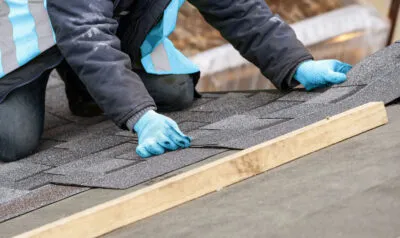
The average roof replacement cost in the United States falls between $8,500 and $25,000 for a typical home, but that range is so wide it’s almost useless without context. Your neighbor’s $12,000 asphalt job and the $45,000 slate roof down the street are both “average” depending on who’s doing the math.
That gap exists because roof replacement pricing is really a bundle of separate decisions: material choice, home size, roof complexity, local labor rates, and how many hidden problems show up after tear-off. Change one variable and the number shifts dramatically.
The homeowner who understands what each factor contributes can walk into an estimate meeting knowing what’s driving the bid (and can push back intelligently when something doesn’t add up).
The national average for a full roof replacement on a standard single-family home sits around $11,500 to $16,500 as of 2025, with most homeowners paying in the $12,000 to $14,000 range for architectural asphalt shingles. Premium materials push that number significantly higher, while basic 3-tab shingles on a simple ranch can bring it below $9,000.
Before diving deeper, you need to understand two industry terms that trip up almost every homeowner.
Roof Cost Per Square Foot vs. Per Roofing Square
Roofers price work by the “square,” which equals 100 square feet of roof area. A quote of “$450 per square” means $450 per 100 square feet, or roughly $4.50 per square foot installed. You should know the difference because your roof’s square footage is not the same as your home’s living square footage. A 2,000 sq ft home typically has 2,200 to 2,800 sq ft of roof area depending on overhangs, pitch, and complexity.
Here’s a quick translation for the most common roofing materials:
- 3-tab asphalt shingles: $3.00–$4.50 per sq ft installed ($300–$450 per square)
- Architectural asphalt shingles: $4.00–$6.50 per sq ft installed ($400–$650 per square)
- Standing seam metal: $8.00–$16.00 per sq ft installed ($800–$1,600 per square)
- Concrete/clay tile: $10.00–$18.00 per sq ft installed ($1,000–$1,800 per square)
- Slate: $15.00–$30.00 per sq ft installed ($1,500–$3,000 per square)
When comparing quotes, always confirm whether the contractor is quoting per square foot of roof area or per roofing square. A decimal point in the wrong place can change your budget by thousands of dollars.
New Roof Cost by Material
Material choice is the single biggest lever you have over your total project cost. The table below compares installed pricing, expected lifespan, and where each material performs best. These figures assume a 2,000 sq ft home with roughly 2,400 sq ft of roof area and moderate complexity.
| Roofing Material | Installed Cost Per Sq Ft | Total Cost (2,000 Sq Ft) | Lifespan | Best Climate |
|---|---|---|---|---|
| 3-Tab Asphalt | $3.00–$4.50 | $7,200–$10,800 | 15–20 years | Moderate climates |
| Architectural Shingles | $4.00–$6.50 | $9,600–$15,600 | 25–30 years | All climates |
| Corrugated Metal | $5.50–$10.00 | $13,200–$24,000 | 30–45 years | Snow and rain regions |
| Standing Seam Metal | $8.00–$16.00 | $19,200–$38,400 | 40–60 years | All climates, especially coastal |
| Concrete/Clay Tile | $10.00–$18.00 | $24,000–$43,200 | 50–75 years | Hot, dry, and subtropical |
| Flat/TPO Membrane | $5.00–$8.50 | $12,000–$20,400 | 20–30 years | Arid and low-slope regions |
| Natural Slate | $15.00–$30.00 | $36,000–$72,000 | 75–100+ years | All climates (freeze-thaw rated) |
Asphalt Shingles: The Most Popular Roofing Material
Roughly 80% of American homes use asphalt shingles, and for good reason. Architectural shingles hit the sweet spot between cost, durability, and curb appeal. They cost only $1.00–$2.00 more per square foot than 3-tab shingles, but last 10+ years longer and resist wind uplift far better. Asphalt roofing costs vary based on brand and warranty level, with significant pricing differences between entry-level and premium product lines.
We generally advise against 3-tab shingles for most homeowners. The upfront savings rarely justify the shorter lifespan and weaker wind ratings, especially if you plan to stay in your home longer than a decade.
Metal Roofing: Pricier Upfront, Lower Lifetime Cost
Standing seam metal is the premium option that tends to even out over time. A $28,000 standing seam roof that lasts 50 years costs less per year than a $13,000 architectural shingle roof replaced every 25 years. The catch? You need to stay in the home long enough to realize those savings.
Corrugated metal panels offer a middle ground. They’re significantly cheaper than standing seam but still outlast asphalt by a wide margin. They’re especially popular in rural areas and for farmhouse-style homes.
Tile and Slate: Premium Roofing Materials
Tile and slate roofs make financial sense in two scenarios: historic homes where architectural integrity is important, and regions where their extreme durability justifies the cost. A clay tile roof in the Southwest can handle decades of UV exposure without degrading, making it a real long-term value play. Slate is essentially a “forever roof” but it requires structural reinforcement due to its weight, which adds thousands of dollars to the project.
Roof Replacement Cost by House Size
Your home’s footprint determines the baseline roof area, but remember that roof area exceeds floor area due to pitch and overhangs. The table below uses architectural asphalt shingles with moderate complexity as the baseline.
| Home Size (Sq Ft) | Estimated Roof Area | Low Estimate | Average Cost | High Estimate |
|---|---|---|---|---|
| 1,000 | 1,100–1,400 sq ft | $5,500 | $7,500 | $10,000 |
| 1,500 | 1,700–2,100 sq ft | $8,000 | $11,000 | $15,000 |
| 2,000 | 2,200–2,800 sq ft | $10,500 | $14,000 | $19,000 |
| 2,500 | 2,800–3,400 sq ft | $13,000 | $17,500 | $24,000 |
| 3,000 | 3,300–4,000 sq ft | $15,500 | $21,000 | $28,000 |
So what does it cost to replace a 2,000 sq ft roof? For the most popular material choice, you’re looking at $10,500 to $19,000, with $14,000 as a reasonable midpoint. Steep pitches, multiple layers of tear-off, or complex roof geometry push you toward the higher end. Plan for these variables ahead of time to prepare for a roof replacement without surprises on install day.
These numbers shift dramatically with material upgrades. A 2,000 sq ft home with standing seam metal could easily reach $30,000+, while the same home with 3-tab shingles might come in under $10,000.
Roof Replacement Cost Breakdown: Labor vs. Materials
Understanding the line-item breakdown helps you evaluate quotes and spot red flags. A typical asphalt shingle roof replacement splits roughly 40% materials and 60% labor (including tear-off and disposal). Metal and premium materials shift that ratio closer to 50/50 or even 60% materials, 40% labor.
Line-Item Breakdown
Here’s what each component typically costs on a $14,000 architectural shingle job for a 2,000 sq ft home:
- Shingles and underlayment: $3,500–$5,000
- Labor (installation): $4,000–$5,500
- Tear-off and disposal: $1,200–$2,000
- Flashing, drip edge, and ridge vents: $500–$1,000
- Decking repairs (if needed): $500–$1,500
- Permits: $150–$500
Decking repair is the wildcard. That uncertainty is one more reason to compare roof repair vs replacement costs before committing to a full tear-off. Your contractor won’t know the full extent of decking damage until the old roof comes off. That’s one reason the roof replacement process typically includes a built-in allowance for decking repairs. Reputable contractors include a per-sheet price for plywood replacement in their quote so there are no surprises. You’ll encounter other judgement calls as the roof replacement process unfolds, so having this info in your back pocket will give you an advantage as the homeowner.
Factors That Increase Roof Replacement Cost
Two homes on the same street with the same square footage can receive quotes $5,000 apart. Here’s why bids vary so much. A professional roof inspection can help pin down which factors apply to your home, and understanding the cost of a roof inspection helps you plan ahead.
Pitch, Slope, and Accessibility
Does pitch affect price? Absolutely. Standard pitch (4/12 to 7/12) keeps labor costs normal. Once you exceed 8/12, roofers need specialized safety equipment and work significantly slower. A steep 12/12 pitch can add 20–30% to labor costs alone. Multi-story homes compound this issue because material staging takes longer and increases fall risk.
Tear-Off Layers and Decking Condition
Most building codes allow a maximum of two shingle layers. If your home already has two layers, the tear-off is heavier, takes longer, and generates more disposal fees. With only one layer on the roof, reroofing vs. roof replacement becomes a real choice, since a second layer can go over the first. Each additional layer typically adds $1,000–$2,000 to the project. Get to know the building codes for roof replacement in your area (or ask your contractor) to prevent surprises during the permit process.
Valleys, Dormers, and Penetrations
Every skylight, chimney, vent pipe, and dormer requires custom flashing and careful waterproofing. A simple gable roof with no penetrations is the cheapest to replace. For complex rooflines like this, a drone roof inspection can help document every valley and penetration before work begins. A hip roof with three dormers, two skylights, and a chimney? That’s easily 15–25% more than the same square footage with a straightforward layout.
Ventilation Upgrades and Add-Ons
A roof replacement is the ideal time to upgrade ventilation, which most older homes desperately need. Adding ridge vents, soffit vents, or a powered attic fan typically runs $300–$800. Poor ventilation voids shingle warranties and dramatically shortens roof life, so this isn’t an area to cut costs.
How Location Changes Your Roof Replacement Price
Geographic location affects roof replacement cost through three channels: local labor rates, material availability, and climate-driven code requirements. A roof in Miami must meet hurricane wind uplift standards that don’t apply in Minneapolis, where snow load requirements drive up structural costs instead.
| Region | Avg. Cost (2,000 Sq Ft, Architectural Shingles) | Key Cost Driver |
|---|---|---|
| Northeast | $13,000–$20,000 | High labor rates, snow load requirements |
| Southeast | $10,000–$16,000 | Hurricane codes, frequent storm damage demand |
| Midwest | $9,500–$15,000 | Hail-rated material upgrades, seasonal demand |
| Southwest | $10,500–$17,000 | UV-resistant materials, tile popularity |
| West Coast | $14,000–$22,000 | Highest labor costs, wildfire-rated materials |
New Jersey and Mid-Atlantic Cost Spotlight
Homeowners looking for roof replacement costs in New Jersey and the Mid-Atlantic region should expect to pay $12,500–$19,000 for a standard architectural shingle replacement on a 2,000 sq ft home. This region sits at the higher end of national averages due to strong union labor markets, stringent building codes, and the frequency of nor’easter damage that keeps demand consistently high. Coastal communities face additional costs for wind-rated shingles and corrosion-resistant flashing.
Homeowners spent $603 billion on U.S. remodeling projects in 2024, with roofing consistently ranking among the top exterior investments. Regional demand fluctuations mean NJ homeowners who schedule replacements in late winter or early spring often secure better pricing before the summer rush.
Roof Repair vs. Full Replacement: Making the Right Call
Not every roofing problem requires a $15,000 solution. The decision on when to replace your roof instead of repairing it rests on a short list of specific signs, such as widespread granule loss or multiple leaks. A detailed comparison of the cost of roof replacement vs. roof repair often reveals that targeted repairs make more financial sense for isolated issues on newer roofs.
Repair makes sense when damage is localized to a small area, your roof is under 15 years old, and the underlying decking is sound. Full replacement is a bigger job, and replacing a roof yourself involves real risk even where it’s legal to do the work. Budget $300–$1,500 for most repairs.
Full replacement becomes the better investment when:
- Your roof is past 80% of its expected lifespan
- You see widespread granule loss or curling shingles
- Multiple leaks appear across different roof sections
- Decking shows signs of rot or sagging
A roof with 22-year-old 3-tab shingles and two patched leak areas isn’t worth another $800 repair. You’re buying time measured in months, not years.
How to Read and Compare Contractor Quotes
The difference between a good contractor and a headache often shows up in the quote before any shingles hit the roof. When evaluating estimates, make sure they’re detailed and specific.
What a Full Roof Replacement Quote Should Include
Every legitimate estimate should contain these line items, and don’t hesitate to ask your roofing contractor questions. If any of the following are missing from the estimate, ask why before signing.
- Total project cost and payment schedule
- Specific material brand, product line, and color
- Tear-off scope (number of layers) and disposal method
- Underlayment type (synthetic vs. felt)
- Flashing details for all penetrations
- Decking inspection plan and per-sheet replacement cost
- Ventilation scope (existing vs. upgraded)
- Permit responsibility and cost
- Warranty details for both materials and workmanship
- Estimated timeline and crew size
Why the Cheapest Quote Actually Costs You the Most
When one bid comes in 30% below the others, that’s not a deal. It’s a warning. Common tactics behind artificially low quotes include omitting tear-off costs, using thinner underlayment, skipping proper flashing at penetrations, and planning for subcontracted labor with no accountability.
Get at least three quotes, but compare them on scope, not just price. A $14,000 quote with a 10-year workmanship warranty and detailed line items beats a $10,500 quote that says “roof replacement, asphalt shingles” and nothing else.
Home Genius Exteriors, as an Owens Corning Platinum Preferred Contractor, provides detailed estimates that break down every component because transparency eliminates the guesswork that leads to budget surprises and subpar installations.
Insurance Claims and Your Out-of-Pocket Roof Replacement Cost
What does insurance cover? Homeowners insurance typically covers roof replacement when damage results from a sudden, covered peril like hail, wind, or a fallen tree. It does not cover normal wear, aging, or neglect.
The claims process works like this: you file a claim, the insurer sends an adjuster, the adjuster assesses damage and writes an estimate, and you receive a payout minus your deductible. Your out-of-pocket cost depends heavily on your deductible structure. Many homeowners carry a 1–2% deductible on wind/hail claims, meaning a $400,000 home has a $4,000–$8,000 deductible before insurance kicks in.
One honest caveat: filing a roof claim can increase your premiums or affect your ability to switch carriers. If damage is minor and close to your deductible amount, a repair may be the smarter financial move. Never let a contractor pressure you into filing a claim just to generate a project.
Roof Replacement Financing Options
According to the Home Improvement Research Institute’s 2025 data, the average household spent $21,000 on home improvement projects in the past year, with a median of $11,500. A roof replacement often represents the single largest home maintenance expense a homeowner faces, making financing a practical consideration rather than a last resort.
Your primary options include home equity loans (lowest rates, longest terms), home equity lines of credit (flexible draw schedule), personal loans (no collateral required, faster approval), and roof replacement financing offered directly through contractors. Each has different trade-offs between interest rates, approval speed, and collateral requirements.
Avoid putting a roof on a credit card unless you can pay it off within a 0% introductory period. The 20%+ interest on carried balances can add thousands to your total cost.
The Best Ways to Lower Your Roof Replacement Cost
You can reduce costs without compromising quality. Check whether a new roof tax deduction applies to your situation, since it depends on how you use the property. The trick is knowing where savings are worthwhile and where they create problems.
- Time your project strategically. The best time to replace your roof generally falls between late spring and early fall, though the ideal month depends on your climate and roofing material. Late fall and winter (outside of snow regions) bring lower demand and more competitive pricing. Avoid scheduling in June through August when every roofer is booked solid.
- Choose architectural shingles over designer or premium lines. Mid-tier architectural shingles from major manufacturers perform nearly identically to premium lines in real-world conditions. The visual difference is subtle.
- Bundle exterior projects. Combining projects can reduce mobilization costs and earn you leverage in negotiations, so consider replacing your roof and siding at the same time.
- Don’t skip the permit. If your neighborhood has an HOA, plan for HOA approval for your roof replacement too, since many associations review roofing materials and colors. Unpermitted work can void your insurance, create problems at resale, and eliminate your ability to make warranty claims. The $200–$500 permit fee is the cheapest insurance you’ll buy.
Don’t choose a roofer solely because they’ll waive your insurance deductible. This practice is illegal in many states, signals a contractor willing to cut corners, and can result in insurance fraud investigations.
Your Next Step Toward Your Next Best Investment
Your roof replacement cost depends on a web of interconnected factors: material choice, home size, roof complexity, regional labor rates, and the contractor you trust to execute the work. The homeowners who get the best outcomes are the ones who understand what a fair price looks like for their specific situation.
Use the tables and tips in this guide to benchmark the quotes you receive. Ask detailed questions, look for itemized estimates, and make sure warranty coverage extends to both materials and workmanship. A new roof installation typically moves through tear-off, deck inspection, new underlayment, and shingle installation in that order.
Home Genius Exteriors provides free inspections and transparent, line-item estimates backed by Owens Corning Platinum Preferred Contractor warranties. Call today for a free inspection and estimate so you can move forward with real numbers instead of rough guesses.
Frequently Asked Questions
How can I estimate my roof’s true size before getting quotes?
Use online aerial measurement tools (or your county property records) to approximate roof area, then adjust for pitch and overhangs. For budgeting, treat the result as a rough baseline and ask contractors to confirm measurements on-site before finalizing pricing.
How long does a typical roof replacement take, and what can cause delays?
Most residential roof replacements take 1 to 3 days, but weather, material lead times, and unexpected decking issues can extend the schedule. Ask your contractor how they handle rain days, staging, and any structural surprises once tear-off begins.
What warranties should I ask for, and what usually voids them?
Look for both a manufacturer warranty (materials) and a workmanship warranty (installation), and get both in writing. Common warranty problems come from improper ventilation, unapproved accessory components, and poor documentation, so confirm the system is installed to the manufacturer’s requirements.
How do I choose a contractor if multiple bids look similar in scope and price?
Prioritize licensing, insurance, local track record, and who will actually perform the work (in-house crew vs. subcontractors). Evaluate professionalism signals like clear communication, documented change-order policies, and a detailed cleanup plan.
Will a new roof increase my home’s resale value, and how do buyers view it?
A newer roof can increase your home’s value by reducing buyer objections and helping a home get cleaner appraisals and inspections, even if it doesn’t return 100 percent of the cost. Keep invoices, permits, and warranty transfer details since buyers and agents often ask for proof of roof age and scope.
Are there energy-efficiency upgrades worth considering during a roof replacement?
Yes, this is a good time to discuss cool roofing options, improved attic insulation, and air sealing, since access and coordination are easier when the roof system is being rebuilt. Ask for projected payback based on your climate, attic conditions, and utility rates.
What questions should I ask about cleanup and protecting my property during roofing work?
Ask how the crew will protect landscaping, siding, windows, and HVAC units, and whether they use tarps, plywood, and magnetic nail sweepers daily. Also ask who is responsible for debris hauling, final walk-through, and any damage discovered after completion.