Gutter Lifespan Guide: How Long Do Gutters Last?
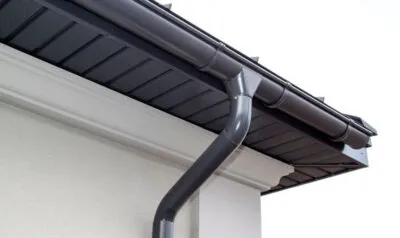
Most homeowners never think about their gutters until water pools near the foundation or paint starts peeling off the fascia. By then, the gutter lifespan you assumed had years left may already be over. The material hanging along your roofline has a surprisingly wide expiration range, and that range determines whether you’re looking at a routine repair or thousands in preventable damage.
Look at what’s actually accelerating or shortening your specific system’s lifespan right now, not just how long gutters last in theory. Neglected cleaning, improper pitch, ice dams, and coastal salt air can each cut years off an otherwise solid installation, while the right material choice and routine maintenance can push a system well past its nominal range.
Quick Answer: How Long Do Gutters Last?
Gutters typically last 10 to 50+ years depending on the material. Vinyl sits at the low end (10-20 years), aluminum hits the middle range (20-30 years), and copper lasts 50+ years with minimal maintenance. Neglected cleaning or poor installation can cut any material’s lifespan nearly in half.
Average Gutter Lifespan by Material
Not all gutters age the same way. A vinyl system on a sun-baked home faces a different clock than copper gutters on a shaded colonial home. Here’s a comparison benchmarked against average gutter pricing.
| Material | Expected Lifespan | Best Climate Fit | Common Failure Mode | Approximate Replacement Cost (per linear foot) |
|---|---|---|---|---|
| Aluminum | 20-30 years | Most climates | Denting, seam separation | $5-$14 |
| Vinyl | 10-20 years | Mild, temperate | UV brittleness, cracking | $4-$7 |
| Galvanized Steel | 15-25 years | Low-humidity regions | Rust and corrosion | $8-$12 |
| Copper | 50+ years | Any climate | Solder joint fatigue | $25-$40+ |
| Zinc | 40-80 years | Coastal, humid | High upfront cost | $35-$50+ |
Aluminum dominates the residential market for good reason. It resists rust, handles most weather, and hits a strong price-performance balance. If you went with seamless aluminum installed by a reputable crew, you’re likely looking at the upper end of that 20-30 year range. Seamless aluminum gutters install with far fewer joints than sectional gutters, which reduces the leak points that can shorten a system’s lifespan.
Why Vinyl Gutters Fail Sooner Than Expected
Vinyl gets a rough reputation, and it’s somewhat deserved. In climates with hard freezes, vinyl becomes brittle and cracks along seams. Intense sun exposure accelerates UV degradation, causing the material to fade and warp within a decade. If you live in a mild climate with moderate rainfall, vinyl can quietly do its job for 15-20 years. Everywhere else, expect closer to 10.
The expansion-and-contraction cycle is the culprit. Vinyl expands in summer heat and contracts in winter cold, stressing joints repeatedly. Over time, those joints open up, and you get leaks that no amount of sealant will permanently fix.
How Long Do Aluminum Gutters Last
Aluminum gutters typically last 20-30 years, but gauge thickness plays a role. Standard .027-gauge aluminum dents easily from ladders and falling branches. Upgrading to .032-gauge resists dents and impact damage roughly 50% better than standard .027-gauge, for a modest cost increase.
Coastal homeowners should note that salt air can pit aluminum surfaces faster, potentially shaving five or more years off the expected lifespan.
6 Factors That Cut Gutter Lifespan Short
Material sets the baseline. But your gutters’ actual longevity depends heavily on conditions you can influence…and a few you can’t.
- Neglected cleaning: Clogged gutters trap moisture against the metal, accelerating corrosion. Debris weight also strains hangers and causes sagging.
- Poor installation: Incorrect pitch prevents water from flowing to downspouts, creating standing water that eats through seams. Insufficient hanger spacing lets gutters bow under load.
- Ice dams: In cold climates, ice backup expands inside the gutter channel and pries seams apart. Repeated freeze-thaw cycles compound the damage each winter.
- Heavy tree coverage: Homes surrounded by pine or oak trees face constant debris accumulation. Pine needles are especially damaging because they clump and hold moisture against the gutter floor.
- Climate extremes: Intense UV, salt air, and severe temperature swings all degrade materials faster than moderate conditions.
- Inadequate downspouts: Too few downspouts for your roof’s square footage means gutters handle more water volume than designed, increasing overflow and joint stress. Industry guidance generally calls for one downspout every 25-40 linear feet of gutter run.
Of these, neglected cleaning and poor installation cause the most preventable failures. A poorly maintained aluminum system might fail at 12-15 years, while the same product with regular care easily reaches 25+.
Signs Your Gutters Need Replacement
Some gutter problems just need a quick fix. Others make it clear the system is done. Use this checklist during your next inspection to figure out if you can get away with a repair or if it’s time for a full gutter replacement:
- Persistent sagging or pulling away from fascia: Hangers have lost grip and the fascia board behind them may be rotting. Reattaching gutters to compromised wood just delays the inevitable.
- Multiple leaking seams or joints: One leaky joint is a repair. Three or more across the system signals widespread sealant failure.
- Visible rust holes or cracks: Patching works temporarily, but once corrosion penetrates the metal, it spreads.
- Peeling paint on fascia boards: Water consistently backing up behind the gutter and saturating wood causes paint to blister and peel.
- Water stains on foundation walls: This connects gutter failure to structural risk. Water that should travel through downspouts is instead dumping against your foundation.
- Landscape erosion directly below gutter runs: Overflow channels form visible ruts in soil and mulch beds, indicating the gutter no longer controls water flow.
- Basement moisture or mildew: Chronic gutter overflow saturates soil near the foundation, and that moisture migrates inward.
If you check three or more items on that list, replacement almost certainly makes more financial sense than continued spot repairs.
A $15 tube of gutter sealant sounds a lot better than a $2,000 replacement bill. But throwing repair money at a system past its useful life is the more expensive choice long-term.
When You Can Get Away With Gutter Repairs
Repairing your gutters is reasonable when the system is less than 15 years old and damage is isolated to one or two sections. A single loose hanger, one leaking end cap, or a small seam separation are straightforward fixes.
When You Need a Full Gutter Replacement
Replace your gutters when damage is systemic. Widespread corrosion, multiple sagging sections, or gutters that have already been repaired twice in the past few years all point toward replacement. Fascia rot behind the gutters seals the deal because you’ll need to address the wood before hanging new gutters regardless.
If you have vinyl gutters and they’re over 12 years old, don’t bother with repairs and jump straight to a full system replacement. The cost-to-benefit ratio of patching aging vinyl rarely justifies the expense when aluminum replacement can last close to twice as long. Similarly, if you’re already investing in fascia board replacement, bundling gutter replacement into the same project reduces total labor cost and saves money in the long run.
How to Extend the Life of Your Gutters
Preventative maintenance isn’t glamorous, but it’s the biggest factor separating a 15-year gutter from a 30-year gutter. These steps cost far less than early replacement.
Clean gutters twice a year, minimum. Once in late spring after pollen and seed pods fall, and again in late autumn after leaves drop. Homes with heavy tree coverage benefit from a third cleaning in midsummer. The EPA’s Soak Up the Rain program also recommends redirecting downspouts toward landscaped areas rather than paved surfaces, which reduces runoff and eases the load on your gutters.
Install gutter guards suited to your debris type. Micro-mesh guards handle pine needles well. Reverse-curve designs work better for broad leaves. No guard eliminates cleaning entirely, but the right match reduces frequency from twice a year to once or less.
Check slope and hanger tightness annually. Gutters should slope roughly 1/4 inch per 10 feet toward each downspout. Standing water after a rainstorm means the pitch has shifted. Tightening or repositioning hangers takes minutes and prevents years of accelerated wear.
Trim overhanging branches. Keeping branches at least three feet from the roofline dramatically reduces debris accumulation and eliminates a common source of physical damage during storms.
What Does Gutter Replacement Cost?
For a typical single-story home with 150-200 linear feet of gutter, expect the following ranges for full professional replacement including removal of the old system:
- Vinyl runs $600-$1,400.
- Aluminum falls between $750-$2,800 depending on gauge and whether you choose seamless.
- Steel lands at $1,200-$2,400.
- Copper starts around $3,750 and climbs from there.
These numbers shift based on your region, roof height, and how many corners and downspouts the project requires. The hidden cost most estimates miss is fascia repair. If your old gutters allowed water damage, replacing rotted fascia boards adds $6-$20 per linear foot. Replace before secondary damage escalates, and you’ll save hundreds if not thousands of dollars.
The best time to evaluate your gutter system is before water stains appear on your foundation or before fascia boards go soft. Age and visible warning signs are what actually flag a gutter that needs replacing. Take 20 minutes to walk your property and run through the replacement checklist above. It’s the fastest way to know whether you’re looking at routine maintenance or something that needs professional attention immediately.
Find Out How Much Life Your Gutters Have Left
Home Genius Exteriors provides free inspections that pinpoint exactly where your gutter system stands, from minor wear to signs you’re overdue for a replacement. Our team can walk you through all the options so you know which makes sense for your home. Call today to schedule your inspection and get ahead of a bigger problem.
Frequently Asked Questions
How do I know what gutter material I currently have?
Look for visual and tactile clues. Vinyl feels lightweight and plastic-smooth, aluminum is light but metallic, and steel is heavier and often magnetic. Copper has a distinct reddish tone that develops a patina over time, while zinc looks matte gray. If you’re unsure, a contractor can identify it quickly during an inspection.
Are seamless gutters worth it compared to sectional gutters?
Seamless gutters are worth considering if you want fewer potential leak points and a cleaner look, especially on long roof runs. Sectional gutters can be cost-effective for small areas or quick repairs, but they typically require more attention at the joints, where most sectional leaks start.
How do I size gutters and downspouts correctly for my roof?
Sizing depends on roof square footage, pitch, and rainfall intensity in your area, not just home size. A gutter professional can calculate required capacity and recommend the right profile (such as 5-inch vs 6-inch) and downspout count to prevent overflow during heavy storms.
What should I look for when hiring a gutter installer?
Ask about licensing and insurance, plus product and labor warranties. Confirm whether they fabricate on-site for seamless runs. It also helps to find out if they will evaluate fascia condition, confirm proper drainage planning, and provide a detailed written scope including downspout placement.
Do gutter guards cause problems? How do I avoid choosing the wrong type?
Gutter guards can create issues when they’re mismatched to your roof style or debris type, which can lead to water overshooting or trapped buildup. To avoid this, choose a guard designed for your roof and tree coverage (pine vs. maple, for example), and confirm the installer will test water flow at valleys and high-volume sections.
How often should gutters be professionally inspected?
A professional inspection every 1-2 years is a good baseline, and annually is smart if you have tall roofs or frequent storms. Even if you think your gutters seem fine, professionals can catch subtle issues like hidden fastener failures and early wood deterioration before they become expensive repairs.
How can I coordinate gutter replacement with other exterior projects to save money?
Bundle gutter work with roof replacement or fascia and soffit repairs so crews can share setup costs and avoid duplicating labor. Schedule these together for proper sequencing: repairing wood and drip edge details before the new gutters go up.