Roof Fascia: Everything You Need To Know
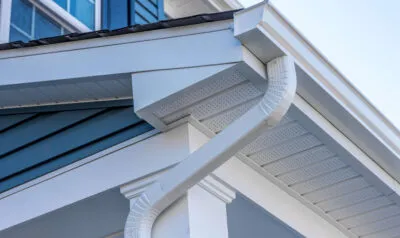
Walk around almost any house and look up at the edge of the roof. That clean horizontal band running along the eaves (the surface your gutters are nailed into, the trim that frames the entire roofline) is doing more work than most homeowners realize. It’s the unglamorous backbone of a roof’s edge, hidden in plain sight behind paint and gutter brackets, and it quietly determines whether water stays out of your attic or finds a slow path into the wood behind it. For something so visible, roof fascia tends to be the last thing anyone thinks about, and the first thing that gives a house away when it’s been neglected.
It’s the unsung barrier between your home’s interior structure and every rainstorm, ice dam, and pest looking for a way in. When it fails, the damage rarely stays contained to a single board. While it may seem decorative, fascia is a critical part of your roof.
What Is Roof Fascia and What Does It Actually Do?
Roof fascia is the long, straight board that runs along the lower edge of your roofline, mounted directly to the exposed ends of your roof rafters or trusses. It’s the vertical “face” you see when you look up at the edge of a roof from the ground. Your gutters attach directly to it.
Functionally, fascia serves as the first line of defense against water intrusion at the roof edge. It seals the gap between the outdoors and the interior of your roof structure, blocking moisture, wind-driven rain, and animals from accessing rafters and attic spaces. Without intact fascia, water can run right into your roof deck and eventually your walls.
Fascia also plays a structural role most people overlook. It supports the bottom row of roof tiles or shingles and bears the full weight of your gutter system. A sagging gutter almost always traces back to compromised fascia.
Fascia vs. Soffit
Homeowners frequently confuse fascia and soffits because they sit right next to each other. Fascia is the vertical board facing outward, while a soffit is the horizontal panel tucked underneath the roof overhang, facing the ground.
| Feature | Fascia | Soffit |
|---|---|---|
| Position | Vertical, at the roof edge | Horizontal, under the overhang |
| Primary Function | Seals rafter ends, supports gutters | Ventilates attic, protects rafters from below |
| Common Materials | Wood, aluminum, vinyl, composite | Vinyl, aluminum, wood |
| Typical Cost (per linear ft) | $6–$20 installed | $5–$16 installed |
| Most Common Problem | Rot from gutter overflow | Blocked ventilation, pest entry |
Both components need to be in good shape for your roof system to perform. Damaged soffit starves your attic of airflow, which causes heat and moisture buildup that accelerates fascia rot from behind. They’re a system, not independent parts.
What is Fascia Board Made of?
Material choice affects how long your fascia lasts, how much maintenance it needs, and what you’ll spend upfront. Here’s a breakdown of the four most common options.
Wood Fascia
Wood is the most common fascia material on existing homes, especially those built before the 2000s. Cedar and redwood resist rot better than pine or spruce, but all wood fascia requires repainting every 3–5 years and consistent inspection. If you skip maintenance, wood fascia can deteriorate within a decade in humid climates.
Wood fascia makes the most sense when matching existing trim on a historic home. For most homeowners, the maintenance burden outweighs the lower upfront cost.
Aluminum Fascia
Aluminum fascia wraps over existing wood boards or installs as a standalone panel. It won’t rot, resists insect damage, and holds paint well. The main drawback is denting. A hard impact from a ladder or falling branch leaves visible marks that are difficult to repair without replacing the section.
Vinyl and Composite Fascia
Vinyl fascia costs the least and never needs painting, but it can become brittle in extreme cold and may warp in intense heat. Composite (typically a wood-fiber and polymer blend) sits at the top of the price range but delivers the best combination of durability and appearance. It resists rot, holds up in temperature swings, and accepts paint if you want to change color down the road.
| Material | Cost per Linear Ft (installed) | Lifespan | Maintenance Level |
|---|---|---|---|
| Wood (pine) | $6–$10 | 10–20 years | High (paint, seal, inspect) |
| Aluminum | $8–$15 | 20–30 years | Low |
| Vinyl | $6–$12 | 15–25 years | Very low |
| Composite | $10–$20 | 25–50 years | Very low |
Spotting Roof Fascia Damage Before It Spreads
Fascia damage tends to escalate quickly because the board sits at the intersection of your gutter system and roof structure. Catching problems early saves thousands compared to dealing with structural rafter repair later.
Urgent Warning Signs
- Soft or spongy spots when you press the board with a screwdriver. This means rot has penetrated deep enough that the board has lost structural integrity.
- Visible gaps between the fascia and the roofline, which allow direct water entry to rafter ends.
- Sagging gutters pulling away from the house. The fascia behind them has likely weakened to the point it can’t hold the gutter weight, especially when full of rainwater.
- Active pest activity such as wasps, carpenter bees, or squirrels entering at the roofline.
Issues You Can Monitor
Peeling or bubbling paint suggests moisture is reaching the wood but hasn’t caused structural compromise yet. Small areas of discoloration or minor surface mold fall into this category too. These are warnings, not emergencies, but ignoring them for more than a season usually pushes them into the urgent category.
Most homeowners run into these warning signs long before they’re ready to weigh roof repair vs. replacement, but that’s exactly when the question starts to matter.
How Much Does it Cost to Repair or Replace Fascia?
Cost varies significantly based on material, the extent of damage, and whether underlying rafter work is needed. Here are a few scenarios to help you budget.
Small Repairs (One Section, Under 20 Linear Feet)
A targeted repair on a single section typically runs $200–$600 for wood or vinyl. This covers material, paint matching, and labor for a straightforward swap where the rafter ends underneath are still solid. Aluminum or composite repairs on the same scope fall between $300 and $700.
Full-House Fascia Replacement
Most single-story homes have 100–200 linear feet of fascia. A full replacement in wood lands between $1,200 and $2,500. Composite runs higher at $1,800–$4,500. These ranges assume clean rafter ends with no hidden structural damage.
The cost multiplier that catches homeowners off guard is rafter-end repair. If rot has migrated from the fascia into the rafter tails, expect an additional $50–$100 per rafter. On a full-house job, that can add $500–$2,000 to the total. This is one reason why delaying fascia replacement often backfires financially.
Why You Should Hire a Professional for Fascia Replacement
DIYing anything beyond ground-floor fascia carries significant risk. Fascia fixes on two-story homes means working at significant height along the full perimeter. You’ll need scaffolding or extension ladders repositioned dozens of times. Beyond safety, there’s a diagnostic issue: hidden rafter damage, improper flashing, and failed drip edges are easy to miss if you haven’t done this work repeatedly.
When evaluating contractors, make sure the scope covers inspection of rafter ends, drip edge condition, and gutter reattachment. A job that only replaces the visible board without addressing what’s behind it is incomplete. Make sure you get a solid estimate: sharper numbers help when you’re actually weighing the cost of roof replacement vs. roof repair against your long-term plans for the house. Fascia and soffit repairs fit naturally into a full roof replacement when the roofline is already open.
How Fascia Works With Gutters and Soffit to Protect Your Home
The most common cause of fascia rot is a failing gutter system. When gutters clog, water overflows behind the gutter and saturates the fascia board for hours or days at a time. Repeated saturation cycles destroy even treated wood within a few years.
Poor roof ventilation creates a second attack vector. Without adequate soffit ventilation, warm moist air from the attic condenses on the underside of the roof sheathing and drips down onto the backside of the fascia. You end up with rot that starts from behind, invisible until the board is already compromised.
Ice dams can also cause major fascia issues. When heat escapes through a poorly insulated attic, snow melts and refreezes at the roof edge, forcing water upward under shingles and directly into fascia boards.
The takeaway: fixing fascia without addressing the root cause means you’ll have to replace it again. Clean your gutters twice a year, make sure soffit vents are clear, and check attic insulation if you notice ice damming.
Take Action on Your Roof Fascia Before Small Problems Become Expensive Emergencies
Roof fascia protects the structural bones of your home at one of its most vulnerable points. Whether you’re seeing early paint failure or dealing with soft, rotted boards, the cost of acting now is always lower than the cost of waiting. Material choice matters, proper installation matters, and diagnosing what’s happening behind the board matters most of all.
Home Genius Exteriors diagnoses and replaces damaged fascia as part of complete roofing and exterior projects. As an Owens Corning Platinum Preferred Contractor, we back our work with warranties that cover both labor and materials. Call today for a free inspection and estimate so you know exactly where your roof edge stands before the next storm season.
Frequently Asked Questions
How can I tell if fascia damage is cosmetic or a sign of deeper structural issues?
Look for straightness along the roof edge and whether gutter spikes or brackets feel firmly anchored. If sections look wavy, pull away at fasteners, or feel unstable when gently tested, the problem often extends beyond the surface board and should be evaluated by a pro.
What should a contractor inspect before quoting a fascia replacement?
A thorough quote should include checking the drip edge and flashing details, the integrity of attachment points, and how water is being directed into the gutters. Ask for photos of any hidden findings and a written scope that lists what will be removed, replaced, and reinstalled.
Do I need permits or HOA approval to replace roof fascia?
Many basic fascia replacements do not require permits, but rules vary by municipality and may change if you alter gutter systems or structural components. If you have an HOA, confirm material and color requirements in writing to avoid rework or fines.
What is the best time of year to schedule fascia work?
Choose a period with stable, dry weather so exposed roof edges are not vulnerable during the project. Contractors also tend to book up before peak storm seasons, so scheduling early can improve availability and reduce delays.
How do I match the new fascia to my home’s existing trim and color?
Bring a physical paint sample or use a color match from a protected area that has not faded, such as behind a downspout strap. If you are using prefinished aluminum or vinyl, request manufacturer samples and view them outdoors in natural light before approving.
Can fascia replacement affect my gutter performance and drainage?
Yes, replacing fascia is an opportunity to correct gutter pitch, hanger spacing, and alignment so water flows cleanly to downspouts. Confirm the installer will reset the gutters and test drainage with water before closing out the job.
What maintenance plan helps fascia last longer after it is replaced?
Create a simple annual checklist: visual inspection after major storms, keeping tree debris away from the roof edge, and addressing small sealant or paint touch-ups promptly. Document the work and keep warranty paperwork, since some coverage depends on basic upkeep.