Roof Vents and Attic Ventilation: A Complete Guide
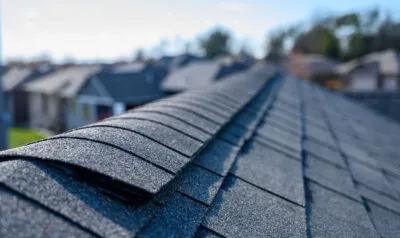
You might be surprised by the impact that roof vents and attic ventilation has on your life. This often-overlooked part of your roofing system directly affects the lifespan of your shingles, the efficiency of your HVAC, your energy bills, and the health of everyone living under your roof.
Most homeowners only think about attic ventilation when something goes wrong, like when ice dams form, when a roof fails prematurely, or when mold appears in the attic. Read this guide to get ahead of the game and recognize when something is off.
Why Roof Vents Matter
Improper Ventilation Damages Your Roof
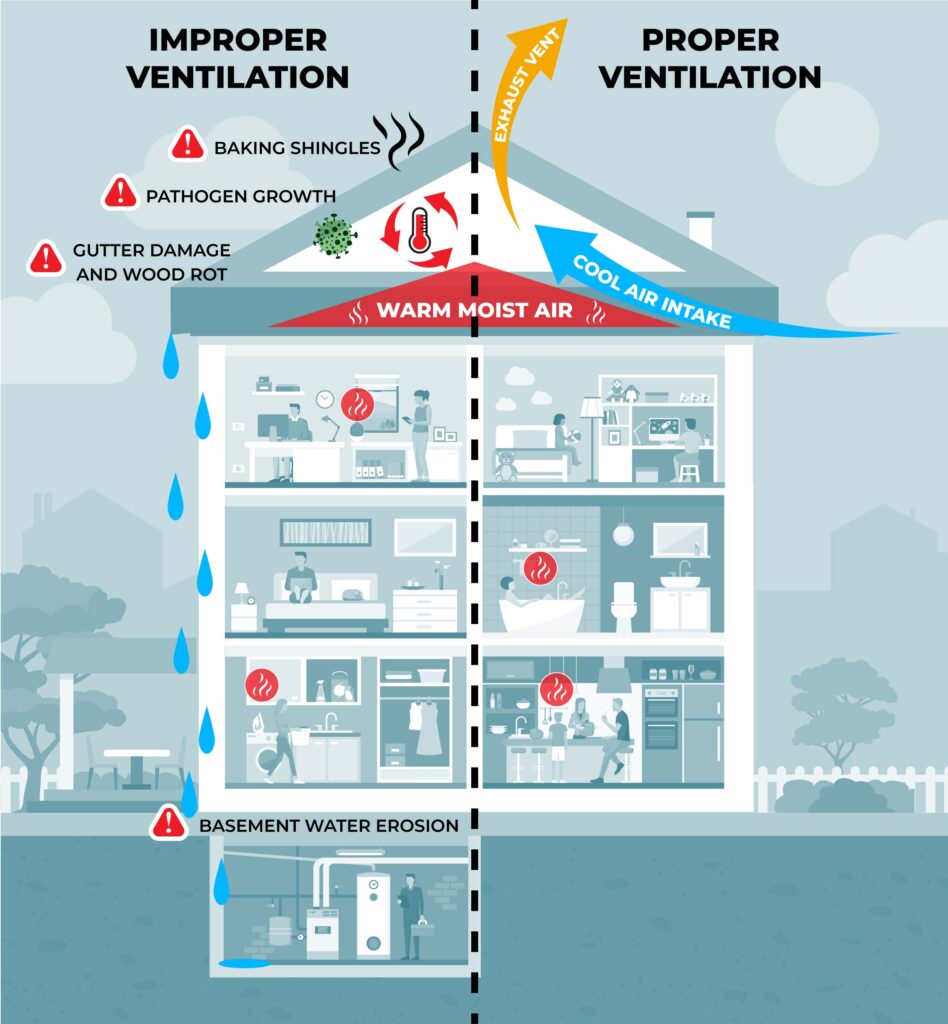
Improper ventilation causes attic temperatures to rise to 140°F or higher on hot summer days. These conditions can soften, blister, and prematurely degrade asphalt shingles. Even a well-installed roof can fail years ahead of its warranty when ventilation is inadequate. Poor roof ventilation shortens shingle lifespan by accelerating the loss of the volatile compounds in asphalt that keep shingles flexible and waterproof.
Improper Ventilation Creates Ice Dams in Winter
In cold months, an improperly ventilated attic holds warm air that escapes from the living space below. That warm air heats the roof deck unevenly, melting snow near the ridge while the eaves remain cold. The meltwater runs down and refreezes at the cold eaves, forming ice dams that can tear off gutters, lift shingles, and force water back under the roofing and into the home’s structure.
Proper Ventilation Improves Energy Efficiency
A properly insulated and ventilated attic results in a more efficient cooling system. Proper ventilation allows hot, moist air to escape through the top of the roof rather than accumulating and radiating into living spaces, reducing the burden on your air conditioning system.
Poor Ventilation Creates Health Risks
A dark, poorly ventilated attic traps warm, moist air that encourages mold growth. Mold poses a wide range of health risks for your household and is expensive to remediate. It also typically requires disclosure when selling your home, which can complicate or delay a sale.
How Attic Ventilation Works: Intake vs. Exhaust
Every effective attic ventilation system is built around one fundamental principle: air needs both an entry point and an exit point to flow. Without both, you essentially have a sealed box.
Exhaust Vents: Let Hot Air Out
Hot air rises. Exhaust vents are placed near the top of the roofline, ideally at or near the ridge, to allow the hottest, most moisture-laden air to escape. The higher the exhaust vent sits on the roof, the more effective it is at removing the worst of the accumulated heat. Ridge vents, which run continuously along the peak, are the gold standard for exhaust because they provide the largest surface area at the highest point.
Intake Vents: Bring Cool Air In
Hot air won’t leave on its own; it needs to be displaced. Intake vents are placed low on the roofline, typically under the eaves at the soffits, and allow cooler outside air to enter the attic. As cool air flows in at the bottom, it pushes warmer air upward and out through the exhaust vents above. This continuous cycle of cool air in, hot air out is called vertical ventilation and is far more effective than any single vent type working alone.
The 1:300 Rule
Building codes and industry standards specify that attics should have a minimum of 1 square foot of net free ventilation area for every 300 square feet of attic floor space, split evenly between intake and exhaust. Some configurations (notably those without a vapor barrier) call for 1:150. When in doubt, more ventilation is generally better than less, provided it’s balanced between intake and exhaust.
Passive vs. Active Ventilation
Most residential roof vents are passive, relying on natural airflow, wind, and thermal dynamics to move air without consuming electricity. Ridge vents, soffit vents, box vents, gable vents, and turbine vents are all passive.
Power vents and solar-powered vents are active, which means they use a fan to force air movement regardless of wind conditions. Active ventilation is especially useful in large attics, low-pitch roofs where air moves slowly, or in climates where passive ventilation alone is insufficient.
Types of Roof Vents
There are two categories of roof vents, intake and exhaust, and multiple vent types within each.
Ridge Vents (The Most Effective Exhaust)
Ridge vents run continuously along the entire peak of the roof, covered by ridge cap shingles that conceal them from view. Because they sit at the roof’s highest point and span its full length, they provide the largest exhaust surface area of any vent type and allow the most hot air to escape. When paired with continuous soffit vents for intake, ridge vents create ideal vertical ventilation: the preferred configuration for most residential roofing systems. Owens Corning’s VentSure ridge vents are specifically engineered to integrate with the Total Protection Roofing System that Home Genius Exteriors installs.
Best for: Homes with a continuous ridge line and adequate soffit depth for paired intake vents.
Box Vents / Static Vents
Box vents (sometimes called static vents, louver vents, or turtle vents) are small, low-profile exhaust vents installed near the ridge on the roof deck. They have no moving parts and rely entirely on natural convection to move air. Multiple box vents are typically needed to match the exhaust capacity of a continuous ridge vent. They are well suited to complex rooflines where a continuous ridge vent isn’t practical, such as homes with multiple peaks, hips, or dormers.
Best for: Complex rooflines where a full ridge vent cannot be installed; supplemental exhaust on homes with short ridge sections.
Turbine Vents / Whirlybird Vents
Turbine vents use wind energy to spin a set of fins that actively draw air out of the attic. When the wind is blowing, they are highly effective, capable of moving significantly more air than a comparably sized static vent.
The trade-off is their moving parts: they can seize, wear out, or rattle over time, and turbine vents that fail to spin properly can allow water infiltration during heavy rain. They’re best suited for hot, windy climates where passive ventilation benefits from a wind assist.
Best for: Hot or windy climates; supplemental exhaust where additional capacity is needed.
Power Vents (Electric)
Power vents are electrically driven fans that actively exhaust attic air regardless of wind conditions. They are thermostat- or humidistat-controlled, switching on when attic temperature or humidity exceeds a set threshold. Like most active ventilation systems, they’re best for large attics, low-pitch roofs where airflow is sluggish, or in very hot climates where passive venting alone is insufficient. The downside is operating cost: they draw electricity and require wiring during installation.
Best for: Large attics, low-slope roofs, very hot climates, homes where passive ventilation isn’t good enought.
Solar-Powered Vents
Solar-powered vents function identically to electric power vents but draw their energy from an integrated solar panel rather than the home’s electrical system. This eliminates operating cost and doesn’t require wiring in. Performance is dependent on sun exposure, which means effectiveness can be reduced on north-facing roof sections or during winter months in northern climates.
Best for: Energy-conscious homeowners who want active ventilation without the electricity cost; south-facing roof sections with good sun exposure.
Off-Ridge Vents
Off-ridge vents are installed one to two feet below the actual ridge line rather than at the peak itself. They function similarly to box vents but are positioned slightly higher on the roof. They’re useful on roofs where the ridge line is too short or fragmented for a continuous ridge vent, providing exhaust in areas that otherwise wouldn’t be served. They’re less efficient than true ridge vents and not commonly recommended as a primary exhaust solution.
Best for: Complex or fragmented rooflines as supplemental exhaust; roofs that lack a sufficient ridge for a continuous vent.
Soffit Vents (Most Common Intake)
Soffit vents are installed in the underside of the roof’s overhang (the soffit) and provide intake ventilation at the lowest point of the roofline: exactly where cool air should enter. They come in individual circular or rectangular units or as continuous perforated strips.
Continuous soffit venting is the preferred intake solution because it distributes incoming air evenly across the entire roofline width, which works most effectively with continuous ridge vents above.
The most common installation mistake with soffit vents is insulation pushed to the roof eaves during attic insulation work, which blocks the vent opening and eliminates intake ventilation. Homeowners planning new insulation can check typical attic insulation cost figures before scheduling work around their vents.
Best for: All homes with a soffit overhang; the essential paired intake vent for ridge vent systems.
Gable Vents
Gable vents are installed in the triangular gable end walls of the attic rather than on the roof deck itself. They allow air to move horizontally through the attic (cross-ventilation). While gable vents do provide some ventilation, they’re less effective than vertical ventilation systems because horizontal airflow tends to move air through the middle of the attic rather than flushing heat from the peak.
It’s important to note that combining gable vents with ridge vents can actually disrupt the intended airflow of the ridge vent system by short-circuiting the air path, which reduces overall effectiveness.
Best for: Simple gable roofs where ridge and soffit venting isn’t practical; older homes as a standalone system. Do not combine with ridge vents.
Drip Edge Vents
Drip edge vents are installed at the roof edge where the roofing meets the fascia, providing intake ventilation in situations where the home lacks a soffit overhang. They have a narrower intake opening than full soffit vents but are a practical solution for homes where no soffit exists to accommodate standard intake vents. For example, older construction or certain architectural styles.
Best for: Homes without a soffit overhang that need intake ventilation; often used in older homes during re-roofing projects.
Comparing Roof Vent Types
| Vent Type | Type | Location | Best For | Pros | Cons |
|---|---|---|---|---|---|
| Ridge vent | Exhaust | Along the entire roof peak | All homes with a continuous ridge line | Most efficient exhaust; low-profile; continuous airflow | Needs paired soffit vents |
| Soffit vent | Intake | Under the eaves / overhang | All homes; pairs with ridge vents | Even intake across the roofline; concealed | Can be blocked by insulation |
| Box / static vent | Exhaust | Near the ridge on the roof deck | Complex rooflines; no full ridge | Inexpensive; no moving parts; easy install | Less efficient than ridge vents |
| Gable vent | Both | On the triangular gable end wall | Simple gable roofs; older homes | Allows cross-ventilation; no roof penetration | Disrupts airflow if mixed with ridge vents |
| Turbine / whirlybird | Exhaust | Roof deck, near ridge | Hot or humid climates | Wind-powered; moves large volumes when spinning | Moving parts wear out; can leak in heavy rain |
| Power vent (electric) | Exhaust | Roof deck or gable | Large attics; low-pitch roofs | Active airflow regardless of wind | Adds energy cost; needs wiring |
| Solar-powered vent | Exhaust | Roof deck (south-facing preferred) | Energy-conscious homeowners | No operating cost; active airflow | Reduces effectiveness in low-sun/winter months |
| Drip edge vent | Intake | At the roof edge / fascia | Homes with no soffit overhang | Provides intake where soffits don’t exist | Lower intake capacity than full soffit vents |
| Off-ridge vent | Exhaust | 1–2 ft below the ridge | Complex roofs with short ridge lines | Adds ventilation on roofs where ridge vents don’t fit | Less effective than full ridge vents |
Most effective systems pair ridge vents (Exhaust) with continuous soffit vents (Intake) for balanced vertical ventilation.
Common Ventilation Mistakes to Avoid
Poor ventilation design can be as harmful as no ventilation at all. These are the mistakes most frequently encountered during professional roof inspections:
- Mixing ridge vents with gable vents: Gable vents create a horizontal air path across the attic that short-circuits the vertical airflow a ridge vent system depends on. The result is reduced effectiveness from both vent types. Choose one system and stick with it.
- Blocking soffit vents with insulation: This is the single most common ventilation error in homes with blown-in or batt insulation. When insulation is pushed to the eaves during installation, it covers the soffit vent openings and eliminates intake. Install attic baffles (cardboard or foam channels) before insulation to maintain the airflow path from the soffit to the attic space.
- Exhaust-only systems: Installing ridge vents or box vents without adequate intake creates negative pressure in the attic, which can actually draw conditioned air from the living space into the attic: the opposite of the intended effect. Always balance intake and exhaust.
- Undersized ventilation: Not installing enough net free area to meet the 1:300 ratio means the system is working at a fraction of its intended capacity. This is common in additions and renovations where ventilation isn’t recalculated for the new attic square footage.
- Placing exhaust vents too low: Box vents or power vents installed too far below the ridge capture cooler air that has already been partially displaced. They miss the hottest, most problematic air that pools at the peak of the attic.
- Turbine vents with failing bearings: A turbine vent that has stopped spinning provides almost no ventilation and can allow water infiltration. Turbine vents should be inspected annually and replaced when bearings wear out.
Signs Your Attic Ventilation Is Inadequate
Many ventilation problems develop slowly and aren’t visible from the ground. These warning signs indicate that something needs attention.
| Warning Sign | When | What It Indicates |
|---|---|---|
| Shingles curling after only a few years | Year-round | Heat buildup from below is degrading shingles prematurely. Classic sign of exhaust-only or undersized ventilation |
| Ice dams at the eaves | Winter | Warm attic air is melting snow at the roof deck; it refreezes at the cold eaves, lifting shingles and backing water into the home |
| Frost forming inside the attic | Winter | Moist interior air is condensing on cold roof decking; a sign that humid air is trapped and not being exhausted |
| Attic feels extremely hot in summer | Summer | Without exhaust ventilation, solar heat absorbed by the roof has nowhere to go, often reaching 140°F+ at floor level |
| Mold or mildew on rafters or sheathing | Year-round | Persistent moisture in the attic, usually from blocked soffits, missing intake vents, or inadequate exhaust capacity |
| Energy bills higher than expected | Summer | Attic heat is radiating into living spaces, forcing the HVAC system to work harder to maintain comfortable temperatures |
| Musty smell in upper floors | Year-round | Stale, moisture-laden air in the attic is infiltrating living spaces, often a precursor to visible mold growth |
| Granule loss or blistering on shingles | Summer | Excessive attic heat is volatilizing the asphalt in shingles from beneath, shortening their effective lifespan significantly |
Trust the Experts to Inspect Your Attic & Roof Ventilation System
Home Genius Exteriors is happy to come out and perform a free, professional inspection of your attic and roof ventilation system. As an Owens Corning Platinum Preferred Contractor (a designation held by fewer than 1% of roofing contractors nationwide), our team understands the signs of poor ventilation and will make sure that your roof and attic have the proper amount and positioning of intake and exhaust vents so that air flows properly throughout your home.
If you have an existing roof and are unsure whether your ventilation is adequate, our inspectors can assess the current vent types, calculate whether the net free area meets the 1:300 standard, check for blocked soffit vents, and identify any of the warning signs above. Contact Home Genius Exteriors today for a free attic inspection.
Frequently Asked Questions
What is the best type of roof vent?
For most residential homes, the best combination is a continuous ridge vent paired with continuous soffit vents. Ridge vents provide exhaust at the highest point of the roof, where heat accumulates most, while soffit vents supply cool intake air at the lowest point. This system creates balanced vertical ventilation that outperforms every other configuration in both summer heat management and winter moisture control.
How many roof vents does my home need?
The standard is 1 square foot of net free ventilation area for every 300 square feet of attic floor space, split evenly between intake and exhaust. For a 1,500 square foot attic, that means 5 square feet of intake and 5 square feet of exhaust, totaling 10 square feet of net free area. Each vent has a net free area rating printed on the packaging. The ratio can shift to 1:150 in some configurations, in particular those without a vapor barrier. A professional roofer can calculate the exact requirements for your home’s attic footprint.
Can you mix ridge vents and gable vents?
You should not. Gable vents create a horizontal air path across the attic that directly interferes with the vertical airflow that ridge vents are designed to create. The result is that the gable vents short-circuit the ridge vent system, reducing effectiveness and potentially creating negative pressure zones. Choose one ventilation system (ideally ridge vents with soffit intake) and remove or seal gable vents if you’re upgrading to a ridge system.
Can attic insulation block soffit vents?
Yes, and this is one of the most common ventilation problems found during attic inspections. Blown-in insulation can drift to cover soffit vent openings if attic baffles aren’t installed first. Baffles are foam or cardboard channels that run from the soffit vent opening up to the attic space, keeping a clear airflow path regardless of insulation depth. If your home has soffit vents but shows signs of poor ventilation, check for blocked soffits first.
Do roof vents let in rain or snow?
Properly designed modern vents are engineered to allow air movement while keeping water out. Ridge vents have baffled openings that deflect wind-driven rain. Soffit vents are protected by their position under the eaves. Box vents are designed to shed water. The exception is turbine vents with worn or seized bearings, as a stopped turbine can allow water infiltration. Any vent that is damaged, improperly installed, or has deteriorated flashing can allow water entry, which is why annual inspections are important.
What happens if I add more exhaust vents than intake vents?
An imbalance in favor of exhaust creates negative pressure in the attic. Instead of drawing in outdoor air, the system begins pulling conditioned air from the living space below through gaps in the ceiling, which increases energy costs and can introduce humidity. In extreme cases, it can even reverse the intended airflow, drawing outside air in through the exhaust vents rather than out. Intake and exhaust should always be balanced as closely as possible.
How do I know if my roof ventilation is working properly?
The best way to assess your ventilation is with a professional inspection, where a contractor can look at vent placement, calculate net free area, check for blocked soffits, and identify warning signs of inadequate airflow. Between inspections, you can do a basic check yourself: on a hot summer day, go into the attic and gauge how hot it feels. Excessively high temperatures are a red flag. In winter, look for frost or condensation on the underside of the roof deck. Either condition indicates that the ventilation system is underperforming.
Does roof ventilation affect my warranty?
Yes. Most shingle manufacturers require proper attic ventilation as a condition of their product warranties. Installing shingles over an improperly ventilated attic, or allowing ventilation to become inadequate after installation, can void coverage. This is one reason why you should work with a certified installer who assesses ventilation as part of the roofing project.