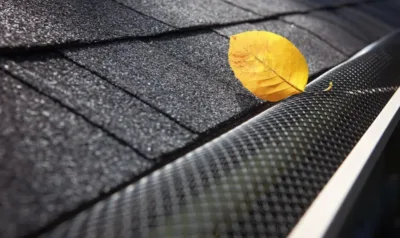
Seamless Gutters vs. Traditional Gutters
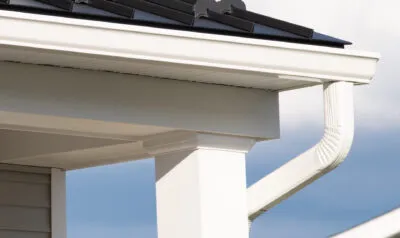
Gutters are one of those essential systems that only get attention when something goes wrong, which is exactly why the choice between traditional and seamless gutters matters more than it seems. The difference comes down to how they’re made, where they’re prone to fail, and how long they’ll actually last before becoming someone else’s problem.
Seamless gutters eliminate the weak points that cause most gutter failures, yet the majority of homes in the U.S. still rely on older sectional systems held together by joints and sealant. If you’re weighing a replacement or first-time installation, your choice will determine everything from leak risk to long-term maintenance costs and your home’s curb appeal.
What Are Seamless Gutters?
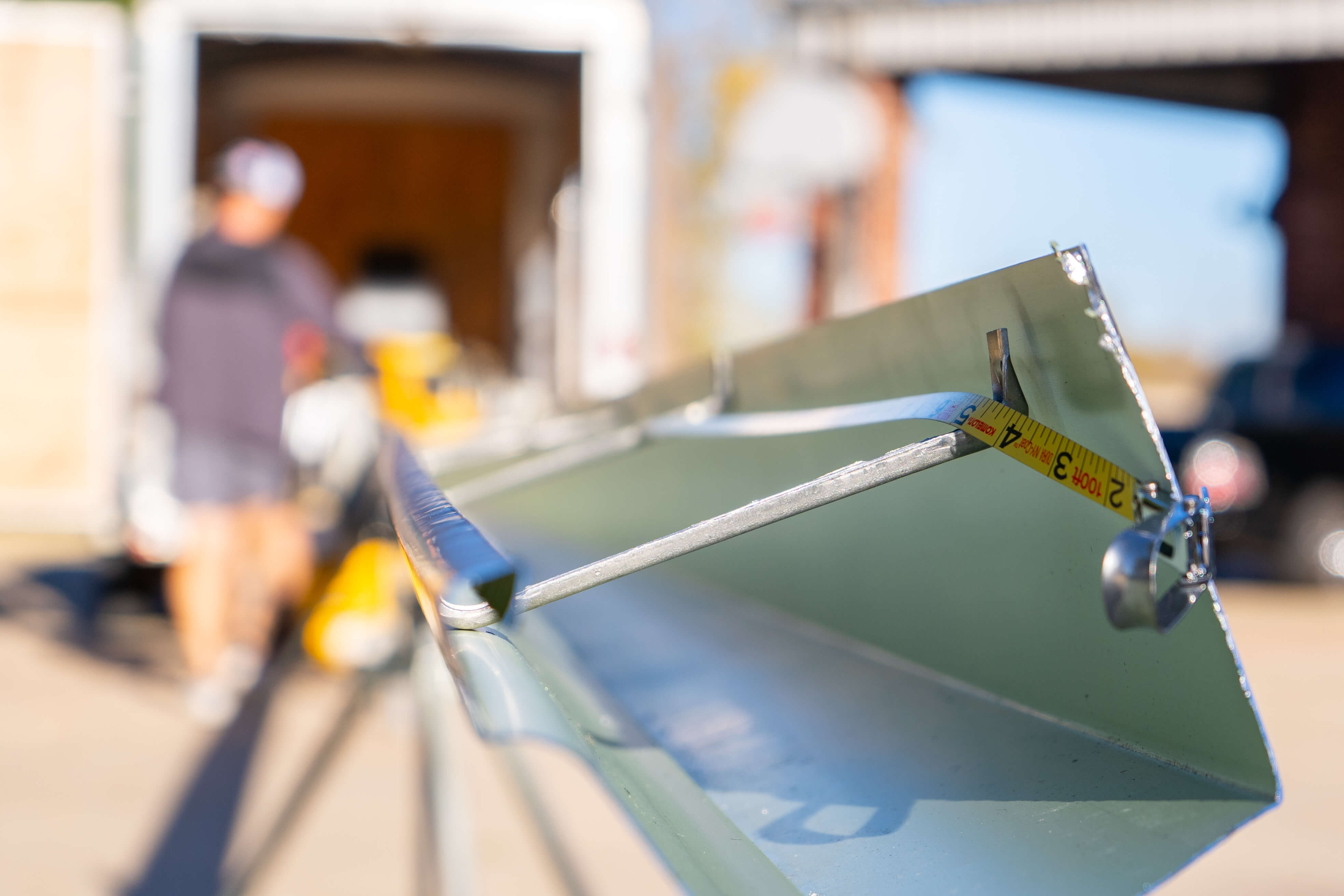
Seamless gutters are continuous lengths of metal formed on-site using a portable roll-forming machine. A technician feeds a flat coil of metal (usually aluminum) into a gutter machine at your property, and it produces a single, unbroken gutter run custom-cut to the exact measurement of each roofline section. The only joints in a seamless system occur at inside corners, outside corners, and downspout outlets.
What Are Traditional Gutters?
Sectional (or “traditional”) gutters come in pre-cut segments, typically 10 feet long, that snap or screw together with connectors and sealant. You can buy them at any home improvement store, which makes them popular for DIY projects. But every connector point is a potential failure.
Why Seams Matter More Than You Think
A typical 150-linear-foot gutter run on a sectional system has roughly 15 joint connections. Each joint relies on sealant that degrades over time from UV exposure, temperature cycling, and water flow. Within five to seven years, those joints often start weeping. Seamless systems on the same home might have only four to six connection points total, dramatically reducing the surface area vulnerable to failure.
That difference compounds over a decade of ownership. Fewer seams mean fewer emergency repairs, less fascia board rot, and reduced risk of water pooling near your foundation.
What Are Seamless Gutters Made From?
Material choice drives both upfront cost and long-term performance. Here’s a look at the four most common options.
Aluminum Seamless Gutters
Aluminum accounts for roughly 80% of residential seamless gutter systems installed today. It resists rust, handles most climates well, and comes in dozens of factory-baked colors. The standard thickness is .027 inches, though upgrading to .032 inches adds durability in areas with heavy snow load or frequent ice. For most homeowners, aluminum hits the right balance of performance and price.
Copper and Steel Seamless Gutters
Copper gutters develop a distinctive patina over time and can last 50+ years. They’re stunning on historic or high-end homes, but they cost three to four times more than aluminum and require specialized soldering at joints. Copper only makes sense if aesthetics are a top priority and budget isn’t a constraint.
Galvanized steel is stronger than aluminum and handles heavy debris impact well, but it rusts over time without regular maintenance. Stainless steel solves the rust problem at a steep price premium.
Seamless gutters are not available in vinyl.
| Material | Cost Per Linear Foot (Installed) | Lifespan | Best For |
|---|---|---|---|
| Aluminum | $6–$15 | 20–30 years | Most residential homes |
| Copper | $25–$40+ | 50+ years | Historic or luxury properties |
| Galvanized Steel | $8–$18 | 15–25 years | Heavy debris or impact zones |
How Much Do Seamless Gutters Cost?
The answer depends on material, home size, roofline complexity, and your region. Seamless gutters typically run $6–$20 per linear foot installed for standard aluminum or steel, compared to $4–$9 for sectional systems. That’s roughly 30–50% higher upfront.
For a typical single-story home with 150–200 linear feet of gutter, expect a total project cost between $900 and $3,000 for aluminum seamless gutters. A two-story home with a complex roofline (multiple corners, dormers, valleys) can push that range to $2,000–$4,500 or more.
Why Seamless Gutters Save Money Long-Term
The upfront price gap shrinks considerably when you factor in maintenance and repairs over time. Seamless gutters last 20–30 years, whereas sectional gutters typically last 15–20 years. That extra decade of service life, combined with fewer leak-related repairs, often makes seamless the cheaper option over a 20-year ownership period.
Sectional gutter owners typically reseal joints every three to five years and face at least one or two leak-related repairs per decade. Those costs add up. If you’re planning to stay in your home for more than five years, seamless gutters deliver better value.
How Seamless Gutter Installation Works
Professional installation follows a predictable process, and knowing what to expect helps you evaluate whether your contractor is doing the job right.
Pre-Install Inspection and Measurement
A qualified installer starts by inspecting your fascia boards and roofline. Rotted fascia needs replacement before any gutter goes up, since mounting hardware won’t hold in compromised wood. The installer then takes precise measurements of every roofline section, noting corners, downspout locations, and drainage slopes. This is also a good time to evaluate whether your siding needs repair before new gutters go on, since accessing those areas becomes harder afterward.
On-Site Fabrication and Mounting
The roll-forming machine shapes each gutter run to the exact length needed. No cutting, no splicing. The installer mounts hidden hangers (typically spaced 24 inches apart, or 18 inches in snow-heavy regions) and attaches the gutter with a slight slope toward each downspout, usually about a quarter inch of drop per 10 feet of run.
Downspouts get positioned to direct water away from the foundation, ideally extending at least four to six feet from the house. A good installer also checks that downspout capacity matches the roof area draining into each section.

Worker Measuring An Aluminum Rain Gutter Feeding Through Seamless Shaping Machine.
Why Seamless Gutter Installation Requires a Professional
You can’t DIY seamless gutters in any practical sense. The roll-forming machines cost thousands of dollars and require training to operate correctly. While you can rent equipment in some areas, the learning curve is steep enough that mistakes (kinks, wrong measurements, improper slope) usually cost more to fix than hiring a professional would have cost in the first place. Save DIY energy for sectional systems if budget is truly the deciding factor.
How to Choose the Right Gutter System for Your Climate and Home Type
Not every home needs seamless gutters, and climate plays a bigger role in the decision than you might think.
Homes in regions with heavy snowfall benefit significantly from seamless aluminum at .032 gauge thickness with hangers spaced at 18 inches. The reduced joint count means less ice-dam-related failure. Coastal properties face salt corrosion, making aluminum or copper the only sensible choices since steel gutters deteriorate quickly in salt air.
If your property sits under heavy tree canopy, seamless gutters paired with gutter guards dramatically reduce clog frequency. Sectional gutters in these environments develop debris dams at every seam, accelerating overflow and fascia damage.
For single-story ranch homes in mild climates with minimal tree cover, quality sectional aluminum gutters can perform adequately at a lower cost, but seamless gutters are truly the better all-around option.
How to Choose a Seamless Gutter Contractor
The quality of your seamless gutter installation depends almost entirely on the installer. Two contractors using the same aluminum coil can produce vastly different results based on hanger spacing, slope accuracy, and corner work.
Make sure any contractor you consider carries proper licensing and insurance for your state. Ask specifically about the coil thickness they use (avoid anyone defaulting to .025 gauge without discussing alternatives) and their standard hanger spacing. Request references from jobs completed at least two years ago so you can verify performance over time, not just initial appearance.
Seamless Gutter Warranties
Most seamless gutter warranties cover materials and labor separately. A strong warranty covers both for at least 10 years, with material coverage extending to 20 years or more. Ask whether the warranty transfers if you sell the home, since that affects resale value. Home Genius Exteriors, for example, offers gutter installation services backed by warranties covering both labor and materials, which gives homeowners confidence that corner-cutting won’t happen during installation.
Be wary of contractors offering unusually low bids. Seamless gutter installation has relatively thin margins, and significantly below-market pricing often means thinner gauge material, wider hanger spacing, or skipped steps like fascia inspection.
How To Make Your Gutters Last Longer
Even seamless gutters need occasional attention. Clean them at least twice per year (spring and fall) to remove debris buildup. Homes near trees may need quarterly cleaning. While you’re up there, check for any sagging sections that indicate a loose hanger and inspect the few seam points at corners for sealant integrity.
Flush downspouts with a garden hose to confirm water flows freely, and make sure splash blocks or extensions at the base still direct water away from the foundation. These simple checks take about 30 minutes per session and can prevent thousands of dollars in water damage. If your home also has an older roof system that’s nearing replacement, coordinating both projects saves on labor costs and makes sure the new gutter slope accounts for any roofline changes.
Your Next Step Toward Leak-Free Gutters
Seamless gutters experience fewer leaks, a longer lifespan, better aesthetics, and lower total cost of ownership for most homes. The key is matching the right material and gauge to your climate, then hiring an expert contractor.
If you’re ready to move forward, Home Genius Exteriors provides free inspections and estimates for seamless gutter installation. Our team evaluates your roofline, fascia condition, and drainage needs before recommending a solution. Call today for a free inspection and estimate to see what the right gutter system looks like for your home.
Frequently Asked Questions
What gutter size should I choose, 5-inch or 6-inch?
Most homes do well with 5-inch gutters, but 6-inch systems are often a better fit for steep roofs, long roof runs, and areas with heavy rainfall. An installer can confirm sizing by calculating roof drainage area and checking whether additional downspouts are needed.
Are gutter guards worth it if I install seamless gutters?
Gutter guards can reduce cleanings and help prevent clogs, but they do not eliminate maintenance entirely. The best choice depends on your roof type, nearby trees, and the guard design, since some styles handle small debris and roof grit better than others.
What are the most common signs my gutters are failing even if leaks are not obvious?
Look for overflowing during moderate rain, peeling paint or staining on siding, water marks behind the gutter, and soil erosion or pooling near the foundation. Indoors, musty smells in basements or crawlspaces can also indicate drainage problems tied to gutters.
How do I decide the right number and placement of downspouts?
Downspout layout depends on roof geometry, how water concentrates in valleys, and where you can safely discharge water away from the home. A good plan also avoids dumping water onto walkways or neighboring properties and coordinates with existing drainage solutions like swales or underground drains.
Can new gutters fix existing water problems around my foundation?
Gutters help, but they are only one part of moisture control. If grading slopes toward the house, downspouts discharge too close, or the soil is poorly draining, you may also need regrading, drain extensions, or a yard drainage system to fully resolve the issue.
How long does a seamless gutter installation usually take, and what should I do to prepare?
Many standard homes can be completed in a single day, while complex rooflines or fascia repairs can extend the timeline. Clear driveway space for the fabrication equipment, move fragile items near work zones, and confirm where the crew will place ladders and dispose of old materials.
What questions should I ask to compare contractor bids beyond total price?
Ask what is included in removal and disposal, how fascia issues are handled if discovered, and whether the bid covers repainting or touch-ups. Also confirm the payment schedule, change-order process, and how service calls are handled if you notice issues after the first heavy rain.