How Much Does Gutter Guard Installation Cost?
Somebody quoted you a few thousand dollars to keep leaves out of your gutters, and you’re trying to figure out if that quote is fair or not. Gutter guard installation cost is often published in units that don’t match how the job is sold. “Gutter guard” also covers six different products with lifespans ranging from a few seasons to a few decades, and a quote rarely says which one you’re getting. Here’s how to make sure your contractor is keeping your pricing in the right ballpark.
How Much Does Gutter Guard Installation Cost?
The national average to install a rain gutter cover is $8.24 to $10.09 per linear foot, installed. On a house with 180 feet of gutter, that’s roughly $1,480 to $1,820. Branded whole-system quotes cost more than that, and the cheapest screen products are priced much lower.
Why Gutter Guards Are Priced by the Foot, Not the Square Foot
Many homeowners are looking for “gutter guard cost per square foot”, but this is the wrong unit. Square footage describes your roof. Guards attach to the gutter, which is a line around the edge of that roof, so the number should reflect how many linear feet of gutter you have.
That’s also why you can’t get a quote for “a 2,500 square foot house”. Two houses with identical square footage can differ by fifty feet of gutter depending on how the roof is shaped. A long, simple ranch has more gutter per square foot than a compact two-story.
How to Measure Your Own Gutter Run
Walk the outside of the house with a tape measure and measure each stretch of wall that has a gutter above it. Add them together. That total should be the basis for every quote, and it’ll make it obvious whether a quote is priced per foot or padded with a package price. If doing it on foot is awkward, measure the roofline on a satellite map instead. It won’t be exact, but it should get you close enough to sanity-check a bid.
Gutter Guard Types Ranked by Cost
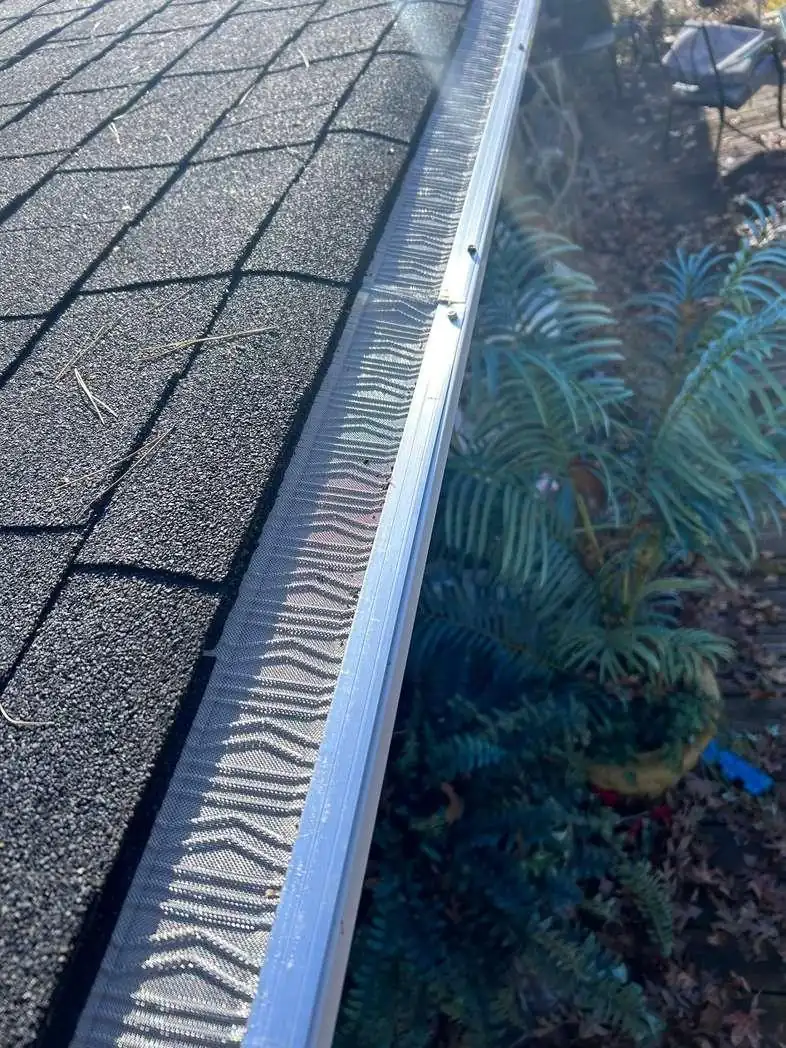
Guard type affects the price more than anything else. The table below sorts them from least to most expensive, along with what each one handles well and its main weakness.
| Guard type | Relative cost | Best for | Main weakness |
|---|---|---|---|
| Foam insert | Lowest | Leaves, on a budget | Holds moisture inside the gutter and breaks down |
| Brush insert | Low | Big leaves | Small debris nests in the bristles |
| Plastic or vinyl screen | Low | Large debris | Goes brittle in sun and heat |
| Aluminum screen | Moderate | Leaves and twigs | Pine needles and grit pass straight through |
| Micro-mesh | High | Pine needles, shingle grit, roof sand | Needs a rinse when pollen coats it |
| Reverse curve or surface tension | Highest | Large debris in ordinary rain | Water can overshoot the curve in a downpour |
Foam and brush inserts are cheap for a reason. They sit inside the gutter rather than covering it, so organic matter breaks down in place and holds water against the metal. They tend to create the maintenance problem they were supposed to solve.
What Raises Gutter Guard Installation Cost?
Height and number of stories: Second-story gutters mean taller ladders, longer setup, and more risk.
Roof pitch: A steep roof slows a crew down and limits where they can safely stand.
Gutter condition: Guards fasten to the gutter, so the gutter has to be sound first. Sagging runs, leaking seams, or gutters pulling away from the fascia must be fixed before guards go on, or the guards will come loose with them. If your gutters are near the end of their life, it may not be worth spending money protecting them. Replacing the gutters and guarding them in one visit usually costs less than doing it separately.
Fascia condition: The fascia is the flat board that holds the gutter. If it’s soft or rotted, nothing mounts to it securely and it has to be repaired first.
Gutter size and shape: Standard 5-inch K-style gutters have the widest product selection. Six-inch, half-round, or box gutters narrow the options and raise the price.
Cleaning before installation: Guards go on clean gutters. Some installers include gutter cleaning while others bill it separately.
Why Branded Gutter Guard Systems Cost More
A quote from a company selling its own proprietary gutter guard system is usually much higher than professional installation of a quality guard on your existing gutters.
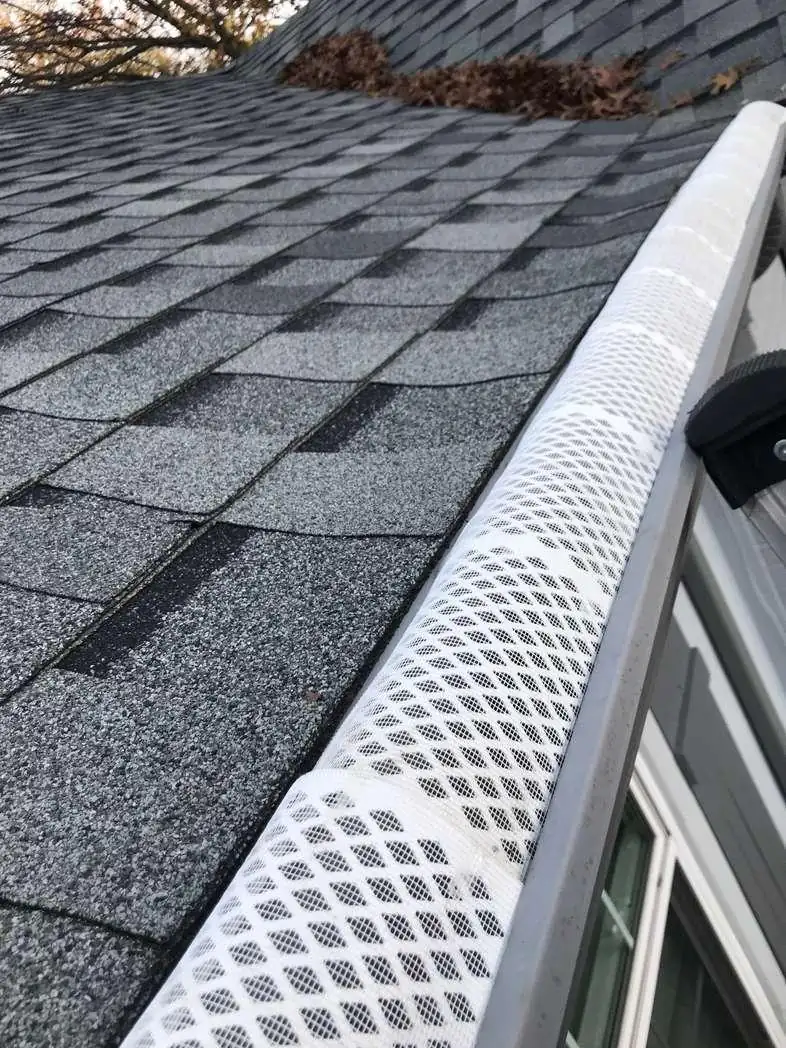
A branded quote typically bundles a custom-fit product, a crew certified on that one system, a long transferable warranty, and the cost of the marketing that brought them to your door. A contractor-installed micro-mesh guard can perform comparably while the warranty terms differ.
Think about how long you’re staying in the house and if it’s worth paying more for a transferable lifetime warranty.
Are Gutter Guards Worth It?
Take what you currently spend having gutters cleaned each year, and divide the guard quote by it. That’s roughly how many years the guards take to pay for themselves. If cleaning costs you $500 a year and guards cost $1,800, the guards pay for themselves in under four years. If you clean once a year for $150, payback takes more than a decade, which is longer than some guard types last.
Apart from the cost, there’s value in not risking your safety by standing on a ladder to clean the gutters. Gutter guards can also help prevent the water damage that follows when a blocked gutter overflows into a basement window well. Your home’s location will also affect how often gutters need cleaning, so factor that into your calculation.
Here’s where gutter guards clearly pay off:
- Pine trees: Needles are the best argument for micro-mesh. They slip through every screen with a larger opening and pack a gutter solid.
- Two or more stories: High gutters cost the most to have cleaned and are the most dangerous to reach, so gutter guards can cut down on the number of visits.
- Heavy tree cover: Oaks and maples turn a once-a-year job into three.
- Cold climates with ice dams: Federal weather guidance is to “thoroughly clean all leaves, sticks and other debris from your home’s gutters and down spouts” before winter so meltwater can drain, and to keep them clear through the season. A gutter already packed with debris has nowhere to put the water.
- No one is climbing up there: If the alternative is that the gutters simply don’t get cleaned, guards stop being a convenience and start being maintenance.
The Downsides of Gutter Guards to Ask About
If your home is on an open lot with few trees, has a single-story roof that’s easy to reach, and needs only one gutter cleaning a year, paying for cleaning usually costs less than installing guards.
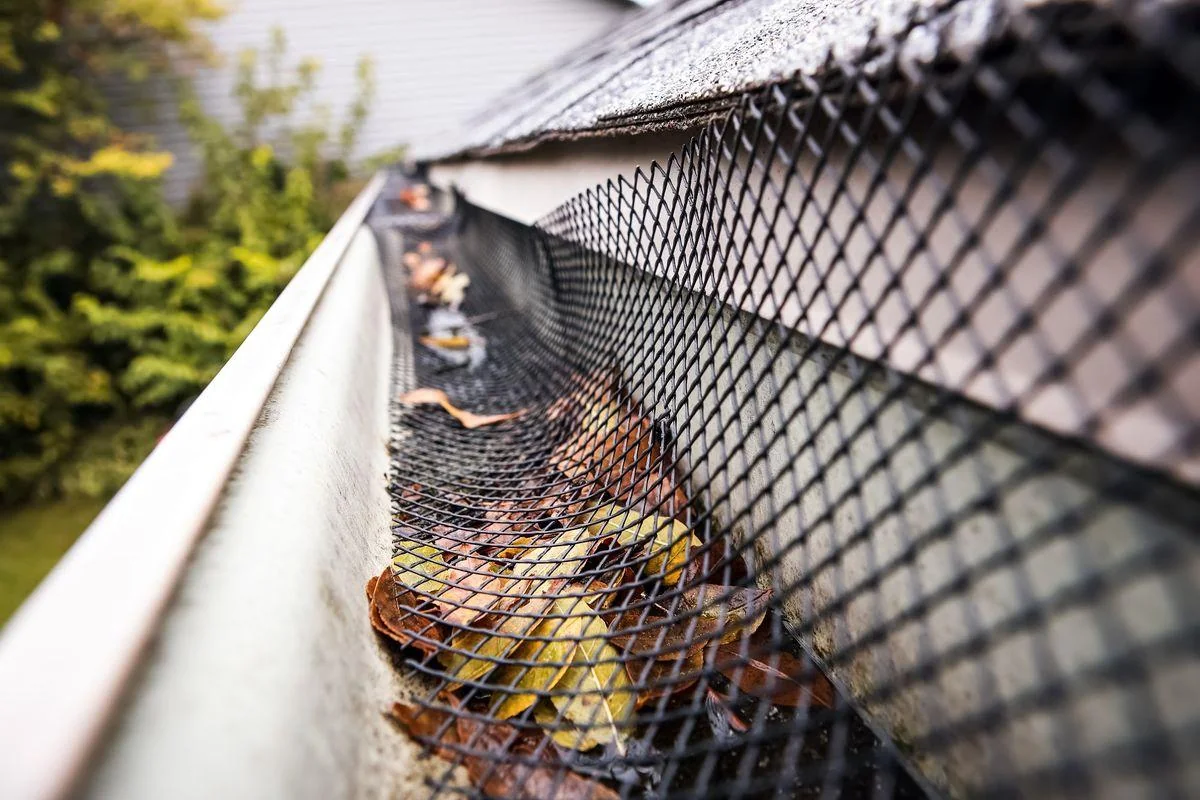
Guards reduce gutter cleaning. They don’t end it. A guard that never needs attention doesn’t exist. Debris still collects on top of a guard, and the guard itself needs a check now and then.
Micro-mesh needs an occasional rinse. Fine pollen and the sandy granules that wash off aging shingles can coat the mesh until water sheets across the top instead of passing through. The gutter underneath stays clean while the water goes over the edge, and a rinse once or twice a year prevents it.
Reverse-curve guards can overshoot. They rely on water clinging to a curved hood and following it into the gutter. In a hard downpour, some of that water keeps going straight and lands in the flowerbed.
Installation can affect your roof warranty. Some guards are installed by lifting the bottom course of shingles and sliding the guard underneath, which disturbs the factory seal strip. Shingle manufacturers set conditions on what can be done to an installed roof, so ask your installer to mount to the gutter or the fascia rather than under the shingles, and check your roofing manufacturer’s warranty terms before agreeing to anything that lifts a shingle.
Get a Custom Gutter Quote
Home Genius Exteriors provides free, no-obligation gutter inspections. A Home Remodeling Expert measures the run, checks the condition of the gutters and the fascia, and tells you plainly whether guards make sense on your house or whether the gutters themselves are the thing to address first. Guards installed by Home Genius Exteriors are stainless steel micro-mesh, and the installation is covered by the Genius Limited Lifetime Warranty. Schedule your free inspection today.
Frequently Asked Questions
What is the downside to gutter guards?
They reduce gutter cleaning rather than eliminating it, and each gutter guard type has its own weak spot. Micro-mesh needs a rinse when pollen or shingle grit coats it, reverse-curve guards can overshoot in heavy rain, and foam and brush inserts trap moisture inside the gutter. If you’re installing the type of guard that goes under the edge of your shingles, this may void your roof’s warranty.
How much do gutter guards cost for a 2000 sq ft house?
Guards are sold by the foot of gutter rather than by roof area, and two 2,000-square-foot houses can have different gutter lengths. Measure the stretches of wall with gutters above them and multiply by the per-foot rate. At the national average of $8.24 to $10.09 per linear foot installed, a house with around 180 feet of gutter costs about $1,480 to $1,820.
What is the average labor cost to install gutter guards?
Most contractors quote guards as a single installed price per linear foot rather than splitting labor from materials. Labor increases with height, roof pitch, and any cleaning or gutter repair needed before installation. Ask for an itemized quote if you want the split, and ask specifically whether cleaning is included.