How Much Does Front Door Replacement Cost?
One contractor quotes $1,200. The next says $5,500. Both sound confident, and neither number tells you which one is “fair”.
They’re usually not quoting the same job. “Replacing the front door” covers three different projects that share a name:
- Hanging a new door in the frame you already have,
- Dropping in a complete door-and-frame unit, or
- Tearing the whole opening back to bare framing and rebuilding it.
Until you know which one you’re being quoted for, you can’t compare two prices. Here’s how to get the details.
How Much Does Front Door Replacement Cost?
The cost to install an exterior door ranges from $957 to $1,458 on average, a figure built around a fiberglass door that’s a one-for-one match with the door it’s replacing. This is the simplest version of the job, where the frame doesn’t need changing. The project scope determines the price. Labor is roughly three quarters of the total on a large door replacement, which is why a $400 door can still become a four-figure project. A storm door is a smaller upgrade that still adds weather protection and curb appeal to the project.
The Three Definitions of “Front Door Replacement”
Slab (Door) Only
A slab is the door by itself: no frame, no threshold. The installer hangs it in the frame that’s already in your wall, cutting the hinge mortises and boring the lock holes to match.
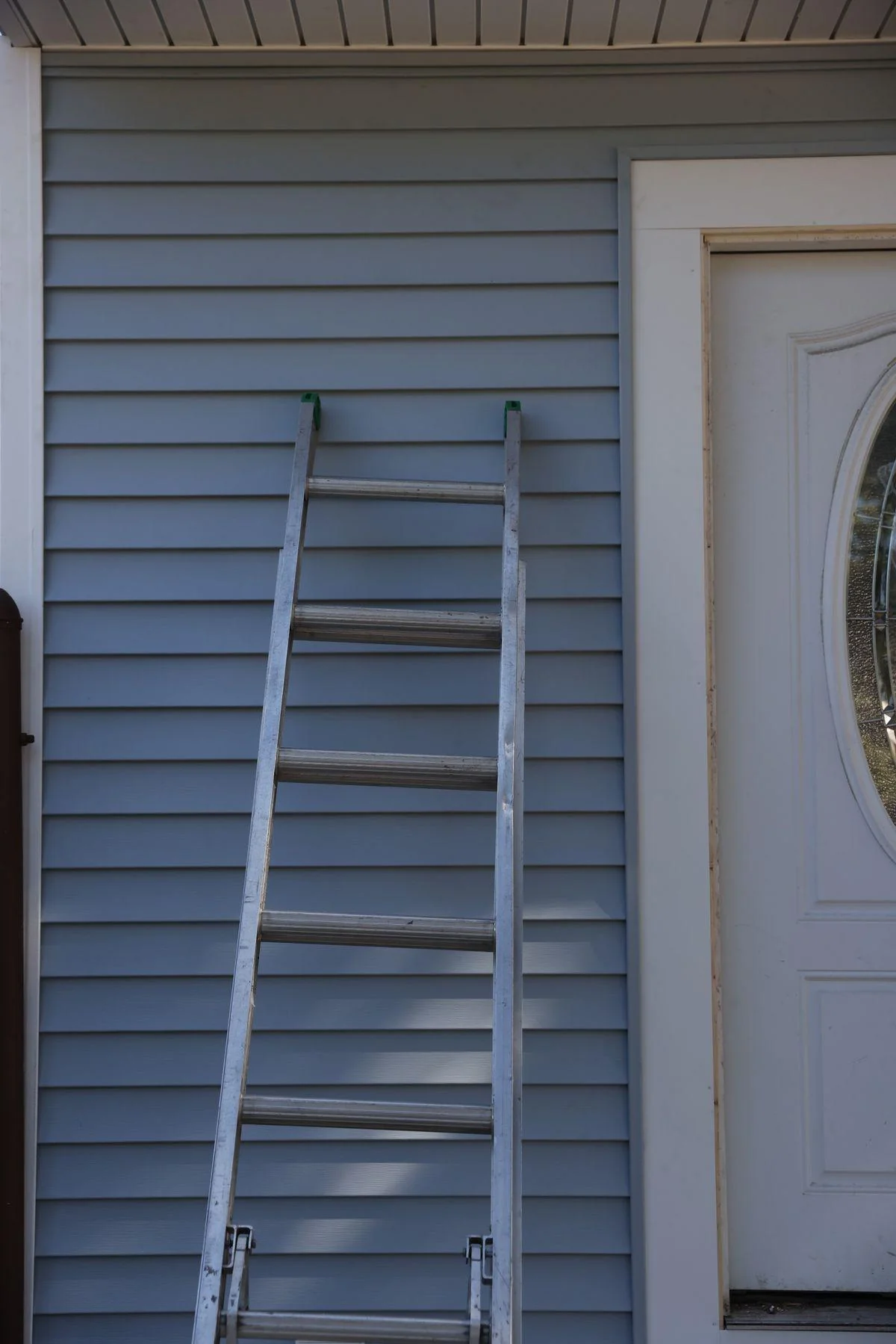
This is the least expensive option and the one with the narrowest set of conditions. The existing frame has to be square, solid, and sized correctly. On a house that’s settled over a few decades, it often isn’t. A slab hung in a frame that’s slightly out of square never seals right, and you end up paying twice.
Prehung Unit
A prehung door arrives already mounted in its own frame, hinges attached and strike plate routed. The crew pulls the old door and frame out and sets the new unit into the rough opening, which is the framed hole in the wall itself.
This is the standard front door replacement and the middle of the price range. It’s the right choice when the rough opening is sound but the old frame is warped, rotted at the bottom, or simply past its working life. You get new weatherstripping, a new threshold, and a door that’s been hung square at the factory rather than forced to fit the current state of your old frame.
Full Frame
A full-frame replacement takes everything out down to the rough opening. The crew repairs framing, re-flashes the opening, sets the new unit, and rebuilds the interior and exterior trim.
It’s the most expensive of the three options, and when it’s needed, it’s needed: rot in the framing lumber, water damage in the subfloor at the threshold, or a plan to widen the opening for sidelites (glass panels).
| Scope | What it covers | When it applies | Relative cost |
|---|---|---|---|
| Slab only | The door, hung in your existing frame | Frame is square, solid, and the right size | Lowest |
| Prehung unit | Door, frame, threshold, weatherstripping, exterior trim | Rough opening is sound, frame isn’t | Middle |
| Full frame | Tear-out to bare framing, repairs, flashing, new unit, all trim | Rot, water damage, or a wider opening | Highest |
When the Front Door Frame Can Stay
The frame has to be square, free of rot, and dimensioned for the door you want. Get a professional opinion to be sure.
There are two quick things you can look at yourself:
- Press a screwdriver into the frame at the bottom corners on the exterior side, where water sits longest. If the wood gives, the frame is rotting.
- Then close the door and look around the edges in daylight. An even gap all the way around suggests the frame is still square. A gap that’s wide at the top and tight at the bottom means the frame has shifted out of square, so you’ll need to replace it with the door.
Front Door Replacement Cost Is Mostly Labor
It’s easy to assume you’re just buying a door. On large door and window replacement projects, about 75% of project costs go to professional labor while materials account for about 24%.
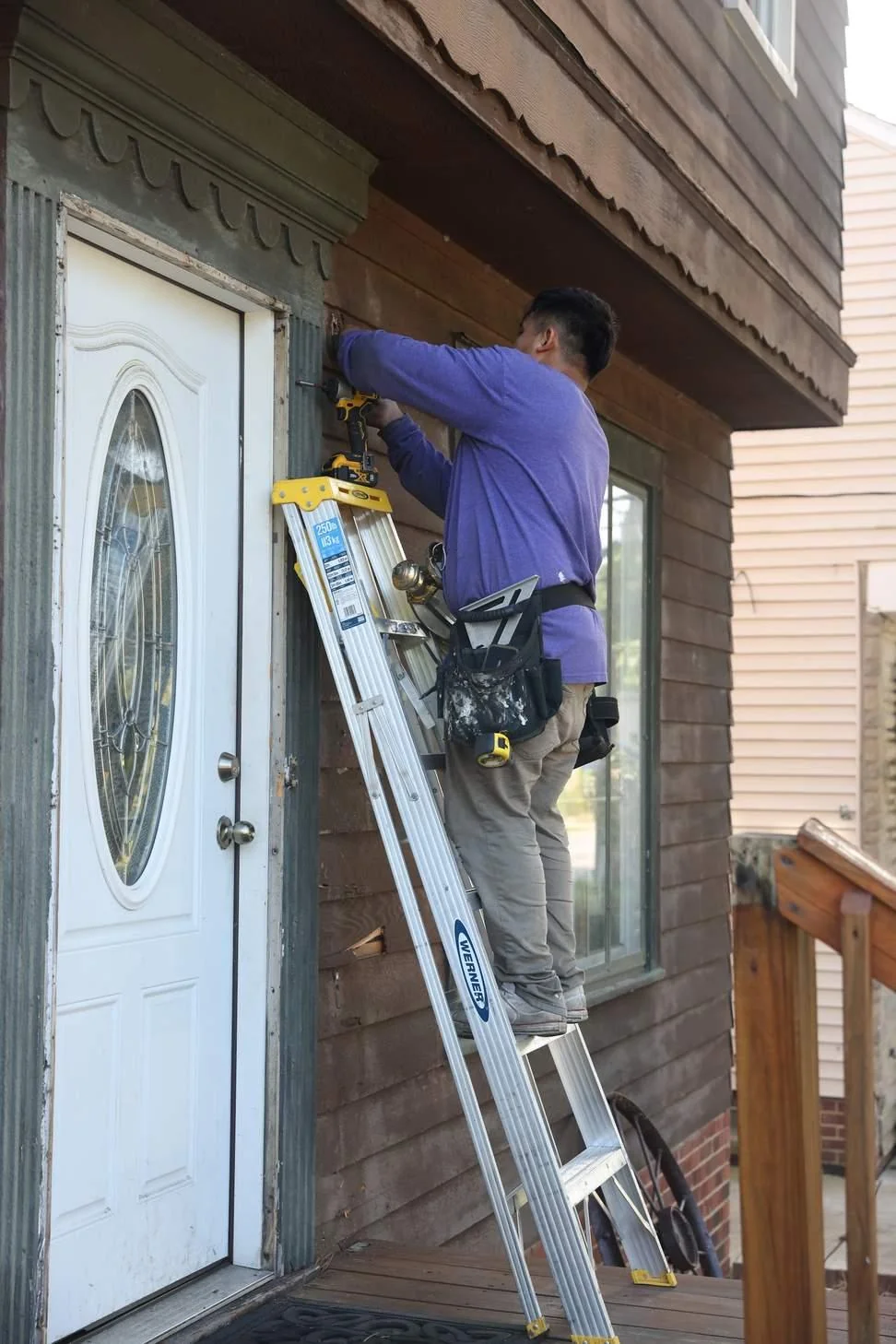
That ratio explains the spread between quotes. Two bids on the same door can differ by a thousand dollars because one crew is budgeting four hours and the other knows the opening needs a day. It’s also why the cheapest bid deserves the most questions: if labor is three quarters of the job, an unusually low number means hours may have been cut somewhere.
On a prehung replacement, those hours cover pulling the old unit, prepping and squaring the opening, shimming and fastening the new frame, setting the threshold, flashing and sealing the exterior so water drains away from the wall, adjusting the strike so the door latches without a shove, and re-trimming both sides.
How Material Changes Your Front Door Replacement Cost
You can find entry doors in four common materials:
Steel is the least expensive of these popular options, and it’s the most secure against a hard hit. Its finish lasts longest under a porch roof where it’s less exposed to the elements.
Fiberglass costs more than steel and is the usual choice for a front entry. It rarely dents, doesn’t rot, handles sun and rain well, and can have a finish that looks like wood grain.
Solid wood is the most expensive of these four materials. It needs refinishing every few years, and it can change with humidity. On a historic home it’s often the only choice that looks right.
A wood-clad door has a weather-resistant layer on the exterior, and a wood layer on the side that faces your interior. This way you get a traditional look inside your home with a hardier surface facing the elements. It costs nearly as much as solid wood and adds one more joint that has to stay sealed.
How Glass Changes the Cost of a New Front Door
Glass is where a manageable quote turns into a large one. A half-lite door, with glass in the upper half of the slab, costs more than a solid door. A full-lite costs even more. Add more to the price if you want decorative glass with beveling or texture.
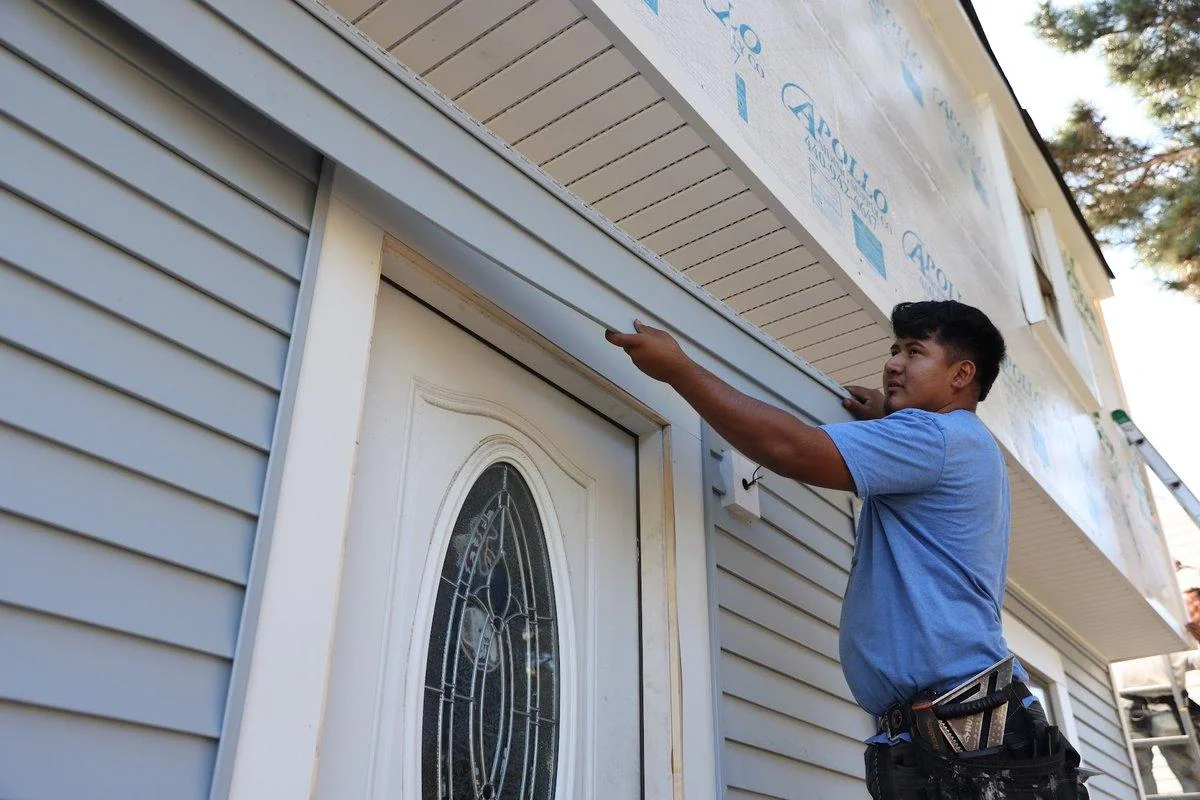
The big jump in front door cost comes with sidelites and transoms. Sidelites (also spelled sidelights) are the narrow glass panels beside the door. A transom is the panel above it. Adding them usually means a wider or taller opening, which means you’re now buying a full-frame replacement rather than a prehung swap. The same glass and sizing pricing apply to patio doors as well.
Front Door Replacement Costs That Show Up After Tear-Out
A good estimator will warn you about potential extra costs before the demolition starts:
- Rot in the framing or subfloor, found once the trim comes off
- An opening that has gone out of square as the house settled
- A non-standard size that has to be special ordered
- Brickmold and exterior trim that won’t survive the tear-out
- A worn threshold or sill that has to be replaced to keep water out
- Interior casing that no longer fits the new unit
- Finishing, since most doors ship primed rather than painted or stained
- A lockset and deadbolt, which are usually priced separately
- Hauling away the old door and frame, plus a permit fee where your town requires one for framing work
Ask which of these are included and which are exclusions.
Signs Your Front Door Needs Replacement, Not Repair
Not every draft means a new door. Weatherstripping and a hardware adjustment fix plenty of complaints. These are the situations that need more than a repair:
- Soft or crumbling wood in the frame or sill, especially at the bottom corners
- A door that sticks or won’t latch because the frame has shifted
- Daylight visible around the edges with the door shut
- Cracked or delaminating skin on a fiberglass or steel door
- Moisture trapped between the panes of the door’s glass, which means the seal is gone
If your windows are showing similar symptoms, it’s cheaper to replace windows and doors in one project than doing it separately.
Does a New Front Door Add Value When You Sell?
A new front door adds more to your sale price than it costs to install, and few home upgrades do that.
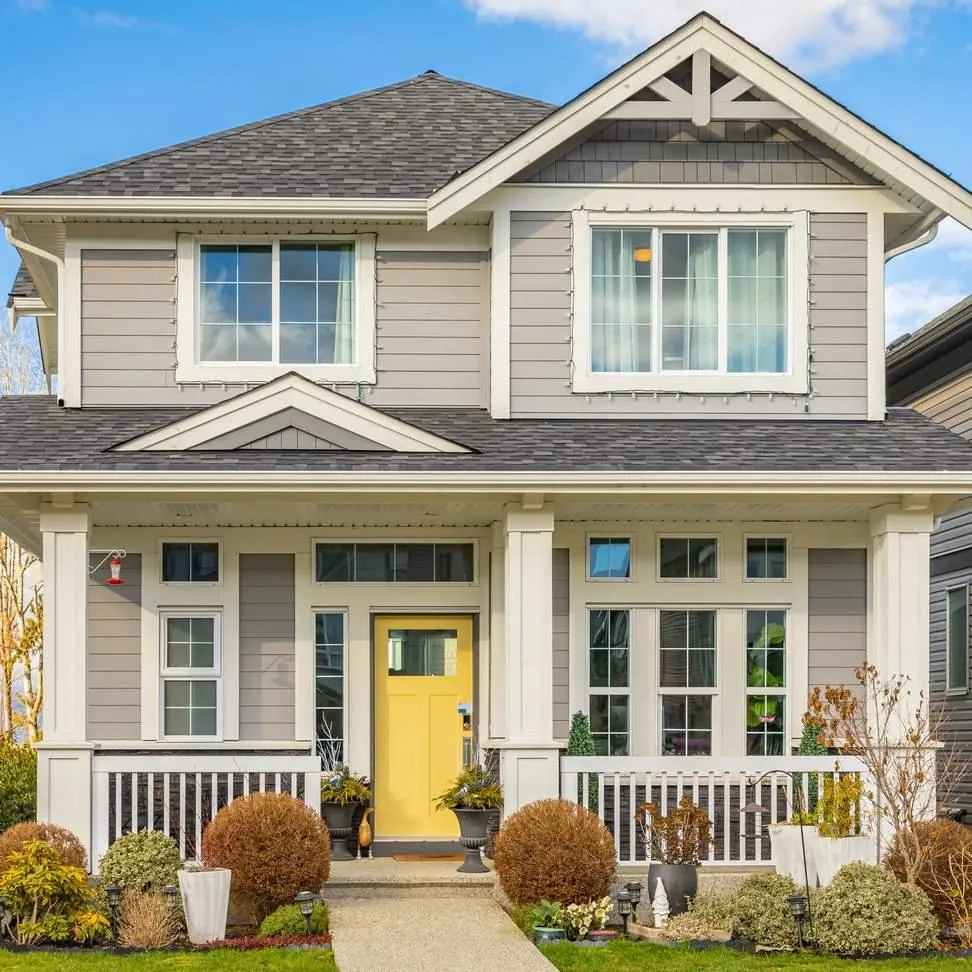
In a 2025 Remodeling Cost vs. Value report, a steel front door replacement costs $2,435 nationally and adds $5,270 to the sale price, a return of 216%. The project behind those numbers is a common prehung replacement: a new door in a new frame, with new trim inside and out. A door-only swap costs less and a full-frame replacement costs more.
The report asked more than 6,000 real estate agents what each project adds to a home’s sale price. It’s a strong signal that buyers respond to a new front door, not a guarantee you’ll get the difference back when you sell.
Can You Claim a Tax Credit for a New Front Door?
No, not anymore. The federal 25C Energy Efficient Home Improvement Credit used to apply to exterior doors, limited to $250 per door and $500 total, but only for “improvements made through December 31, 2025.” A door installed now doesn’t qualify.
If efficiency is the goal, check the performance rating on the door itself, measured against the published criteria for exterior doors. It’s the same logic that governs energy efficient windows.
Get a Front Door Replacement Quote
Home Genius Exteriors offers free, no-obligation inspections. On a door, that means someone looks at the frame, the sill, and the trim before quoting, so you know up front if you need a new door only, a prehung replacement, or a full-frame replacement. A Home Remodeling Expert puts the scope and the exclusions in writing so you can ask questions or compare bids. Schedule your free inspection today.
Frequently Asked Questions
How much does it cost to install a new front door?
Most front door replacements cost between about $1,000 and $2,500 installed. A one-for-one door hung in a sound frame averages $957 to $1,458. A prehung replacement, with a new frame and new trim, costs around $2,400 nationally. A full-frame replacement, which also rebuilds the wall framing around the door, runs up to about $4,000. Adding side windows (sidelites) beside the door costs up to $4,600. Labor is about three quarters of the total of a more comprehensive door replacement project.
How much does Home Depot charge to put in a front door?
Home Depot’s published guide lists $398 to $998 for basic exterior door installation, separate from the cost of the door. Big-box retailers subcontract installation to local crews, so the price is only part of the comparison. Ask who looks at the door and the frame before the order goes in, and who comes to repair it if it leaks later.
Can I just replace the front door without replacing the frame?
Only if the existing frame is square, solid, and the right size for the new door, and it’s less common to find this on older homes. Check the bottom corners of the frame for soft wood and look for an even gap around the closed door. If the frame has racked or rotted, a new door will never seal properly.