What Is a Door Jamb?
A door jamb is easy to ignore until it shows up as its own line on a door quote, or until the wood at the bottom of your front door frame turns soft and dark.
The jamb is the part of the frame the door hangs from and latches against, so its condition determines whether a repair will hold or whether the door and frame should be replaced together. Before you can judge either, you need to know which boards around the door make up the jamb.
Table of Contents
- What is a door jamb?
- The parts of a door frame
- Door jamb vs. door frame vs. trim
- The right frame depth for your wall
- Exterior door jamb materials and rot resistance
- Should you repair or replace a damaged door frame?
- Why a new exterior door arrives with its own frame
- Common door jamb types for interior and exterior doors
- What to look for in a replacement frame
- Get a free exterior door inspection
- Frequently Asked Questions
What is a door jamb?
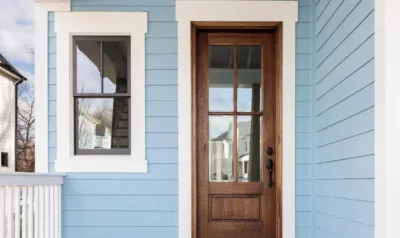
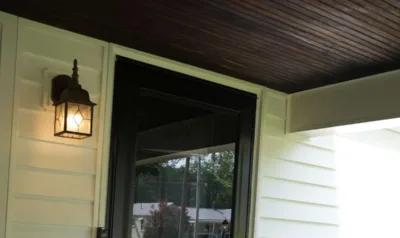
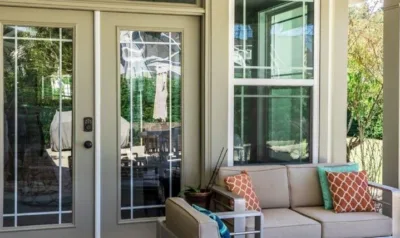
A door jamb is the set of boards that lines a doorway, one down each side and one across the top. The door hangs from the side piece with the hinges and latches into the opposite side, and on an exterior door the jamb also holds the rubber seal that keeps out air and water.
The parts of a door frame
Each piece of the frame has its own name on quotes and product listings, and the name usually says where the piece sits.
The top and the two sides
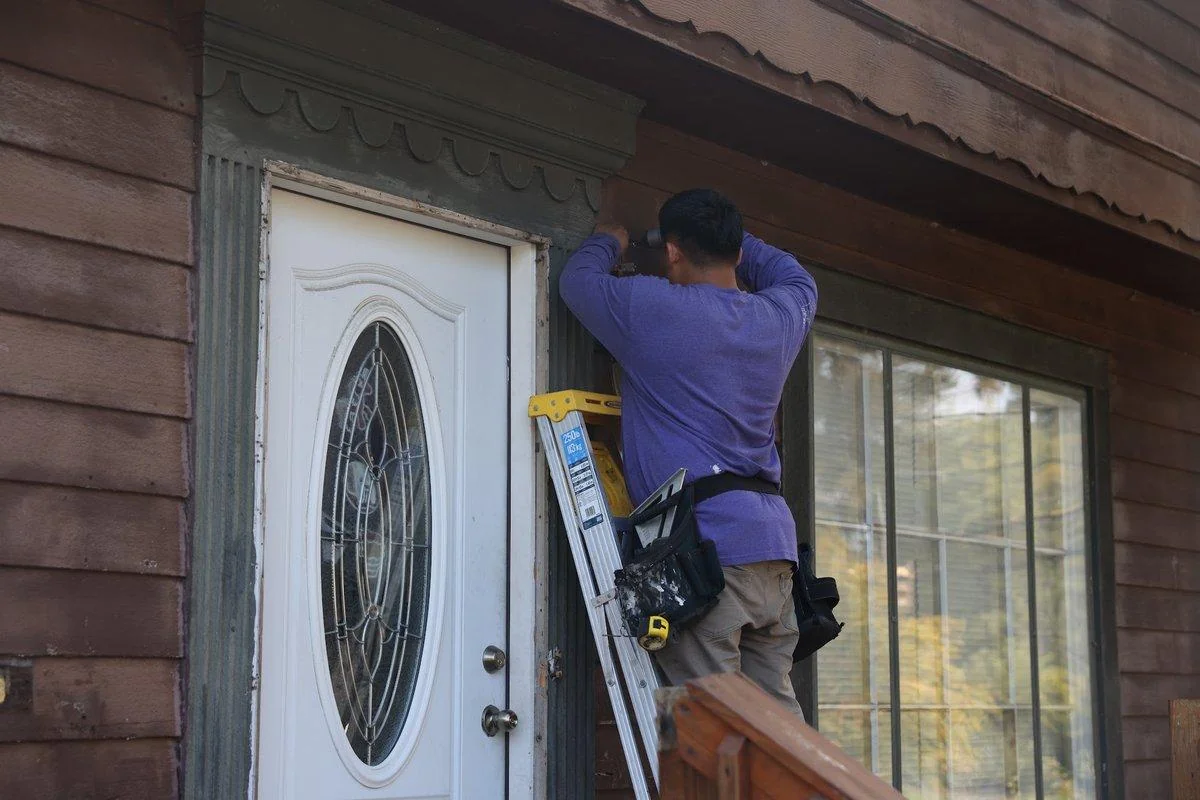
The head jamb is the horizontal piece across the top of the doorway. The two side jambs are the vertical pieces running from the head jamb down to the bottom of the doorway.
The side opposite the hinges holds the strike plate, the small metal plate where the latch and deadbolt catch. Windows use the same word: the vertical sides of a window frame are its jambs, too.
What the door closes against, and the seal
The doorstop is a thin strip attached to, or cut into, the face of each jamb piece. The door closes against it, and it keeps the door from swinging past the frame. It’s a different part from the rubber wedge that holds a door open.
On an exterior door, that rubber or foam seal, called weatherstripping, sits in a groove in the jamb or along that strip.
The sill, sometimes called the threshold, is the strip across the bottom of the doorway between the two side jambs. Interior doors usually don’t have one, and the door swings above the floor.
Door jamb vs. door frame vs. trim
A quote can list the jamb, the frame and the trim as separate items, and each word covers a different part of the doorway.
| Term | What It Is | Where It Sits | Purpose |
|---|---|---|---|
| Door Jamb | The lining of the doorway (head jamb + two side jambs) | Inside the wall, between the wall framing and the door | Supports the door, holds the hinges and latch plate, anchors the seal |
| Door Frame | The full structural assembly: jambs, sill, and the framing above | The entire perimeter of the doorway | Defines the doorway and transfers the door’s weight to the wall structure |
| Casing (Trim) | Decorative molding, called casing, applied over the gap between the jamb and the wall surface | On both sides of the wall, covering the jamb-to-drywall seam | Hides the rough edge and finishes the look |
Trim can be replaced without touching the jamb, but a new jamb always means taking the trim off first.
On the outside of the house, a storm door frame mounts to the exterior trim around the doorway, which is why the depth of that trim is measured before one is ordered.
The right frame depth for your wall
A jamb’s depth is its width from the inside edge of the doorway to the outside edge, and it has to match the full thickness of the wall, including the framing and the wall covering on both sides.
Standard jamb depths follow the wall: a 2×4 wall with half-inch drywall takes a jamb about 4-9/16 inches deep, and a thicker 2×6 wall takes one about 6-9/16 inches deep.
Walls thicker than the standard sizes
A layer of rigid foam insulation on the outside or a second sheet of drywall on the inside adds to a wall’s thickness, and the jamb has to be deep enough to cover it.
A jamb that matches the wall lets the trim sit flush on both sides, which keeps air and water out around the door. A shallower jamb leaves a gap at the trim, and a deeper one sticks out past the wall surface.
Jamb extensions, thin strips added to the edge of the jamb, can make up a small difference. For a larger difference, a jamb ordered at the wall’s actual depth fits without them.
Exterior door jamb materials and rot resistance
Exterior door jambs face rain, condensation and water that pools at the sill, so the material has to stand up to all three.
Wood, composite, and vinyl options
Finger-jointed pine, short pieces of pine glued end to end and primed, is the traditional choice. Water that soaks into wood at the bottom of the side jambs, where they meet the sill, can lead to rot.
Primed composite is a mix of wood fiber and resin, and some all-composite frames are made so they won’t absorb water or rot. Other doors pair a wood frame with a composite bottom, which helps keep the lowest stretch of the jamb from absorbing water.
Polyvinyl chloride (PVC) jambs, the vinyl option, stay popular for interior doors and budget projects, while composite jambs in the deeper sizes pair well with humid exterior walls.
The door and the jamb don’t have to match in material, so fiberglass and steel entry doors can both go into a composite jamb sized to the wall.
Should you repair or replace a damaged door frame?
Jamb damage usually shows up as soft wood, a door that won’t latch or a draft around the edges, and how far the damage has spread determines whether a repair will hold.
Signs of repairable damage
Shallow rot in a small area can often be repaired. A contractor cuts out the soft wood, fills the spot with epoxy wood filler and repaints it, as long as the rest of the jamb is solid, the door still closes evenly and the hinge screws hold tight. If the jamb is straight and sound, new weatherstripping alone can stop a draft.
Signs it’s time for a new door and frame
These signs mean the damage has gone past what filler or new weatherstripping can fix:
- Rot that has spread behind the trim or into the wall framing. A contractor checks by pressing a screwdriver into the wood, and if it sinks in with light pressure, the rot is too deep for filler.
- A doorway that’s no longer square. When the jamb shifts, the door stops closing evenly and gaps open at the top or bottom. Adjusting the jamb can correct a small shift, but not a large one.
- Hinge screws that no longer hold. When the screws turn without gripping, the wood around the hinge cutouts has gone soft or been stripped.
- Warped or rotted surface under the seal. New weatherstripping only seals against a flat, even surface.
When two or more of these signs show up together, replace the door and jamb at the same time.
Rot or loose wood around the deadbolt is a security problem as well as a water problem, so have it looked at soon.
Why a new exterior door arrives with its own frame
A prehung door comes already hung in its own jamb, with the hinges attached.
A door bought by itself has to be matched to the old frame, with hinge cutouts and lock holes made to line up with the old ones. A prehung door arrives with that work done, and an exterior model also comes with its sill and weatherstripping in place.
That’s why replacing an exterior door usually means a new jamb, too: the old frame comes out, and a prehung replacement sized to the wall goes in, so the seal is tight, the hinges line up and the latch catches. The same choice shows up in front door replacement cost: hanging a new door in the old frame is the cheapest option, a prehung replacement is priced higher, and rebuilding the doorway down to the wall framing is the most expensive.
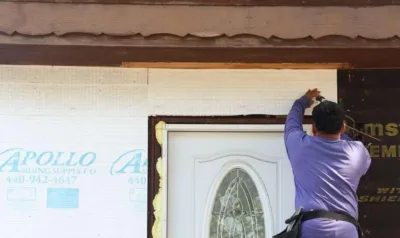
The installer levels the new jamb in the framed gap with thin wedges, fastens it to the wall framing, insulates the space around it and checks the seal before the trim goes on.
Common door jamb types for interior and exterior doors
Jambs come in a few types, depending on the door style and how the wall is built.
Rabbeted jambs have an L-shaped groove, called a rabbet, cut along each side jamb, which forms a built-in stop for the door.
A double-rabbeted jamb has that groove on both edges of the frame.
Flat jambs have no groove, so the strip the door closes against is nailed onto the face of the jamb, where it can be moved if the door doesn’t close evenly.
A split jamb comes in two halves that slide together from each side of the wall, so it adjusts to small differences in wall thickness.
The type is also how a product listing describes the frame, as in “single-rabbeted prehung.”
What to look for in a replacement frame
Before you sign a quote for a new exterior door, ask whether it includes a new sill and new trim inside and out. The sill should slope slightly toward the outside so water runs away from the house, and the old interior trim often doesn’t fit a new frame.
Also ask how the contractor prices damage found during the tear-out, such as rotted wall framing under the old sill, since nobody can see it until the trim comes off. And ask what warranty covers the frame itself, because some manufacturers back their rot-resistant frames separately from the door.
Get a free exterior door inspection
Home Genius Exteriors provides free inspections for exterior doors, and the team can tell you whether a soft or shifted jamb can be repaired or whether the door and frame should be replaced together. They install ProVia entry doors, with frame options that include an all-composite frame. Call today to schedule your free inspection.
Frequently Asked Questions
What is the difference between a door jamb and a door frame?
The frame is the whole structure, and the jamb is the lining inside it. When a quote mentions a new frame, ask the contractor which parts it covers.
What do door jambs look like?
A door jamb looks like three flat boards, usually painted or stained, lining the two sides and the top of the doorway. With the door open, it’s the edge of the doorway between the door and the trim, with the hinges set into one side and the latch’s metal plate in the other.
Why do they call it a door jamb?
The word comes from the French word jambe, meaning leg, for the two upright pieces that stand on either side of a doorway.
What is another word for a door jamb?
Doorpost is another word for the side pieces of the frame. Quotes and product listings usually say jamb, often with its position, such as head jamb or side jamb.