What Is a Prehung Door?
A replacement quote for your front door often lists a “prehung” option, sometimes beside a cheaper door-only price, with no note on why it costs more or why your installer chose it.
The difference is the frame, because a prehung door comes with a new one. Whether you need that depends on whether it’s an exterior or interior one and on the condition of the frame you have now, so start with what a prehung door includes.
Table of Contents
- What is a prehung door?
- What comes with an exterior prehung door
- Prehung door or just the door panel: which one do you need?
- Why exterior door replacements include a new frame
- How to tell a door’s hand and swing
- What size should a prehung door be?
- When your installer can reuse the frame
- Interior vs. exterior prehung doors
- What to check on an exterior door quote
- Get a free exterior door inspection
- Frequently Asked Questions
What is a prehung door?
A prehung door is a door that comes already hung on its hinges inside a complete frame, shipped as one piece ready to install. The frame runs down both sides and across the top, and an exterior prehung door also has a sill at the bottom with weatherstripping (rubber seals) already in place. Because it all comes squared from the factory, the door closes evenly and seals once your installer sets the frame in the wall.
What comes with an exterior prehung door
An interior prehung door stops at the door, the frame, and the hinges.
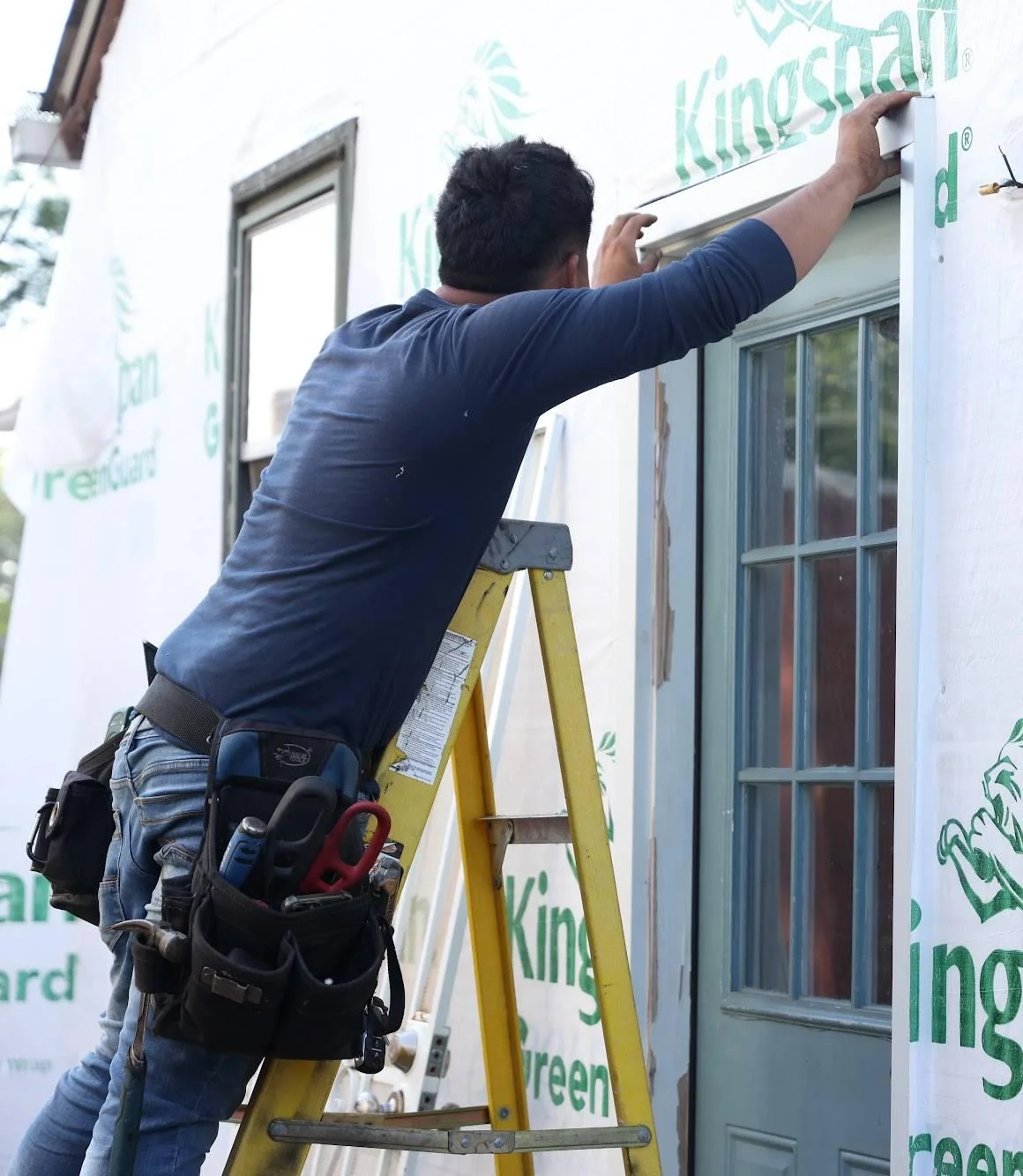
An exterior one adds the pieces that keep rain and drafts out of the house.
Parts of the exterior door and frame
- The door is the part that swings open and closed. Fiberglass and steel are common materials for an exterior door, and they differ in weight, dent resistance, and how well they take paint.
- The frame holds the hinges on one side and, on the other, the metal plate the latch catches.
- The hinge slots are cut and the hinges attached at the factory, so the door swings correctly before it leaves the box.
- The sill is sloped or channeled to send water away from the house, and it usually has an adjustable cap that seals against the bottom of the door.
- Weatherstripping presses against the door when it closes, blocking air and moisture.
- The exterior trim, listed as brickmold on many quotes, covers the gap between the frame and your siding or brick, and it often comes attached.
- Exterior prehung doors often arrive with the lock and deadbolt holes already drilled to standard dimensions.
ProVia’s prehung exterior doors, from a manufacturer of entry, patio, and storm doors, ship everything in one box, with the trim cut to size and wrapped separately and the lock hardware packed on its own.
Prehung door or just the door panel: which one do you need?
A door panel sold on its own is only the door, with no frame, no hinges, and no sill.
Your installer cuts the hinge slots and drills the lock holes on site to match your existing frame, then hangs the new door in it.
| Factor | Prehung Door | Door Alone |
|---|---|---|
| What’s included | Door, frame, hinges, sill (exterior), weatherstripping, exterior trim, drilled lock holes | Door panel only |
| Installed cost range | Higher (full assembly plus labor to set the frame) | Lower (door panel plus labor to fit it to your existing frame) |
| Installation time | Longer | Shorter if your existing frame is square and sound |
| Existing frame reused? | No. Your old frame is removed. | Yes. The door alone hangs in your old frame. |
| Must be square and level? | Your installer levels the new frame in the wall | Your existing frame must already be square, or the door alone won’t seat properly |
| Best for exterior? | Yes. The sill, weatherstripping, and frame are all new. | Only if your existing frame, sill, and weatherstripping are all in good condition |
Your installer checks your existing frame for rot, water damage, and shifting before writing the quote.
Of the three ways to replace a front door, hanging a new one in your existing frame is the cheapest, a prehung replacement costs more, and rebuilding the doorway down to the wall framing costs the most. That’s why front door replacement cost varies by thousands of dollars from one quote to the next.
Why exterior door replacements include a new frame
On an interior door, the frame’s only job is to hold the door straight so it swings freely and latches. There’s no weather to keep out.
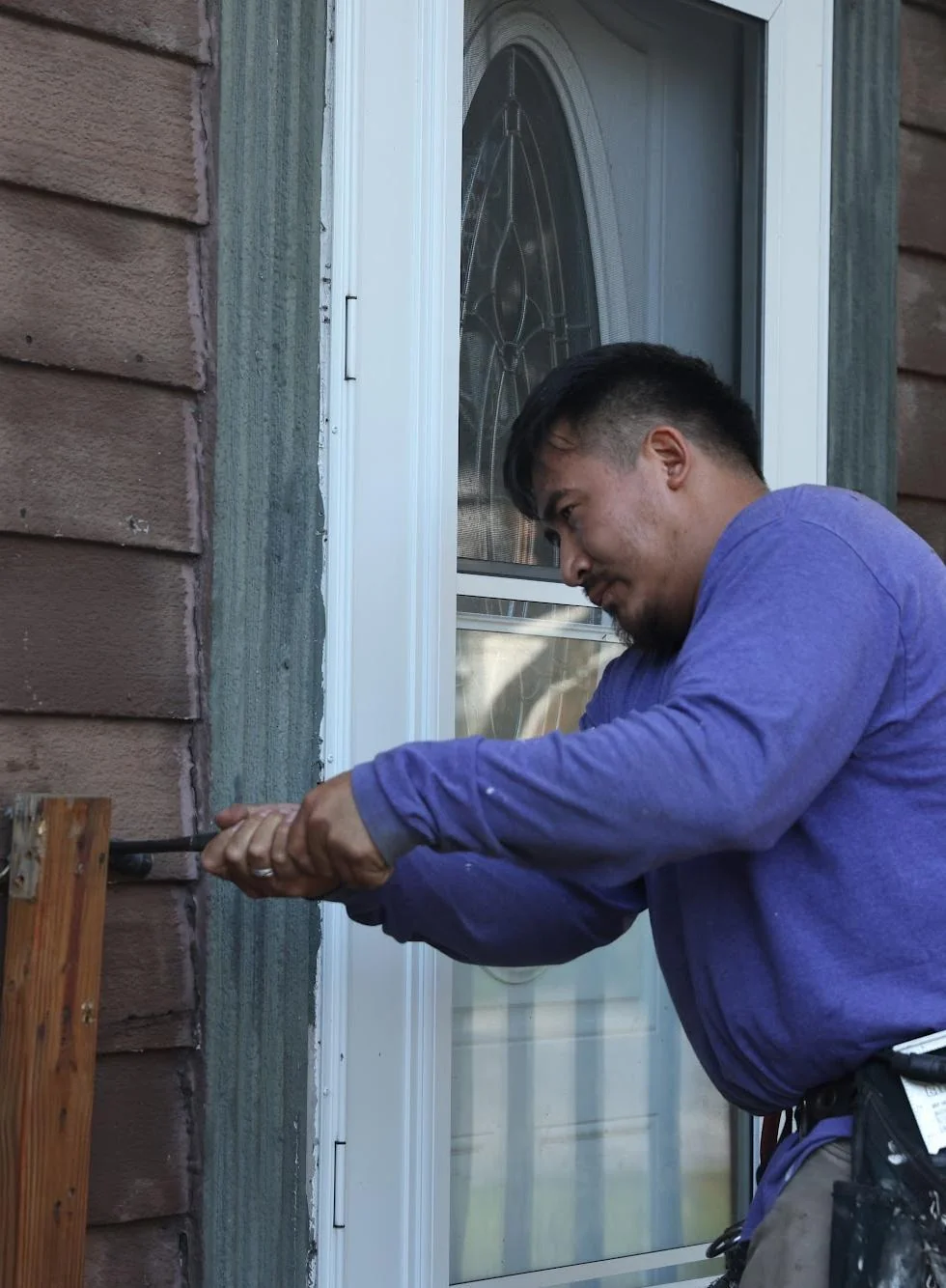
An exterior door frame does the same work and also seals the gap between the inside of your home and the weather outside.
Years of rain and sun wear down that seal and the frame itself.
Signs of wear on an old exterior frame
A worn sill no longer slopes correctly, and water can pool against it instead of draining away.
Compressed or cracked weatherstripping leaves gaps that let heated or cooled air escape.
A racked frame, one that has shifted out of square, is harder to spot than a worn sill. When a house settles unevenly or the framing around the door shifts, the frame’s two sides stop running parallel. In a frame like that, a new door rubs in one corner and leaves a gap in the opposite one.
With a prehung door, the worn sill, the old weatherstripping, and the racked frame all go out together. The gap around the new frame is then filled with caulk or low-expansion foam, the usual method for air sealing around doors and windows, since fiberglass insulation alone won’t stop air leaks.
How your installer seals the sill and trim
Before the door goes in, your installer sets a shallow waterproof tray under the sill and laps waterproof flashing tape behind the exterior trim, each layer over the one below it, so any water that gets past the door runs back outside instead of into the wall.
How to tell a door’s hand and swing
Every prehung door is built with a “hand,” the side its hinges are on, and a swing direction. Your installer orders it with both, because a door built the wrong way opens into a wall, blocks a hallway, or puts the hinges on the wrong side.
Left-hand vs. right-hand
Stand outside, facing the door as if you’re about to walk in, the same way you’d hand a storm door.
If the hinges are on your left, it’s a left-hand door. If the hinges are on your right, it’s a right-hand door.
Does the door swing in or out?
An inswing door opens into the house, which keeps its hinges on the inside, out of reach from outside.
An outswing door opens toward the outside, so wind pushes it against its weatherstripping instead of away from it, which helps seal out wind-driven rain.
A prehung door built as “right-hand inswing” can’t be changed to “left-hand inswing” on site without rebuilding the frame.
What size should a prehung door be?
The framed hole in the wall, called the rough opening on a spec sheet, is built slightly larger than the prehung door on every side.
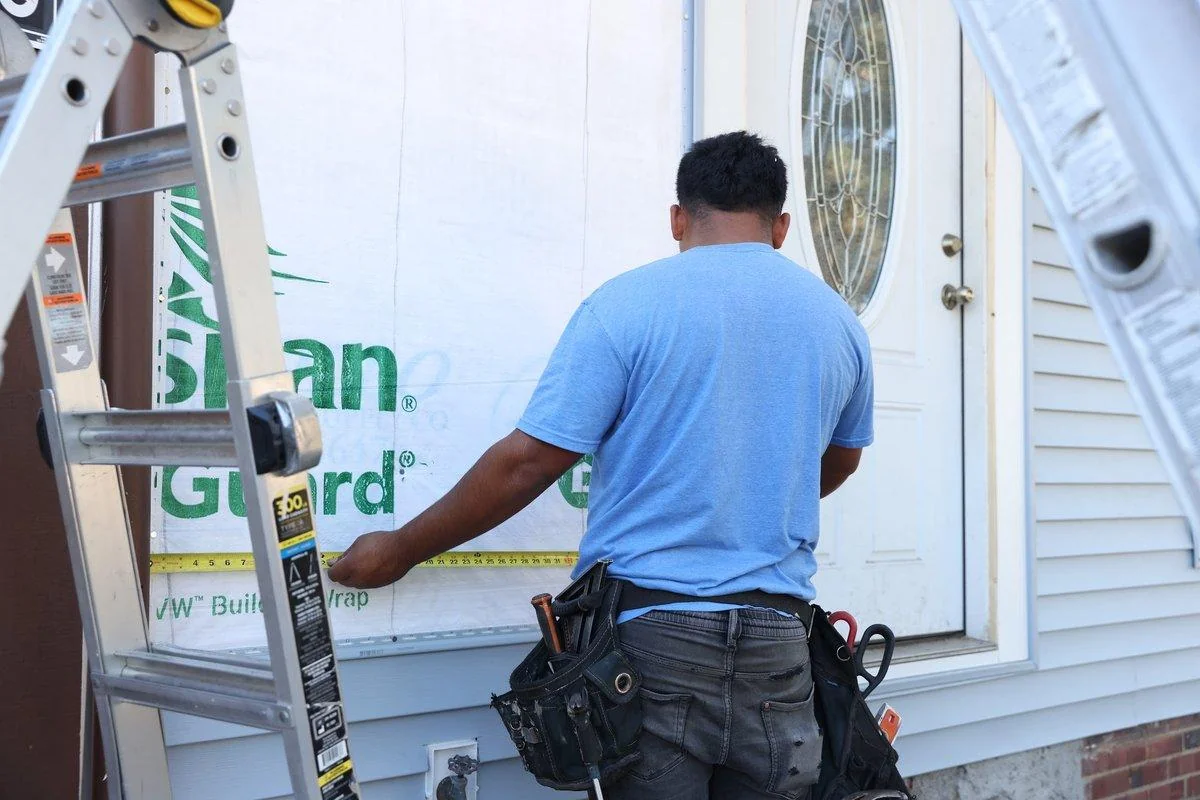
That gives your installer room to shim the frame, tapping thin wedges in behind it until it sits level and square, even when the wall framing isn’t.
The manufacturer’s spec sheet for your door lists the exact size that hole has to be. It varies by brand, by whether the door has narrow side windows or a window above it, and by the frame material, so your installer checks the spec sheet before any framing work starts.
If the hole for your current door is an unusual size, your installer can often add strips of wood to narrow it or trim the framing back to widen it. A bigger change in size means rebuilding part of the wall framing, which adds time and cost.
When your installer can reuse the frame
Your installer can hang a new door in your existing frame when all three of these are true:
- Your existing frame is structurally sound.
- The change is cosmetic, such as updating the style or color of an interior door.
- The new door panel matches your old one’s dimensions and hinge placement.
Inside the house, all three are often true. On an exterior door, they rarely are.
A prehung door is the standard front door replacement for that reason.
Interior vs. exterior prehung doors
An exterior prehung door is usually a fiberglass or steel skin over a foam core, which helps it insulate the entry.
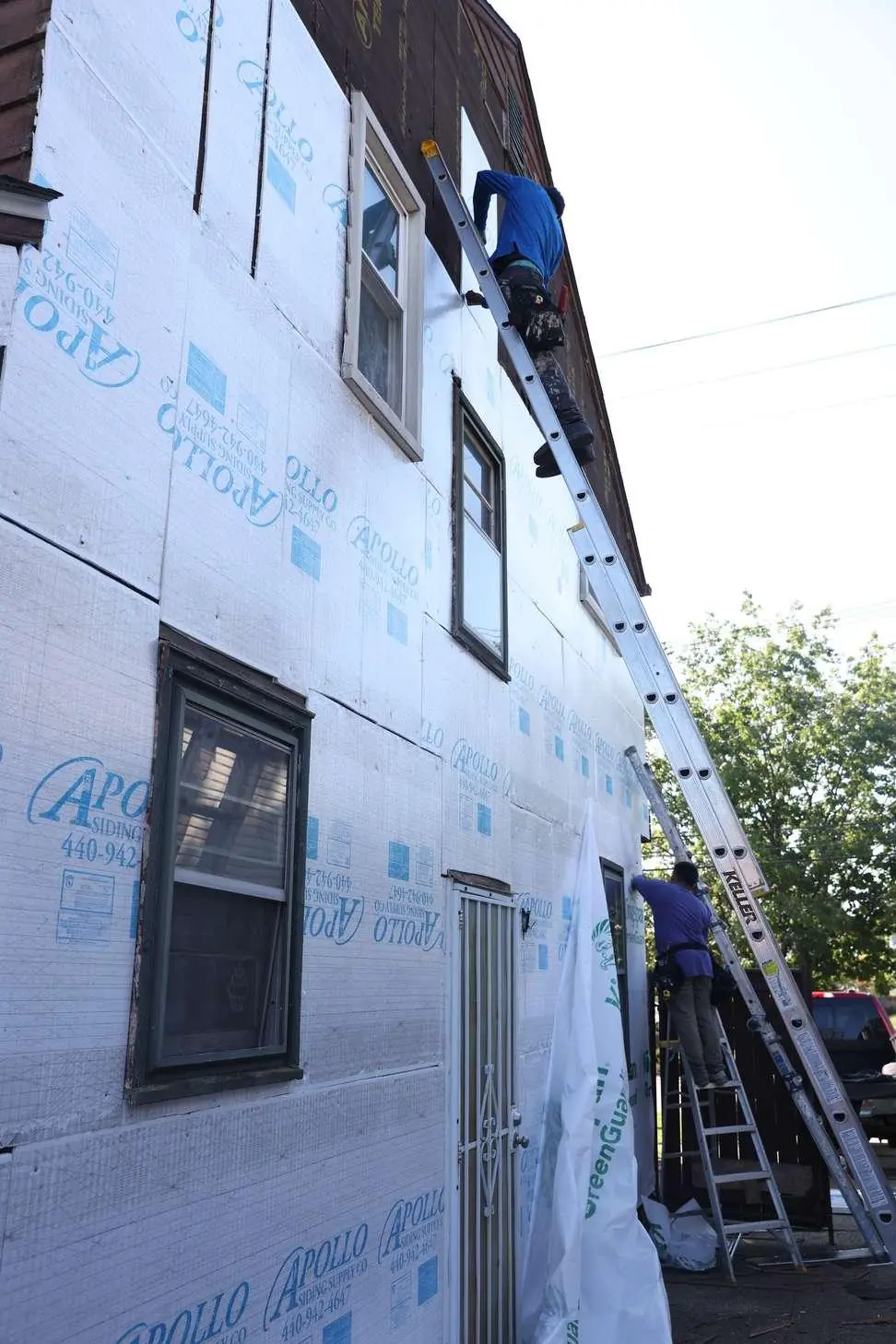
For an interior door, your installer only sets the frame in the doorway, levels it, and fastens it to the wall framing.
What to check on an exterior door quote
Before you sign, check that the quote spells out each of these:
- Whether it’s a prehung door or a new door hung in your existing frame.
- The door’s hand and swing, written out.
- How the installer will waterproof the sill and seal the gap around the frame.
- Which warranty covers the workmanship and which covers the door itself.
Get a free exterior door inspection
Home Genius Exteriors installs ProVia entry doors, storm doors, and patio doors. Every installation is backed by the Genius Limited Lifetime Warranty on workmanship, with the manufacturer’s warranty covering the materials separately.
Home Genius Exteriors provides free inspections for homeowners who want an installer to check their existing exterior door frame. Call today to schedule yours.
Frequently Asked Questions
Is it better to get a prehung door?
For an exterior door, almost always, because the new frame comes with a new sill and new weatherstripping. For an interior door, only when the existing frame is damaged or out of square.
Can you just buy a door without the frame?
Yes. A door sold without a frame costs less than a prehung door, and your installer fits it to the frame you already have, which works when that frame is square and free of rot.
What is a bored door panel?
It’s a door panel with the holes for the doorknob and deadbolt already drilled at the factory, at a standard spacing. “Bored” describes only the lock holes, not the frame or hinges.
Do doors come with hinge cutouts?
A prehung door does, with the hinges already attached. A door sold without a frame often doesn’t, and your installer cuts the hinge slots to line up with the hinges on your existing frame.
What do prehung doors include?
An interior prehung door includes the door, its frame, and the hinges. An exterior one adds a sloped sill, weatherstripping, exterior trim, and often holes drilled for the lock and deadbolt.
How to hand a prehung door?
Your installer records two details when measuring: which side the hinges are on, seen from outside, and whether the door swings into the house or out. The order lists both together, such as left-hand inswing.