Attic Insulation Removal: What to Expect
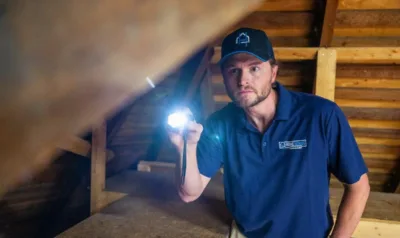
Before you pay for attic insulation removal, know that much of what’s up there doesn’t need to come out at all. Removal is a line item on the invoice, but it isn’t always needed. Sometimes you can install new insulation over the old stuff and it’ll perform just as well for a fraction of the price.
However, sometimes you really do need to remove the insulation. It depends largely on the material and its condition. An attic inspection will show whether yours needs to come out.
Do You Need to Remove Old Attic Insulation?
Usually not. If the existing layer is dry, loose, and free of contamination, new insulation can be added directly on top of it and you keep the R-value you already have (the rating for how well insulation slows heat that moves through it).
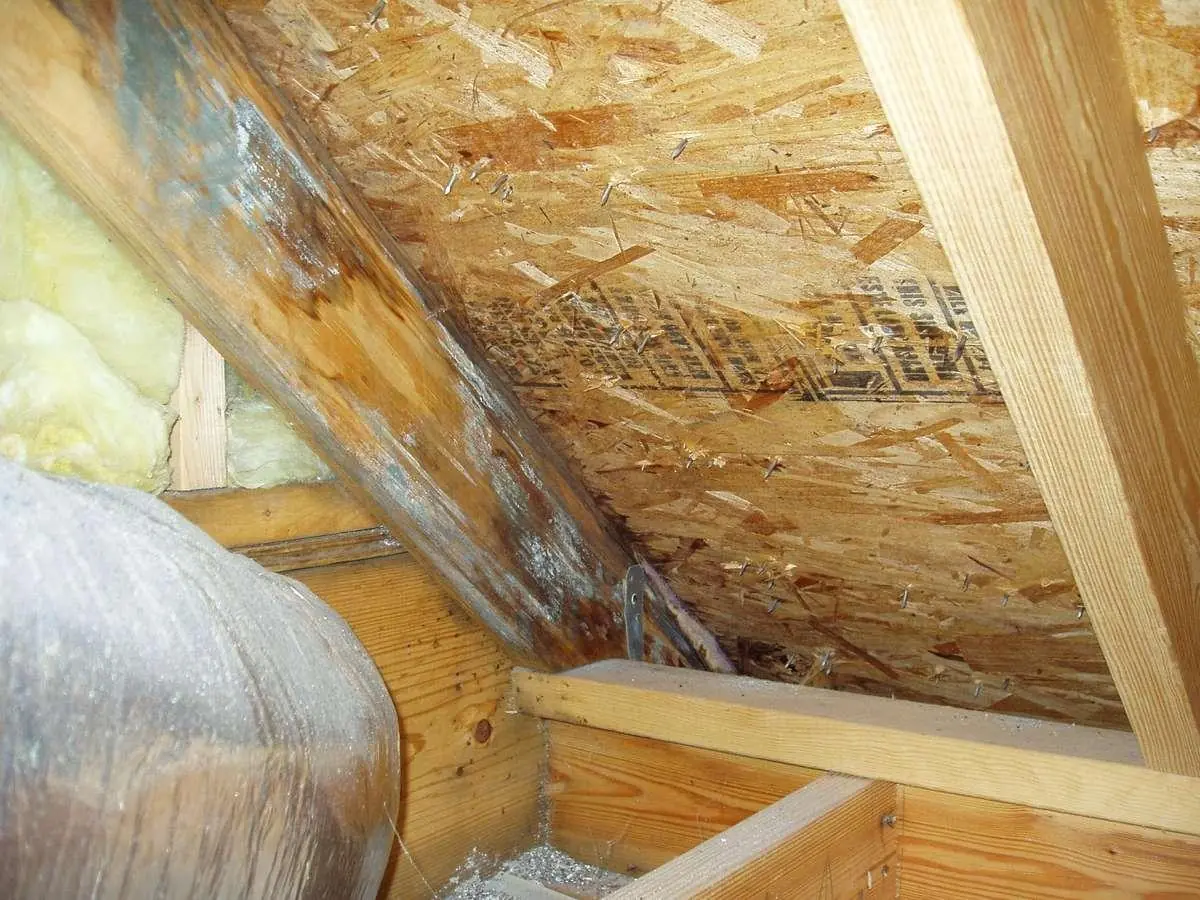
Removal becomes necessary when the material is wet, moldy, fire-damaged, compacted to the point of uselessness, contaminated by rodents, or when it’s vermiculite, which may contain asbestos.
When Should You Remove Attic Insulation?
| Condition | Remove it? | Add on top? |
|---|---|---|
| Dry, loose, evenly spread | No | Yes |
| Flattened or settled below joist height | Sometimes, if it no longer performs | Often fine |
| Water-stained or damp from a roof leak | Yes | No |
| Visible mold growth | Yes | No |
| Rodent or bat droppings and nesting | Yes | No |
| Smoke or fire damage | Yes | No |
| Vermiculite (small pebble-like grains) | Call an asbestos contractor | No |
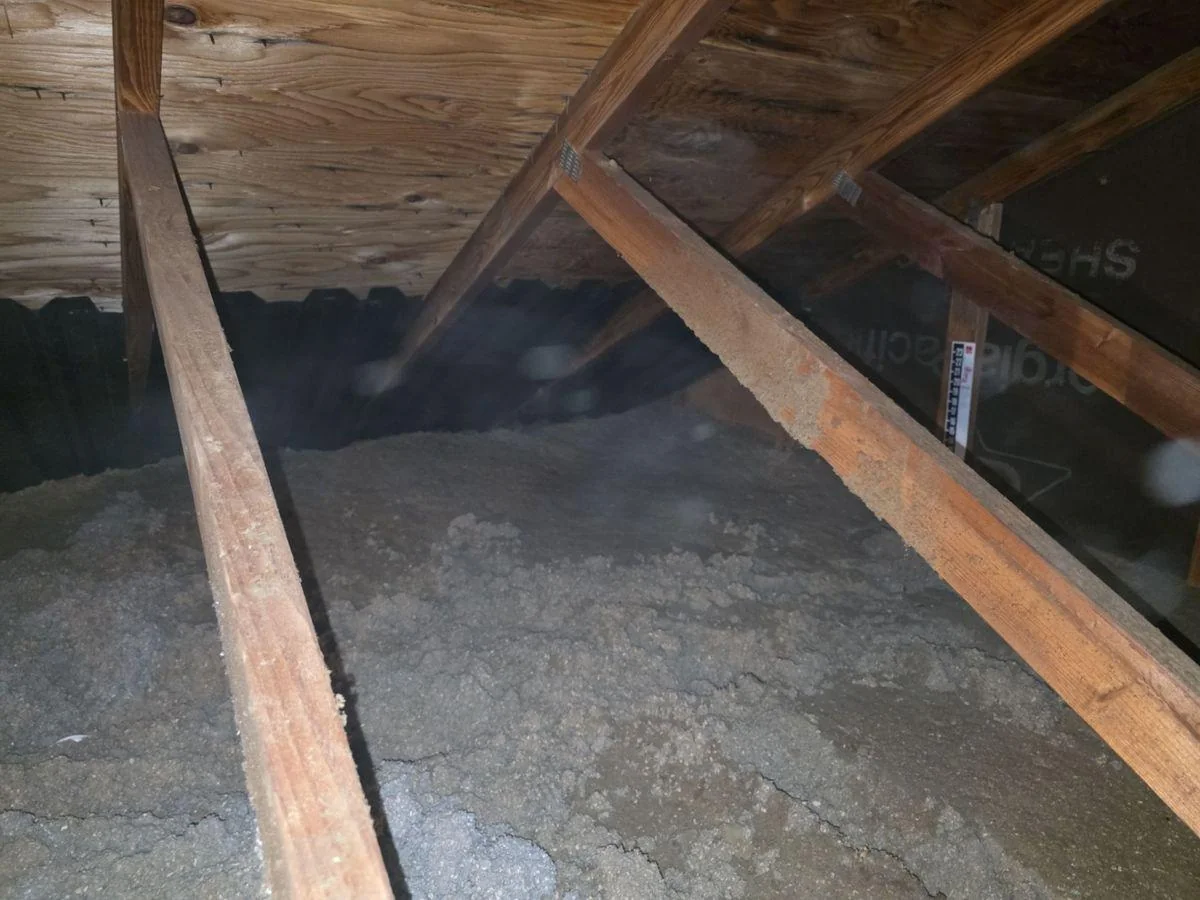
People misread settling. Blown-in insulation compacts over decades, and compacted material insulates worse than fluffy material of the same depth. That doesn’t automatically mean you need to remove it. If it’s clean and dry, blowing new material over it usually restores performance at a lower cost than tearing it out first.
The conditions that do force removal have one thing in common: something is in the insulation that you don’t want spread through the house, or the material is holding water. Insulation that has been wet doesn’t recover. It stays compressed, it can grow mold, and it keeps the roof deck above it damp.
Vermiculite: The Attic Insulation You Should Never Touch
If your attic contains a loose, pebbly material that looks like small gray-brown or silvery accordion-shaped granules, stop and get it identified before anyone disturbs it.
Vermiculite insulation sold through most of the twentieth century frequently came from a mine that also contained asbestos. A mine near Libby, Montana was the source of over 70 percent of all vermiculite sold in the United States from 1919 to 1990, and that deposit was contaminated.
The federal guidance for homeowners is to assume any vermiculite contains asbestos and leave it undisturbed. Leave it alone in the attic or walls, avoid storing anything in that attic, keep children out of it, and never attempt removal yourself. If you’re planning work that could disturb it, you’ll need a licensed asbestos abatement contractor, which is a different trade from an insulation crew and a different kind of license.
Vermiculite is easy to mistake for ordinary loose fill. Never poke around to see how deep it goes!
What to Expect During Professional Attic Insulation Removal
Removal is a containment job, not a cleanup job. The crew’s goal is to get the material out of the attic without spreading it through the house.
Here’s what you can expect during the insulation removal process:
- Assessment: Someone confirms what the material is, why it’s no longer doing its job, and whether to proceed with a standard removal or an abatement.
- Containment: The access hatch and the path to it get sealed and protected, because everything that comes out has to travel through your living space.
- Vacuum extraction: The crew runs a hose from the attic to a commercial vacuum with HEPA filtration on a truck outside, so the debris goes straight out of the house.
- Bagging and disposal: Material is sealed and hauled away. Disposal fees vary by volume and by whether the material is contaminated.
- Sanitizing: If there were rodents or mold, the exposed surfaces get treated, not simply covered.
- Air sealing: With the attic floor bare, every gap around wiring, plumbing stacks, and wall top plates is visible and reachable. This is a great opportunity to air seal the attic.
- Baffles and re-insulation: Baffles, the channels that hold an air path open along the roof edge, go in to keep the attic ventilation path clear before the new insulation goes down.
What Does Attic Insulation Removal Cost?
Removal is priced per square foot of attic floor. The national insulation removal cost is about $1 to $2 per square foot for a straightforward job. Contractors who publish their own rates quote up to $3. The price goes up if there’s contamination, like mold or hazardous material, because the work becomes containment and disposal rather than extraction.
Three things affect the price:
- What’s in the material: Rodent contamination and mold add labor, protective equipment, sanitizing, and disposal cost.
- Access: A pull-down stair into a tall attic makes access easy. A small hatch into a crawl-height space means slower work and more hose.
- Volume: Disposal is charged by what comes out, so a deep layer costs more to get rid of than a thin one.
Removal quoted as part of a full removal-and-replace project usually costs less than removal alone, because the crew is already there and the attic only gets prepped once. When you’re comparing bids, check whether air sealing is included in the total, since that’s where two otherwise similar quotes tend to differ.
How Long Attic Insulation Removal Takes
Most residential removals are a one-day job, and a removal-plus-reinsulation on an average attic often finishes in a day as well. Contaminated attics take longer because the crew will need to sanitize between extracting the old material and installing the new insulation.
Can You Remove Attic Insulation Yourself?
No. Vermiculite may contain asbestos, and disturbing it can cause fibers to get into the air. Rodent droppings and nesting in insulation harbor pathogens that go airborne when the material is agitated.
Fiberglass and mineral fiber irritate skin, eyes, and lungs. In summer, attics get hot enough that working with a respirator comes with the risk of heat exhaustion. And you’re working on joists with nothing but drywall between the gaps, so a misplaced step puts a leg through a bedroom ceiling.
Renting a vacuum doesn’t address any of that. The equipment is the easy part of the job. The rest involves a lot of risk that would be better handled by the pros.
What to Do Before Removing Attic Insulation
Start with an attic inspection. The inspector will identify the material, check for moisture, and find the source of any leaks if applicable. Once the attic is clear, the crew will seal any air leaks (one of the biggest energy benefits of the whole project) before the new layer of roof insulation goes in.
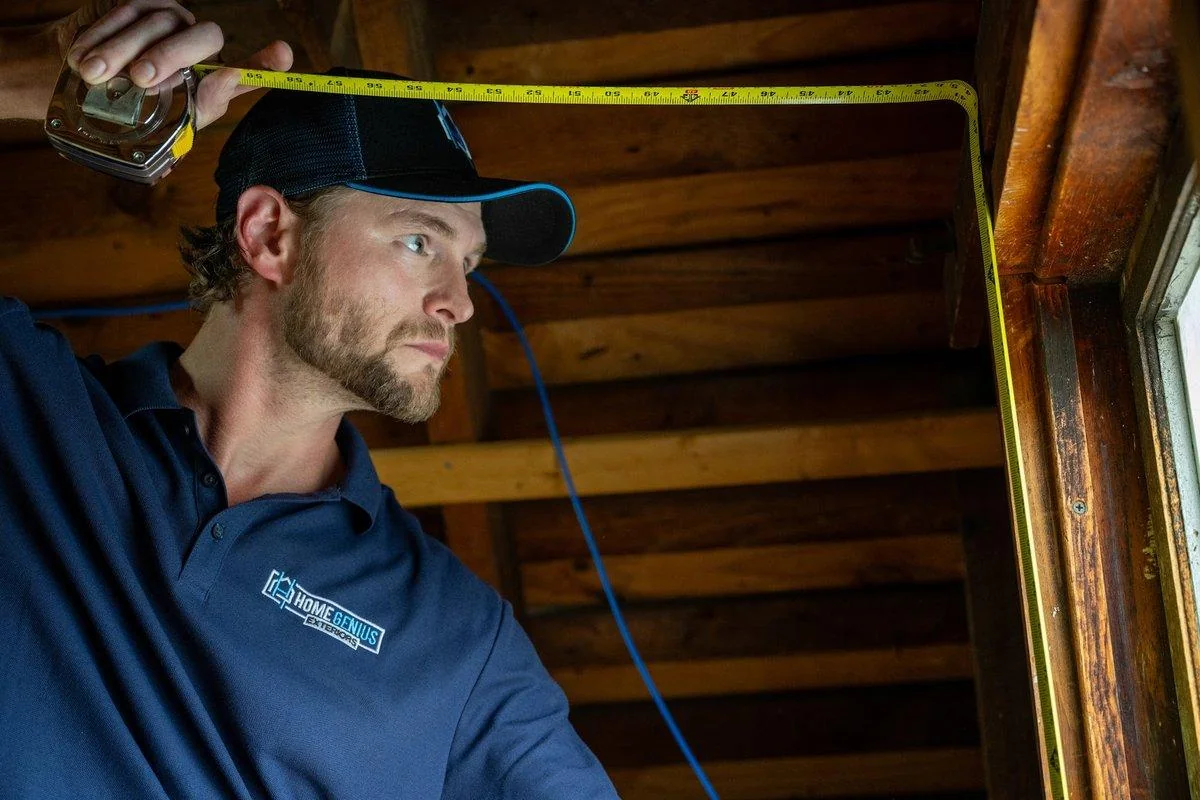
Home Genius Exteriors provides free, no-obligation attic inspections. A Home Remodeling Expert will identify the material, check for moisture and contamination, and tell you whether the existing insulation has to be removed or if adding new insulation is the way to go. Schedule your free inspection today.
Frequently Asked Questions
How much does it cost to remove attic insulation?
Insulation removal costs about $1 to $2 per square foot of attic floor for a straightforward job, with some contractors quoting up to $3. By those numbers, a 1,000-square-foot attic costs $1,000 to $3,000 for removal.
Can I remove attic insulation myself?
No. The material may contain asbestos if it’s vermiculite. Rodent-contaminated insulation harbors pathogens that can become airborne when disturbed. Fiberglass irritates skin and lungs, attics reach dangerous temperatures in summer, and there’s no floor between the joists to catch a misstep.
Should you always remove old attic insulation?
Only when there’s a reason. Dry, uncontaminated insulation can usually be left in place with new material added on top, which preserves the effectiveness of your existing insulation. Remove it when the material is wet, moldy, rodent-contaminated, fire-damaged, or vermiculite.
Can I vacuum old insulation from my attic?
Not with household equipment. Professional removal uses a commercial insulation vacuum with HEPA filtration and a hose that runs directly outside so debris never passes through your living space. A shop vac lacks the filtration to contain fine particles and you risk distributing them through the house.
How do you dispose of old attic insulation?
The removal crew seals the old insulation in bags as it leaves the attic and hauls it away. The disposal fee depends on the volume and whether the material is contaminated. If there’s vermiculite present, a licensed asbestos contractor will remove and dispose of it accordingly as it may contain asbestos.