What Is TPO Roofing?
Rain runs off a steep roof on its own, but on a nearly flat porch, addition or rowhome top it drains slowly, which is why the quote for that section may name thermoplastic polyolefin (TPO) roofing instead of shingles.
Shingles overlap one another and need that pitch to shed water, so the level parts of a house take a covering with sealed seams. Before you compare TPO with the other options on the quote, here’s what it is.
Table of Contents
- What Is TPO Roofing?
- Where a House Has a Flat or Low-Slope Roof
- The Parts of a TPO Roof
- Heat-Welded Seams
- What TPO Does Well on a House
- Trade-Offs to Know Before You Sign a Quote
- TPO vs. Rubber vs. Asphalt Roofing
- How Long Does a TPO Roof Last?
- TPO Roofing Cost per Square Foot Installed
- How to Care for a Flat Roof
- What to Ask a Contractor Before a Flat Roof Replacement
- Get Help With a Flat or Low-Slope Roof
- Frequently Asked Questions
What Is TPO Roofing?
TPO roofing is a single-ply roof covering, meaning one flexible plastic sheet, called a membrane, that’s rolled out over the roof and fused at the seams with hot air instead of glue. Contractors install it on the flat and low-slope sections of a house. Ethylene propylene diene monomer (EPDM), a synthetic rubber sheet, goes on the same kinds of roofs.
Where a House Has a Flat or Low-Slope Roof
A house gets a flat or low-slope section where a steep pitch won’t fit, such as a porch roof under a second-story window or the space over an attached garage. A home can have both a flat roof and a pitched roof, with shingles on the steep main section and a sheet like TPO on the low ones.
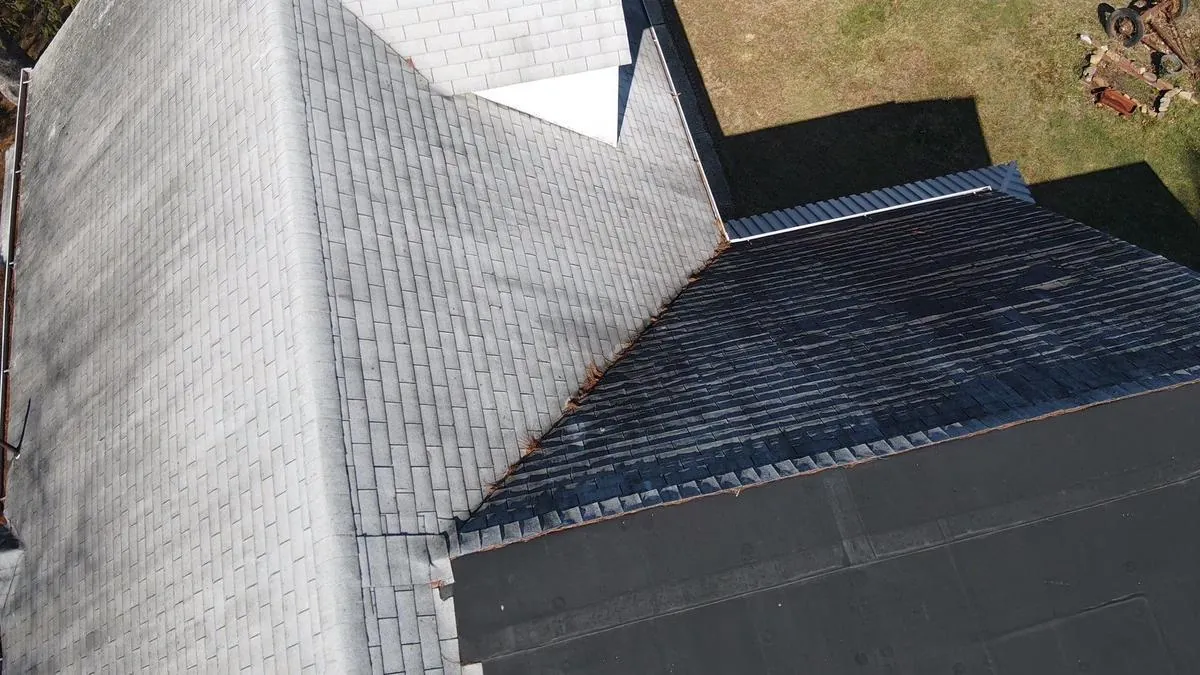
On a section that’s between flat and pitched, a roofer measures the slope before recommending a material, because roll roofing can also work on a slope of 1 to 2 inches per foot.
The Parts of a TPO Roof
A TPO roof has three parts: the sheet on top, a layer of rigid insulation under it, and the screws, glue or rock that hold both to the roof deck, the wood base under everything.
The sheet on top
The sheet comes in several thicknesses, measured in mils, or thousandths of an inch, such as 60 or 80 mils. It’s made in white, light gray and black.
The insulation board
Beneath the sheet sits a rigid foam insulation board. Roofers commonly choose between three types: polyisocyanurate, which has a high insulating value but costs more; expanded polystyrene, which doesn’t hold onto water and gives the most insulation for the price; and extruded polystyrene, a mid-range option on both cost and performance. On a flat section, the installer also shapes this layer with a slight built-in slope, called tapered insulation, so water drains toward a roof drain or the roof’s edge.
How the sheet attaches
A contractor holds the sheet down in one of three ways.
- Screwed down, listed on a quote as mechanically fastened: screws hold the sheet and insulation in place.
- Glued down, listed as fully adhered: adhesive bonds the sheet to the insulation across its whole underside.
- Ballasted: the sheet lies loose, and river rock or concrete pavers hold it down, which adds weight the roof framing has to support.
Glue leaves a smooth surface with no screws through the sheet, which suits a section you can see from an upstairs window.
Heat-Welded Seams
Where two TPO sheets overlap, the crew runs a hot-air welder along the seam, melting the plastic on both so they cool into one continuous piece.
TPO welds well only within a narrow range of heat, so the crew sets the welder’s temperature and speed to the sheet manufacturer’s instructions.
TPO bonds only to itself, which is why the metal edging around a TPO roof comes coated in the same plastic: the crew welds the sheet to that coating.
What TPO Does Well on a House
Reflects heat
In white, TPO reflects most of the sunlight that hits it. A clean reflective roof surface that sends back 80% of sunlight stays about 50 degrees cooler on a summer afternoon than a gray one that sends back 20%, which cuts air conditioning costs for the rooms underneath. Light-colored shingles, metal and coatings can also make cool roofs, so the pitched parts of a house can reflect heat, too.
Resists punctures
As a heat-welded plastic roofing sheet, TPO resists punctures, tears, dirt and mold. A thicker sheet adds to that resistance, which helps under overhanging branches or where people walk.
Trade-Offs to Know Before You Sign a Quote
A shorter track record than rubber roofing
TPO has been sold in the United States since the early 1990s, and EPDM rubber has been on roofs longer. TPO formulations also differ from one manufacturer to the next, and a manufacturer may adjust its own formula over time, so two roofs of the same age can wear differently.
Repairs need a welding tool
A tear or a lifted edge is repaired by welding a TPO patch over it with a hot-air tool, so whoever fixes the roof needs that equipment.
TPO vs. Rubber vs. Asphalt Roofing
A contractor may also quote EPDM rubber or modified bitumen, an asphalt-based sheet, for the same section of roof.
| Category | TPO | EPDM | Modified Bitumen |
|---|---|---|---|
| Material | One plastic sheet | One synthetic rubber sheet | Asphalt-based sheet with reinforcing layers |
| Seam method | Hot-air welded | Adhesive or seam tape | Torch or cold adhesive |
| Repairs | Heat-welded patch | Patch with cold adhesive, no heat needed | Roofing cement and a patch sheet |
Among flat roofing materials, EPDM is valued for its low cost and durability, and TPO for its energy efficiency.
How Long Does a TPO Roof Last?
The projected lifespan of a TPO sheet is about 15 years for a budget grade and 25 to 30 years for a standard grade. Heat shortens that life, and the sheet gets hotter when dirt builds up on it, when a taller light-colored wall reflects sunlight onto it, or when solar panels are attached directly to it.
Several other factors shorten a TPO roof’s life:
- Pooled water. Rain that’s still on the sheet 48 hours later, called ponding water, speeds up wear, and some manufacturer warranties limit how long it may stand. The building code calls for a new flat roof to slope at least a quarter-inch per foot, a 2 percent grade, so it drains.
- Foot traffic. Regular walking wears the sheet down, so a section people cross often, such as one with an air conditioner on it, gets walkway pads, thicker strips laid where people step.
- Poorly sealed flashing. This is the edging that seals the roof where it meets a wall, a pipe or a vent, and a gap there lets water in even when the rest of the sheet is sound.
A small puncture or a lifted seam can usually be fixed with a flat roof repair. Once damage covers more than 25% of the roof, or the sheet is past its expected life, plan on a replacement.
TPO Roofing Cost per Square Foot Installed
Installed TPO roofing costs $4.50 to $14 per square foot. A porch or garage roof is much smaller, so its total is a fraction of that.
These choices change the price within that range:
- Tear-off or recover. A tear-off removes the old roof first and adds labor and disposal to the price. A recover lays the new roof over a sound existing one and skips that work.
- Insulation. New insulation puts the price toward the high end of the range.
Roll roofing, an asphalt sheet often used on sheds and garages, costs about $2 to $5.50 per square foot installed, but it lasts 5 to 15 years and has no welded seams.
How to Care for a Flat Roof
Schedule routine inspections with a roofer, who can find a small tear or a lifted edge and repair it before water soaks into the house.
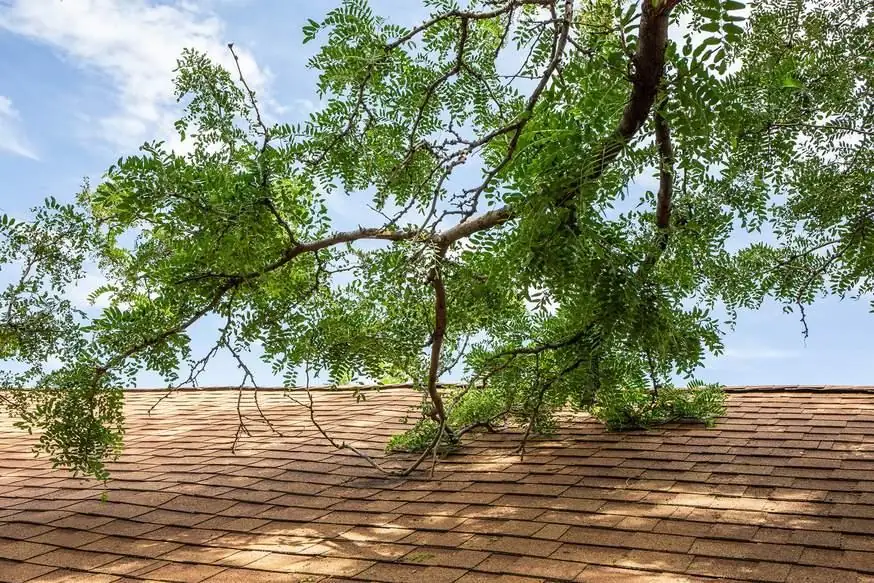
Leaves and branches hold moisture against the sheet, so have overhanging limbs trimmed back, which also keeps a falling branch from puncturing it. The roofer can clean the surface during an inspection with a hose, a soft broom and a mild detergent. Stay off the roof yourself, especially when it’s wet, and if you notice a tear or a soft spot, call a roofer to check what’s underneath.
What to Ask a Contractor Before a Flat Roof Replacement
Ask which brand and thickness of TPO the contractor plans to install, how long that product has been sold, and for references from homeowners whose roofs used it.
Ask how the crew checks each seam, such as by running a probe along it, and whether they follow the sheet manufacturer’s written instructions.
Ask whether the contractor will check the old insulation for water before the quote is final. A small hole in a one-sheet roof can be hard to see, and water can soak the insulation without leaving a stain inside, so wet board found during the work can add to the cost.
Get Help With a Flat or Low-Slope Roof
Home Genius Exteriors provides free inspections, including for the flat and low-slope parts of a house, such as a porch roof or an addition. The team can check the sheet, the seams and the edges, and walk you through your options for that section. On every roof they replace, the Genius Limited Lifetime Warranty covers the installation workmanship. Call today to schedule an inspection.
Frequently Asked Questions
What does TPO mean in roofing?
TPO stands for thermoplastic polyolefin. Thermoplastic means the material softens when it’s heated and hardens again as it cools, and polyolefin is the plastic family that includes polypropylene, which TPO sheets blend with rubber to stay flexible.
What are the disadvantages of a TPO roof?
One disadvantage is a shorter history: TPO has been sold in the United States only since the early 1990s, and the formula differs from one manufacturer to another. The sheet also expands and shrinks a lot with temperature, so its edges need secure fastening and a close look at every inspection as the roof ages.
Which is better, EPDM or TPO?
TPO is the better fit for a flat section over a room you cool in summer, because its white surface reflects heat, and it holds up better than EPDM in hot, sunny weather. EPDM has been on roofs longer, and a roofer can patch it with cold adhesive instead of a welding tool.
How long will a TPO roof last?
A TPO roof lasts about 15 to 30 years. Shade, a thicker sheet and regular cleaning and inspections help it last longer, while full sun and frequent foot traffic shorten its life.
What is another name for a TPO roof?
Roofers also call it a single-ply or membrane roof, the general names for a covering made of one sheet. Some people call any flat roof sheet a rubber roof, but TPO is a plastic blend, and the rubber sheet is EPDM.
How much does TPO roofing cost per square foot?
Installed TPO roofing costs about $4.50 to $14 per square foot, and the installation itself accounts for about $3 of that. The total goes up when the old roof has to come off or new insulation goes in.