Does A New Roof Increase Home Value?
A 15-year-old roof with no active leaks can still cost you $10,000 at the negotiating table. Buyers see aging shingles the same way they see a check engine light: even if nothing is technically wrong right now, the risk changes how they value the deal. That tension between “it still works” and “it scares buyers” is exactly why the relationship between a new roof and home value deserves a closer look than most sellers give it.
Part of what makes this dynamic so frustrating is that the financial hit isn’t tied to the roof’s actual performance. A roof that has never leaked, holds no mold, and has years of life left can still shave five figures off your sale price simply because it looks old. Buyers don’t pay for what a roof has done; they pay for what they think it might cost them. That fear-based discount gets applied before a home inspector ever sets foot on your property, before the first offer comes in, and often before your listing earns a second look.
That said, a new roof absolutely increases home value.
How Much Value Does a New Roof Add to Your Home?
A new roof typically recoups between 50% and 65% of its cost at resale, depending on your market, material choice, and the condition of the old roof. That means a $10,000 asphalt shingle replacement might add $5,000 to $6,500 to your sale price. It rarely returns dollar for dollar, but it removes a major obstacle that kills deals.
Exterior projects consistently outperform interior remodels at resale, with some exterior upgrades reaching ROI figures as high as 267.7%. Roof replacement anchors a home’s curb appeal in ways that directly influence how quickly offers come in.
ROI Comparison: Roof vs. Other Major Remodels
Homeowners often weigh a roof against a kitchen or bathroom upgrade. Here’s how the most common projects stack up based on recent cost-vs-value data:
| Project | Average Cost | Estimated Value Added | Typical ROI |
|---|---|---|---|
| Asphalt Roof Replacement | $29,000–$35,000 | $15,000–$21,000 | 50–61% |
| Minor Kitchen Remodel | $27,000–$30,000 | $20,000–$23,000 | 72–78% |
| Bathroom Remodel (Mid-Range) | $25,000–$28,000 | $15,000–$18,000 | 58–64% |
| Siding Replacement | $18,000–$22,000 | $13,000–$16,000 | 68–75% |
While a kitchen remodel may have the best ROI in isolation, this assumes you have a functioning roof. Buyers rank structural integrity above countertops every time. If your roof is a red flag, that kitchen ROI becomes theoretical because offers either drop or never come in.
What Appraisers and Lenders Look for in Roof Condition
Most sellers underestimate how important the roof condition is during an appraisal. Appraisers assess remaining useful life as part of their property evaluation, and a roof nearing the end of its expected lifespan triggers adjustments that directly lower the appraised value. A low appraisal can torpedo a deal even when the buyer is willing to pay full price.
FHA and Conventional Loan Roof Requirements
FHA loans carry stricter standards than conventional financing. If an FHA appraiser identifies missing shingles, visible deterioration, or evidence that the roof has less than two to three years of remaining life, the lender can require repairs before approving the loan. Conventional loans offer slightly more flexibility, but appraisers still note roof condition and may reduce the home’s appraised value accordingly.
This is where sellers get blindsided. You accept an offer at $425,000, the appraisal comes back at $410,000 because of the roof, and now the buyer either needs to cover the gap in cash or renegotiate. Many deals fall apart entirely at this stage. Before listing your home, determine if and when you need to replace your roof so you’ll have the most leverage.
What Roof Age Becomes a Buyer Red Flag
For asphalt shingles, buyer anxiety spikes around the 15-year mark. Even if your 18-year-old roof shows no leaks, buyers know they’re inheriting a major expense within the next five to seven years. Their agents know it too, and they’ll use it as leverage.
Metal and tile roofs get more runway as they have an inherently longer lifespan. A 20-year-old standing seam metal roof still has decades of life ahead, and buyers recognize that.
Should You Replace Your Roof Before Selling?
This decision depends on three factors: your roof’s current condition, your local market, and your timeline. Some sellers are better off offering a credit instead.
Replace before listing if your roof has active leaks or visible storm damage, if it’s older than 20 years (asphalt), or if you’re in a market where buyers have options and will simply skip your home. In competitive markets with inventory, a bad roof pushes you to the bottom of the stack. Buyers today often compare 10 to 15 homes online before scheduling a single showing, and the cost of roof replacement vs. roof repair determines whether a targeted fix or a full tear-off makes more financial sense before listing. A roof replacement cost estimate gives you a number to compare against what buyers will pay.
A new roof also eliminates inspection contingencies. Home inspectors flag aging roofs in nearly every report, and that finding gives buyers a negotiating weapon whether they need one or not.
Which Roofing Material Adds More Home Value?
Material choice affects both the upfront cost and how much value buyers perceive. Not every upgrade is worth the premium, and the best choice depends heavily on your region and price tier.
Asphalt Shingles: The Safe Bet
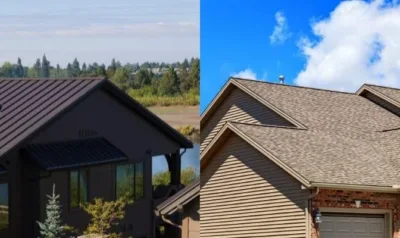
Asphalt is the most common residential roofing material in the U.S., and for good reason. It’s affordable, familiar to buyers, and widely available. An asphalt roofing installation typically costs less per square foot than metal or tile, giving you a better ROI on mid-range homes. Buyers in the $250,000 to $450,000 range rarely expect premium roofing and won’t pay extra for it.
Metal Roofing: Premium Appeal in the Right Market
Standing seam metal roofs can last 50 years or more and carry strong appeal in storm-prone areas like the Southeast and Gulf Coast. Insurance companies in these regions sometimes offer premium discounts for metal roofs, which becomes a selling point during negotiations. However, the higher upfront cost means the ROI percentage often dips below asphalt unless you’re selling a home above $500,000 where buyers expect premium finishes.
Skip metal if you’re in a subdivision where every other home has architectural shingles. Over-improving relative to your neighborhood caps your return regardless of the material’s quality.
Tile Roofing: Regional and Style-Specific
Clay and concrete tile dominate in the Southwest and parts of Florida. In those markets, tile is the standard, and buyers factor it into their expectations. Installing tile on a colonial in Ohio won’t generate the same return. Match your material to what buyers in your area already associate with quality.
How a New Roof Affects Buyer Psychology and Days on Market
According to the NAR’s 2025 Remodeling Impact Report, new roofing received a perfect “Joy Score” of 10 out of 10 from homeowners who completed the project. That satisfaction translates directly into how sellers present their home and how confidently they negotiate.
From the buyer’s side, a new roof eliminates one of the biggest unknowns in a home purchase. Buyers don’t just fear the cost of replacement; they fear the disruption, the contractor search, and the insurance hassle. Removing that burden makes your listing feel move-in ready in a way that fresh paint never will.
Homes with new or recently replaced roofs typically spend fewer days on the market. Real estate agents consistently report that properties with documented roof replacements attract faster offers because buyers feel less need to negotiate or delay. A transferable warranty sweetens the deal further, and working with a contractor like Home Genius Exteriors, whose Owens Corning Platinum Preferred certification provides industry-leading warranty options, gives buyers additional confidence in the investment.
Energy-Efficient Roofing and Regional ROI Differences
Energy-efficient roofing materials, including cool roof shingles and reflective metal panels, reduce attic temperatures and lower cooling costs. In southern markets where air conditioning drives utility bills for eight months a year, this is a tangible selling point. In northern climates, the energy savings are less dramatic, and buyers may not weigh them as heavily.
Regional differences extend beyond energy. In storm-prone areas like the Carolinas, Texas, and the Gulf Coast, a new roof with impact-resistant shingles can reduce insurance premiums by 10% to 28%. That ongoing savings becomes part of your listing pitch and gives buyers a financial incentive beyond aesthetics. For homeowners in those regions, roofing tax credits for South Carolina homeowners can offset a large portion of the upfront investment when energy-efficient materials are used.
In mild-climate markets with low storm risk, the ROI on a new roof tends to cluster at the lower end of the 50% to 60% range. Buyers in those areas see a functioning roof as a baseline expectation rather than a premium feature. Storm-belt homeowners, on the other hand, often recoup closer to 60% to 68% because the insurance, durability, and peace-of-mind benefits carry more perceived weight.
Your Pre-Listing Roof Checklist
Gather the documentation that appraisers and buyers actually want to see. This preparation positions you to either justify your asking price or negotiate from a position of strength.
- Roof age documentation: Original permit, contractor invoice, or warranty start date
- Recent inspection report: A professional assessment from the last 6 months
- Warranty details: Transferability terms and remaining coverage period
- Insurance claims history: Any storm damage claims and completed repairs
- Material specifications: Shingle type, wind rating, and impact resistance class
Having this file ready signals professionalism to buyers and their agents. It also reduces the chance of surprises during the inspection period, which is when most roof-related deal failures happen.
Make Your Roof Work for Your Sale Price
A new roof won’t double your home’s value, and anyone promising that is selling you something other than honesty. What it does is remove friction. It prevents appraisal shortfalls, eliminates buyer objections, reduces days on market, and protects against last-minute renegotiations.
Home Genius Exteriors offers free inspections and estimates so you have the data to make the smartest move before listing. Call today to find out exactly where your roof stands and what it’s worth to your sale.
Frequently Asked Questions
What documents should I show buyers to prove my roof is new or recently replaced?
Provide the final paid invoice, permit and inspection sign-off (if applicable), warranty certificate with transfer terms, and a completion photo set. A concise one-page summary that lists install date, material brand, and contractor license info makes it easy for agents and buyers to trust the upgrade.
Is it better to replace the roof before listing or allow the buyer to choose materials after closing?
If buyer preferences in your price range vary widely, a structured credit or escrow can preserve flexibility while keeping negotiations controlled. The key is to set clear terms in writing, including who selects the contractor, scope assumptions, and what happens if bids come in higher than expected.
What is the difference between roof repair, partial replacement, and a full replacement from a buyer perspective?
Buyers typically view repairs as short-term maintenance, partial replacements as a potential mismatch risk, and full replacements as the cleanest, lowest uncertainty option. If you do anything less than a full replacement, be prepared to explain scope, provide receipts, and show that ventilation and underlayment were addressed where relevant.
How do I choose a roofing contractor that will hold up under buyer scrutiny during a sale?
Look for proper licensing and insurance, strong local reviews, a clear written scope, and workmanship warranty terms that will transfer to the new owner. A contractor who can provide permit support, manufacturer certifications, and a clean closeout package helps prevent post-inspection disputes.
Will a new roof reduce my homeowner insurance premium, and how do I document that for buyers?
It can, but the impact depends on carrier rules, roof features, and local risk factors. Ask your insurer for a written quote update or endorsement showing any discount, then share that document with buyers as a concrete monthly savings estimate.
If I can’t afford a new roof, what low-cost steps can still reduce buyer objections?
Get a professional roof tune-up, replace obvious problem components like damaged flashing or missing shingles, clean gutters, and obtain a recent roof certification or inspection letter. Pair this with a transparent disclosure and a pre-negotiated, documented credit strategy to prevent inflated repair demands.